 Save
Save I'll never forget the year my grandmother decided to reimagine our Thanksgiving table. She was inspired by a documentary about the Mayflower and wanted to create a dish that told the story of journey and connection. That afternoon, as golden root vegetables roasted in the oven and turkey breast filled the kitchen with savory warmth, I understood what she meant—each element on the plate represented a link in a chain of gratitude, history, and family bonds stretching back through generations.
The first time I made this for my extended family, my skeptical uncle—the one who always insisted on the same traditional turkey dinner—came back for thirds. As he ate, he kept commenting on how the roasted vegetables tasted almost like a separate dish, yet somehow tied everything together. That's when I realized this recipe wasn't just about food; it was about creating new traditions while honoring the old ones.
Ingredients
- Boneless turkey breast, skin on (1.5 kg): The skin-on cut is your secret weapon—it crisps up beautifully and keeps the meat juicy during the long roast. Don't skip removing the skin for storage; it'll dry out the meat. Trust me, skin-on makes all the difference.
- Olive oil (4 tbsp total): Use a good quality oil you actually enjoy tasting. The oil carries your seasonings into every fiber of the turkey and vegetables, so it's worth the investment.
- Dried thyme and sage (1 tsp each): These herbs are the backbone of that classic Thanksgiving flavor. Fresh would be wonderful, but dried concentrates the essence—use three times the amount if you go fresh.
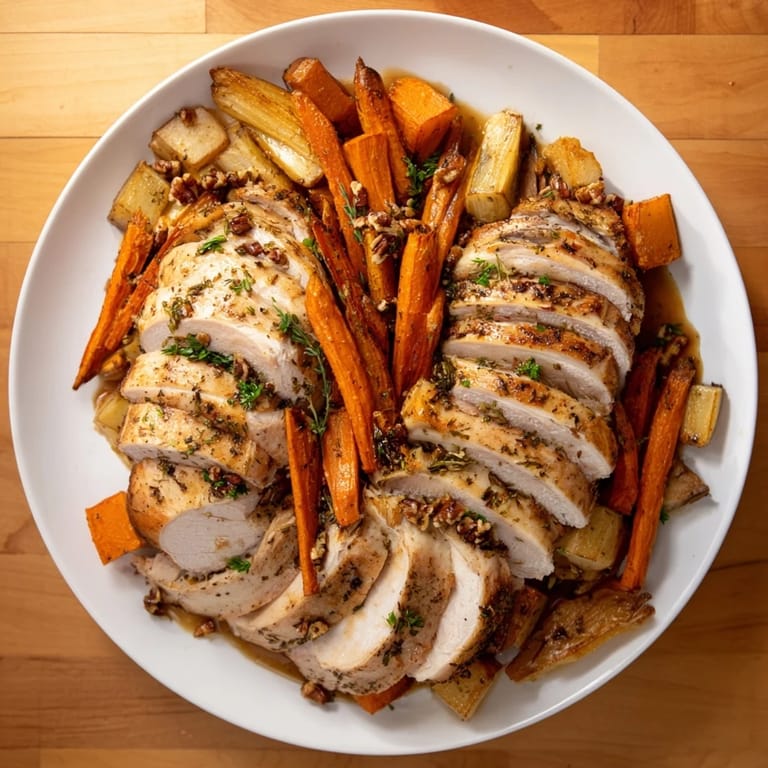
- Carrots, parsnips, sweet potatoes, and celery root: This quartet of vegetables creates a visual and flavor symphony. Each brings its own sweetness and texture; together they're far greater than the sum of their parts. The celery root especially adds an earthy sophistication.
- Smoked paprika and ground cumin (1 tsp and ½ tsp): These spices add a subtle warmth and depth that makes people ask what your secret ingredient is. They're the unsung heroes of this dish.
- Chicken or turkey stock (500 ml): Homemade is beautiful, but quality store-bought works perfectly. The stock is what transforms pan drippings into liquid gold.
- Soy sauce or tamari (1 tbsp): This small addition adds umami—that savory depth that makes people say everything tastes better. If you're avoiding gluten, tamari is your friend.
- Fresh parsley and toasted pecans: These aren't just garnish; they're the final brushstroke that says you cared enough to make this beautiful.
Tired of Takeout? 🥡
Get 10 meals you can make faster than delivery arrives. Seriously.
One email. No spam. Unsubscribe anytime.
Instructions
- Prepare and Season the Turkey:
- Pat your turkey breast dry with paper towels—this helps the seasoning stick and lets the skin crisp. Mix your olive oil with thyme, sage, salt, and pepper to create a paste. Rub this all over the turkey, getting it under the skin if you can manage it. Let it sit for a few minutes so the flavors start to sink in.
- Roast the Turkey:
- Place your turkey skin-side up in a roasting pan. Slide it into a 200°C oven and listen for the gentle sizzle. After about 45 minutes, you'll notice the skin turning golden—that's when you know something magical is happening. Keep cooking until the internal temperature reaches 74°C, about 1 hour 15 minutes total. When it's done, tent it loosely with foil and let it rest for 15 minutes—this is crucial, as it allows the juices to redistribute.
- Prepare the Root Vegetables:
- While the turkey roasts, cut your vegetables into roughly 1-inch pieces—uniform sizing helps them cook evenly. Toss them in a bowl with olive oil, smoked paprika, cumin, salt, and pepper. Spread them on a baking sheet and roast for 40 to 45 minutes, stirring halfway through. You're looking for edges that are deeply golden and caramelized, with tender centers.
- Create the Silky Gravy:
- Melt butter in a saucepan over medium heat. Whisk in cornstarch until you have a smooth paste—this prevents lumps. Slowly pour in your stock, whisking constantly as you go. The mixture will transform from thick paste to silky sauce. Add your soy sauce and simmer for 5 to 7 minutes, stirring occasionally, until it coats the back of a spoon. Taste and adjust seasoning.
- Assemble the Chain:
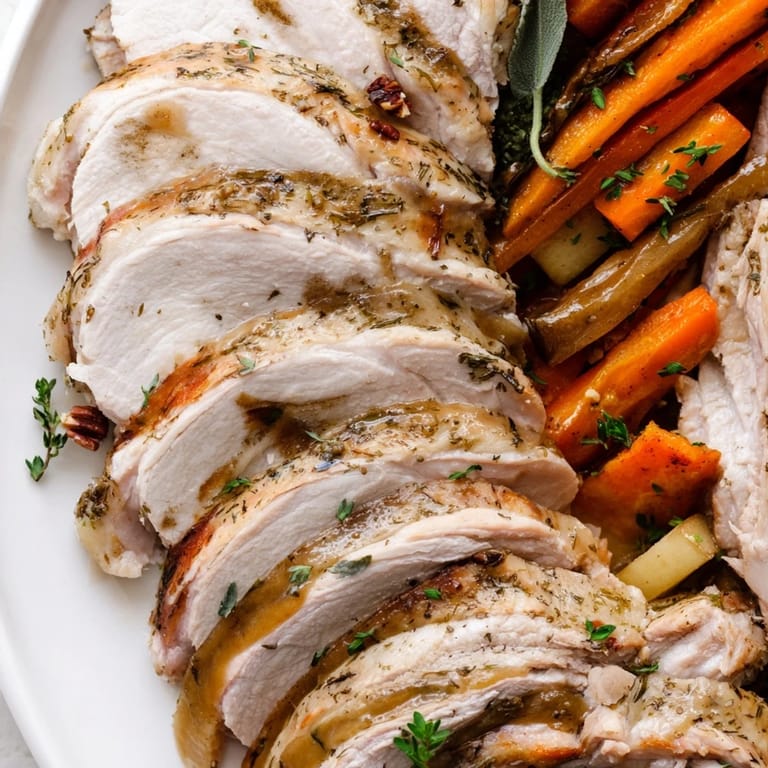
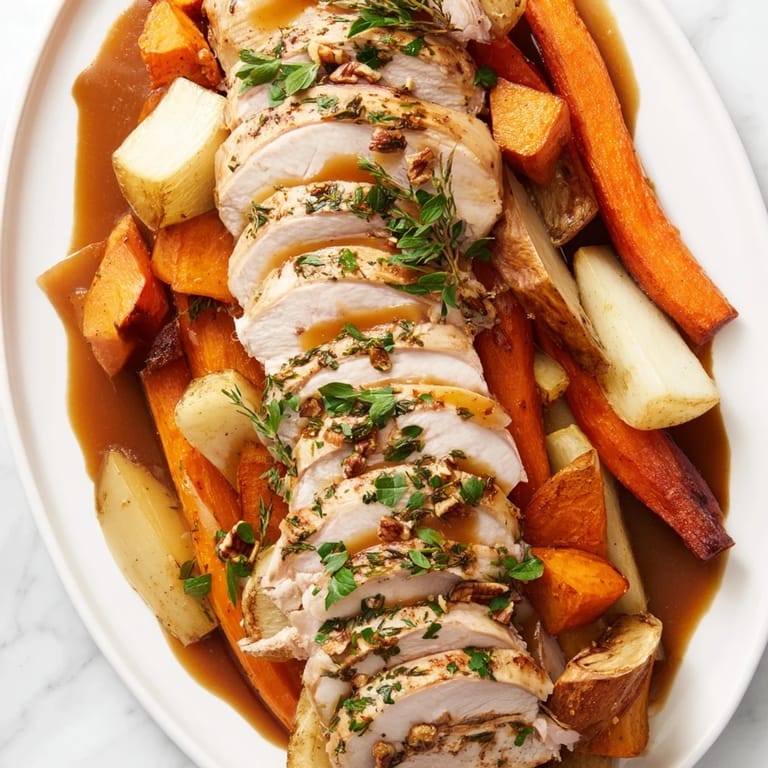
- This is where the magic happens. Slice your rested turkey into half-inch pieces. On your largest platter, arrange turkey slices and roasted vegetables in overlapping rows or rings, creating that symbolic chain-like pattern. It should look like links connected together, telling a story of journey and connection. Drizzle everything with your silky gravy, then scatter fresh parsley and toasted pecans across the top.
 Save
Save Years later, when my nephew asked why we arrange the food in chains instead of just piling it on a plate, I realized that this dish had quietly become our family's way of remembering that we're all connected—to each other, to the past, and to gratitude. It's more than a beautiful presentation; it's a prayer on a plate.
The Story Behind the Chain
The Mayflower wasn't just a ship; it was a symbol of people coming together across differences to build something new. When you arrange this dish in overlapping chains and rings, you're recreating that spirit—each element supporting and connecting with the next. There's something deeply meaningful about food that tells a story, especially at a table where gratitude is the main course.
Timing and Make-Ahead Magic
Here's what I wish someone had told me years ago: you can prep everything the morning of, and roast it all at once if your oven is large enough. Chop your vegetables, season your turkey, make your gravy base (just don't add stock until you're ready to finish it), and store everything in the refrigerator. When guests arrive, everything comes together in under two hours. The beauty of this approach is that you're not frantically cooking while people are already seated.
Variations and Personal Touches
Once you've made this dish once, you'll start to see it as a canvas for your own creativity. Add roasted Brussels sprouts or beets for deeper earthiness and color that makes the platter even more stunning. If you're cooking for vegetarians, replace the turkey with thick portobello mushroom slices—roast them alongside the vegetables and they'll develop a meaty, satisfying texture. Serve cranberry sauce on the side for those who crave that traditional tang. Some people love adding toasted hazelnuts instead of pecans, or drizzling the whole platter with a touch of truffle oil just before serving. Each addition becomes part of your family's story with this dish.
- Try adding roasted Brussels sprouts or beets for more color and earthiness
- A vegetarian version with portobello mushrooms and vegetable stock is equally stunning
- Cranberry sauce served alongside adds brightness that cuts through the richness
 Save
Save This recipe is my love letter to Thanksgiving—to family, to tradition, and to the courage it takes to do something both familiar and new. Every time you make it, you're weaving your own link into an endless chain of gratitude.
Recipe FAQs
- → How do I ensure the turkey stays moist during roasting?
Rub the turkey breast with olive oil and herbs before roasting. Rest the turkey covered with foil for 15 minutes after cooking to let the juices redistribute.
- → Can I use different root vegetables for this dish?
Yes, adding beets, Brussels sprouts, or other hearty roots will enhance earthiness and color without changing the flavor profile.
- → What is the best way to achieve a smooth gravy consistency?
Whisk the cornstarch into melted butter before gradually adding stock, stirring constantly to prevent lumps. Simmer until thickened.
- → How should the components be arranged to reflect the 'chains' concept?
Arrange sliced turkey and roasted vegetables in overlapping linked rows or rings on a platter to resemble connected chains or links.
- → Are there vegetarian alternatives for this meal?
Substitute turkey with roasted portobello mushrooms and swap the stock in gravy with vegetable stock for a satisfying vegetarian option.