 Save
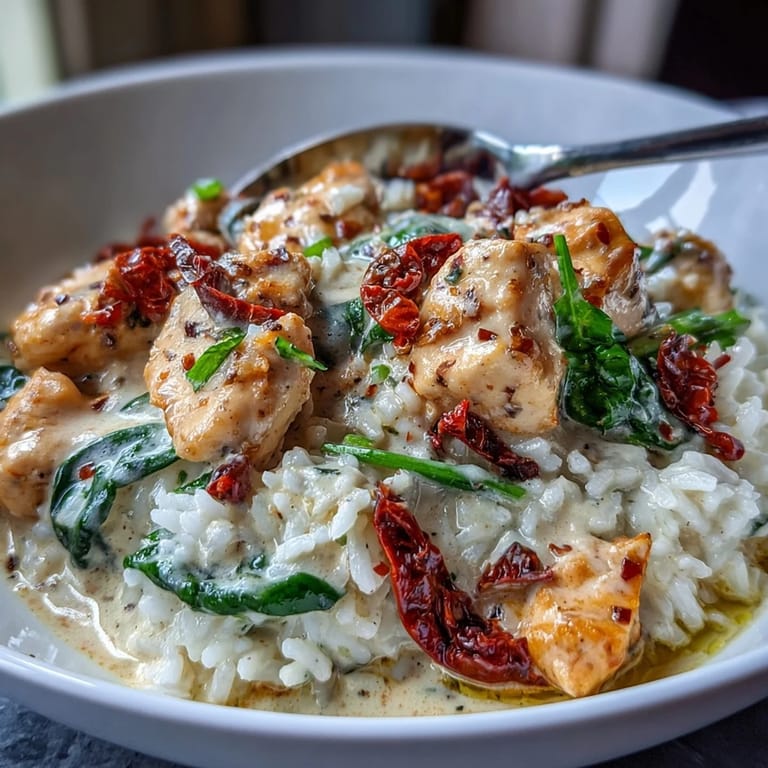
Save There's something about the smell of garlic hitting hot oil that makes you stop whatever you're doing. One weeknight, I was standing in front of the stove feeling uninspired, staring at chicken breasts and a half-empty container of sun-dried tomatoes, when it hit me—why not try building something creamy and rich, something that didn't require multiple pans or a grocery store trip for exotic ingredients? That's how this Tuscan skillet came together, and honestly, it's been on rotation ever since.
I made this for my sister during her first week in her new apartment, when her kitchen was still mostly empty boxes and hope. We ate it straight from the skillet while sitting on her living room floor, and she asked for the recipe before we'd even finished. Now whenever she needs something that feels homemade but isn't fussy, this is what she reaches for.
Ingredients
- Boneless, skinless chicken breasts: Cut into 2.5 cm cubes so they cook evenly and stay tender rather than drying out in the pan.
- Long-grain white rice: Rinsing removes excess starch and keeps grains from clumping together as they absorb the creamy sauce.
- Yellow onion and garlic: These are your flavor foundation—don't rush sautéing them, as it builds the depth that makes everything else taste better.
- Sun-dried tomatoes: The oil they're packed in is liquid gold; drain it into the skillet rather than wasting it.
- Baby spinach: Added at the very end so it stays bright and tender instead of turning into mush.
- Heavy cream and Parmesan cheese: Together they create that luxurious sauce, though you can use half-and-half if you want something lighter.
- Low-sodium chicken broth: Using low-sodium gives you control over the salt level as flavors concentrate during cooking.
- Olive oil and butter: The combination gives you butter's flavor with olive oil's higher smoke point.
- Dried Italian herbs and red pepper flakes: Mild heat and herbaceous notes that tie the whole dish together.
Tired of Takeout? 🥡
Get 10 meals you can make faster than delivery arrives. Seriously.
One email. No spam. Unsubscribe anytime.
Instructions
- Sear the chicken until golden:
- Heat oil and butter over medium-high heat until the butter foams—this is your signal the pan is ready. Add chicken cubes in a single layer and don't move them for a couple minutes; you want that golden crust on each side, about 5-6 minutes total.
- Build the flavor base with onions and garlic:
- In the same skillet, cook diced onion until it softens and turns translucent, stirring occasionally. Add minced garlic and let it bloom for just a minute—you'll smell when it's ready, a fragrant signal not to wait much longer.
- Toast the sun-dried tomatoes briefly:
- Stir in the drained sun-dried tomatoes and fresh cherry tomatoes if using, cooking for a minute or two until they're warm and slightly softened. This quick sauté releases their concentrated flavor into the oil.
- Coat the rice with aromatics:
- Pour in rinsed rice and stir constantly for about a minute, coating each grain with the fragrant oil and vegetable mixture. You're not cooking it yet, just awakening its flavor.
- Simmer the rice in broth:
- Add chicken broth and bring to a gentle simmer, then lower the heat, cover the skillet, and let it cook for 15 minutes while you stir occasionally. The rice will gradually absorb the liquid and soften without sticking to the bottom.
- Create the creamy finish:
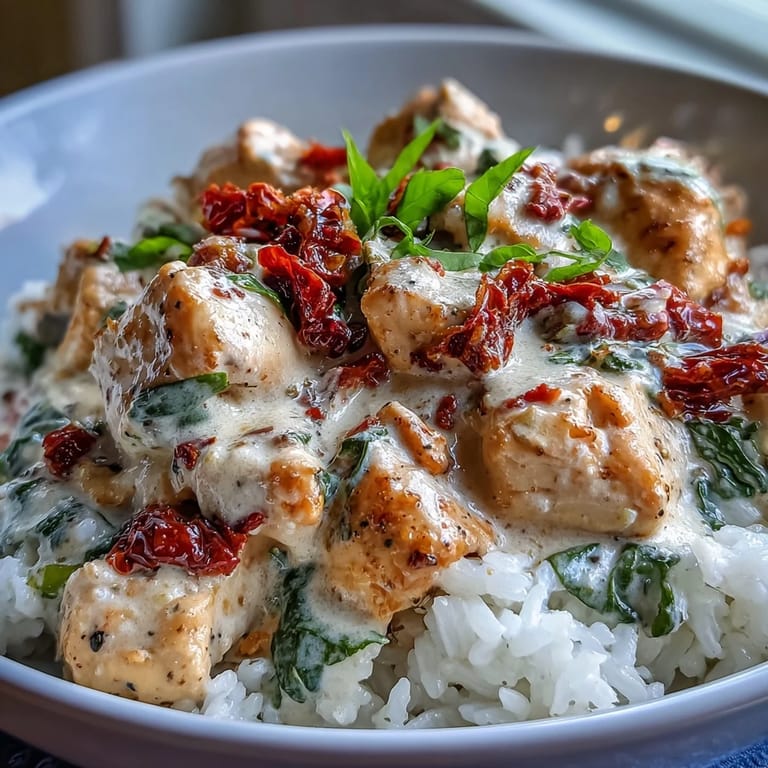
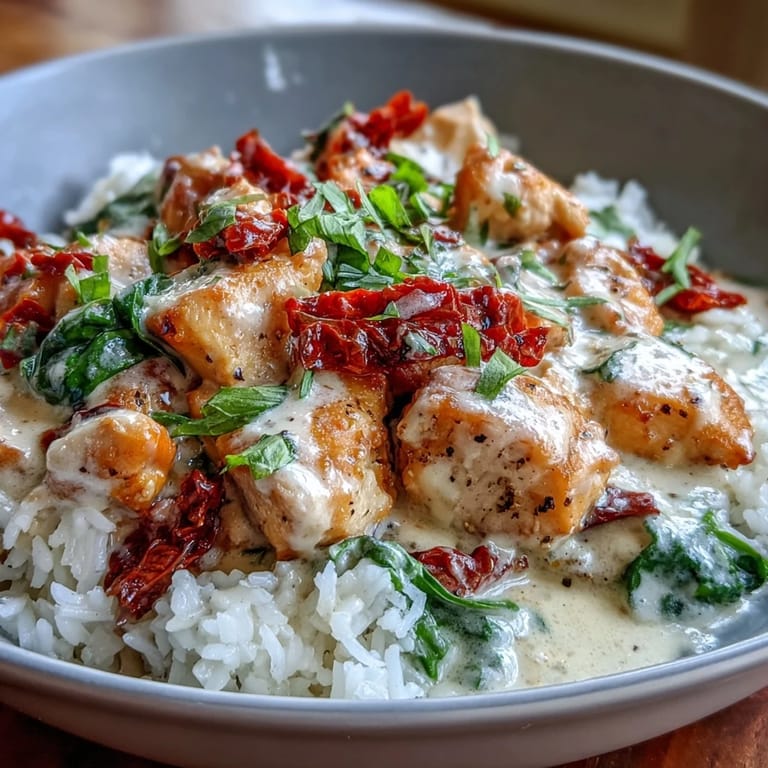
- Once the rice is nearly tender, stir in heavy cream, freshly grated Parmesan, Italian herbs, and red pepper flakes, then return the seared chicken to the pan. Simmer uncovered for 5-7 minutes until the sauce thickens into something silky and clings to the rice.
- Finish with spinach and garnish:
- Fold in the chopped spinach and cook just until wilted, about one minute—this keeps it bright green and tender. Taste and adjust salt and pepper, then garnish with fresh basil and extra Parmesan if you have it.
 Save
Save  Save
Save The first time someone asked me why I wasn't opening a restaurant with this recipe, I laughed—but it felt good. There's a quiet confidence in feeding people something that tastes like you spent all day on it, when really you just understood how to layer flavors and let one pan do the work.
When to Use Chicken Thighs Instead
If you want the dish to feel even more forgiving and juicy, swap the chicken breasts for thighs. They have more fat running through them, so they stay tender even if the rice takes a few extra minutes to cook. Just cut them into similar-sized pieces so everything cooks evenly, and don't worry about them drying out—thighs are almost impossible to overcook in a creamy sauce.
Making It Lighter Without Losing Richness
One evening I made this for a friend watching her dairy intake, and instead of heavy cream, I used half-and-half mixed with a splash of pasta water from the vegetables I'd steamed alongside. The sauce was thinner but still creamy, and the Parmesan brought back enough richness that nobody felt like something was missing. You can also use evaporated milk if that's what you have on hand—it's denser than regular milk and mimics that luxurious mouthfeel pretty convincingly.
Optional Flourishes and Variations
Once you understand how this skillet works, it becomes a template rather than a strict recipe. I've added fresh basil to the pan instead of just garnishing with it, stirred in a handful of spinach-artichoke mix, or even scattered torn mozzarella on top for a moment before serving. One night I deglazed the pan with white wine after sautéing the onions, letting it reduce before adding the broth—it added a subtle brightness that made the whole dish taste more complex.
- Deglaze the pan with a splash of white wine after cooking the onions for added depth and subtle acidity.
- Stir in a spoonful of pesto or sun-dried tomato paste for extra intensity if you're in the mood for boldness.
- Top with crispy breadcrumbs or toasted pine nuts right before serving to add texture and a nutty note.
 Save
Save 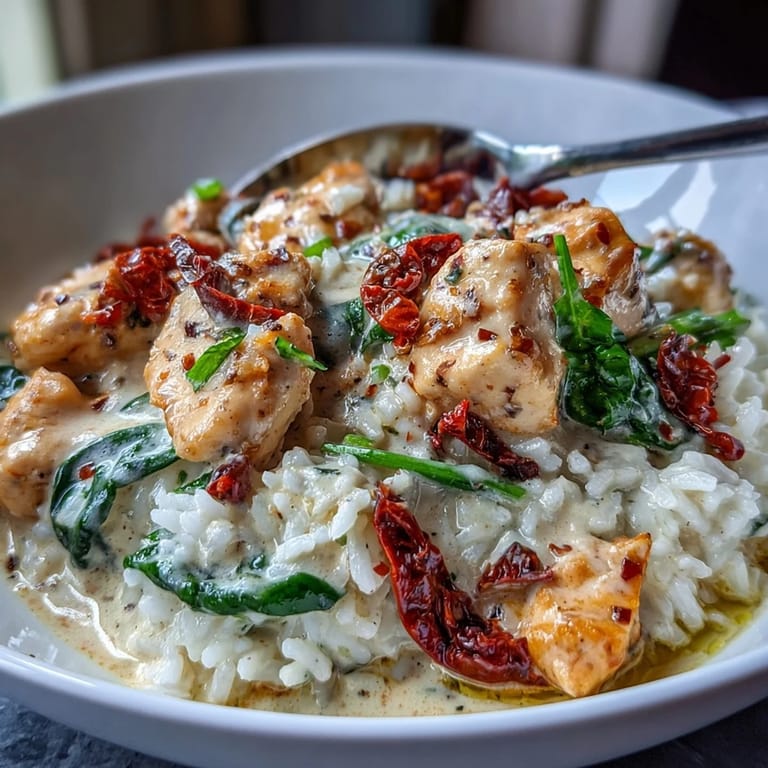 Save
Save This skillet has become my go-to when I want to feel like I've cooked something real without spending the whole evening in the kitchen. It's the kind of dish that tastes like care without demanding perfection.
Recipe FAQs
- → Can I use brown rice instead of white?
Brown rice works but requires about 20 minutes longer cooking time and additional liquid. Adjust broth by ½ cup and extend simmering until rice reaches desired tenderness before adding cream.
- → What can I substitute for heavy cream?
Half-and-half, evaporated milk, or coconut milk (for dairy-free) work well. The sauce will be slightly less rich but still creamy. Avoid regular milk as it may curdle when simmered.
- → How do I store and reheat leftovers?
Store in an airtight container for up to 3 days. Reheat gently on the stove with a splash of broth or cream to restore consistency. The rice will continue absorbing liquid, so add moisture as needed.
- → Can I make this ahead of time?
Prepare all ingredients in advance for faster assembly. The full dish is best enjoyed fresh, but you can cook it completely and reheat. The rice may soften slightly—add fresh spinach when reheating for texture.
- → Is this skillet freezer-friendly?
Freezing is possible but not recommended as the cream sauce may separate and rice texture changes. If freezing, undercook the rice slightly and reheat slowly with added liquid to help emulsify the sauce.
- → What protein alternatives work well?
Chicken thighs stay juicier, while turkey or Italian sausage add different flavor profiles. For a vegetarian version, use cannellini beans and vegetable broth, adding them when you'd return the chicken to the pan.