 Save
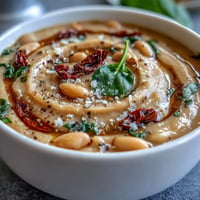
Save My grandmother kept a ham bone wrapped in butcher paper at the back of her freezer, waiting for soup season. She'd pull it out when the first real chill hit, and by evening the whole house smelled like comfort—that savory, meaty steam rising from a pot that never seemed to empty. That ham and lima bean soup taught me that the best meals aren't about fancy techniques or rare ingredients; they're about patience and knowing exactly what feeds people on days when the world feels too cold or too much.
I made this soup for my neighbor after she came home from the hospital, and watching her take that first spoonful—the way her shoulders relaxed—reminded me that food is a language all its own. She asked for the recipe three times, and I think because she wanted to understand how something so simple could feel like exactly what she needed. That's when I truly understood why my grandmother guarded that ham bone so carefully.
Ingredients
- Cooked ham, diced (2 cups): This is your flavor anchor; don't skimp on quality here because even a small amount carries the whole soup on its shoulders, and smoked varieties work wonderfully if you want that extra depth.
- Dried lima beans (2 cups): Soaking them overnight isn't just tradition—it cuts cooking time and makes them absorb flavors like little flavor sponges, so don't skip this step.
- Onion, carrots, and celery (1 large, 2 medium, 2 stalks): This holy trinity is where the soup develops its backbone, and taking five minutes to dice them evenly means they'll soften at the same rate.
- Garlic cloves, minced (3): Add this after the softer vegetables so it doesn't burn and turn bitter—a lesson learned from one too many burnt batches early on.
- Low-sodium broth (8 cups): The canvas for everything else, so choose something you'd actually drink on its own, and remember that low-sodium lets you control the final salt level.
- Bay leaf, dried thyme, and black pepper: These three work as a quiet team in the background, making everything taste more like itself without announcing themselves.
Tired of Takeout? 🥡
Get 10 meals you can make faster than delivery arrives. Seriously.
One email. No spam. Unsubscribe anytime.
Instructions
- Prepare your beans and get your stage ready:
- After draining those overnight-soaked lima beans, have everything prepped and within arm's reach—the diced vegetables in one bowl, the ham in another, your broth measured and waiting. This five minutes of organization saves you from standing there mid-cook with a hot pan and nowhere to go.
- Sauté the aromatics until golden:
- Heat that splash of oil in your pot over medium heat, then add onions, carrots, and celery, stirring occasionally until the edges start to caramelize slightly and everything becomes fragrant. You're not rushing here; five minutes gives them time to release their sweetness and become the foundation everything else builds on.
- Bloom the garlic quickly:
- Once those vegetables are softened, add your minced garlic and let it cook for just about one minute—you're looking for that moment when it becomes fragrant and slightly golden, not burnt and bitter. Listen for the gentle sizzle to quiet down, which tells you you're ready to add everything else.
- Build your soup by adding all the players:
- Stir in your ham, those drained lima beans, the broth, bay leaf, thyme, and black pepper all together, then turn up the heat to bring everything to a rolling boil. The moment you see that boil starting, you know you're on track.
- Simmer low and let time do the work:
- Drop the heat to low and let it bubble gently, uncovered, for about an hour and fifteen minutes, stirring now and then to make sure nothing's sticking to the bottom. The beans will soften from hard little marbles into something you can almost dissolve on your tongue, and the whole pot becomes creamy and rich even without cream.
- Fish out the bay leaf and taste your way to perfect:
- Once the beans are tender, pull out that bay leaf (it's done its job), then taste the soup and add salt bit by bit until it tastes like home. This is the moment where it stops being ingredients and becomes something alive.
- Serve hot with a shower of green:
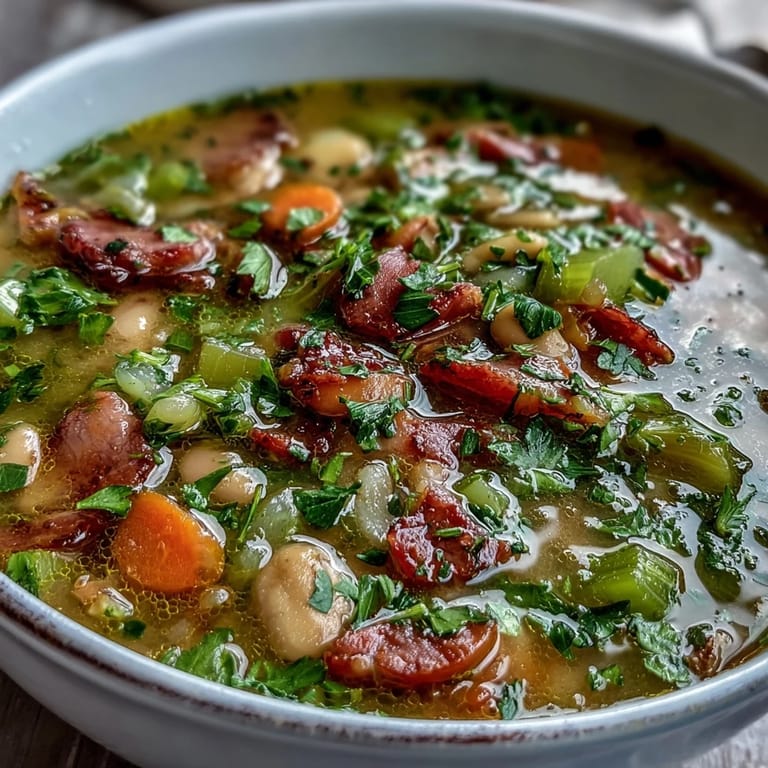
- Ladle into bowls and, if you've got fresh parsley, scatter it on top for a fresh note against all that savory warmth. The contrast between the bright green and the deep, rustic soup colors is almost as nice as how it tastes.
 Save
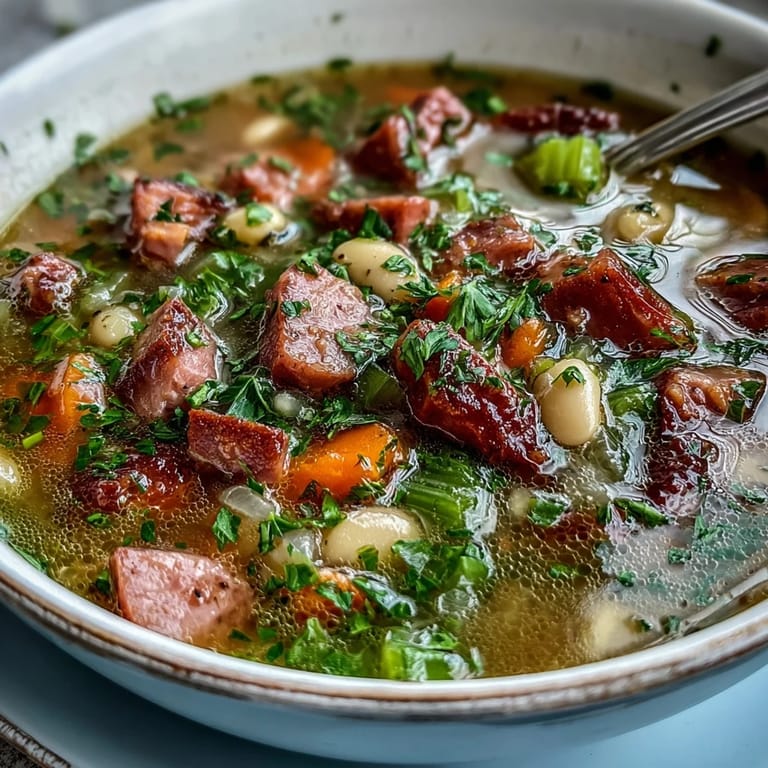
Save My son came home from a rough day at school and silently ate three bowls of this soup without saying a word, then asked if I'd make it again tomorrow. There's something about this dish that meets people exactly where they are—it doesn't ask for conversation or energy, it just wraps around you like something warm you've forgotten you needed.
When to Make This Soup
This soup sings on cool evenings when you want something that tastes like it's been cooking all day, even though you've only been at it for ninety minutes. I keep it on rotation from September through April, when the weather shifts and everyone starts craving food that sticks to your ribs and makes the kitchen smell like yesterday's good decisions.
Variations Worth Trying
The beauty of this soup is how it bends without breaking—I've made it with smoked turkey when ham felt too heavy, and once with a combination of vegetable broth and smoked paprika when a vegetarian friend was coming over, and both times it disappeared just as quickly. Different meats, different broths, even different beans if you can't find limas—this recipe is less a rule and more a suggestion about how these flavors like to live together.
Building a Soup Routine
There's something meditative about watching a soup come together, about how the flavors gradually decide to become one thing instead of many separate things crowded into the same pot. I started making this once a month just for the ritual of it—the chopping, the waiting, the moment you taste it and know it's ready—and it became the thing that kept my freezer full and my family comfortable.
- Make a double batch and freeze half in smaller containers so you always have a warm answer to the question of what's for dinner.
- Day-old soup tastes noticeably better as the flavors have time to fully embrace one another, so don't judge it harshly straight from the stove.
- Serve alongside something crusty and good to soak up every last bit, because leaving soup behind in the bowl feels like a small tragedy.
 Save
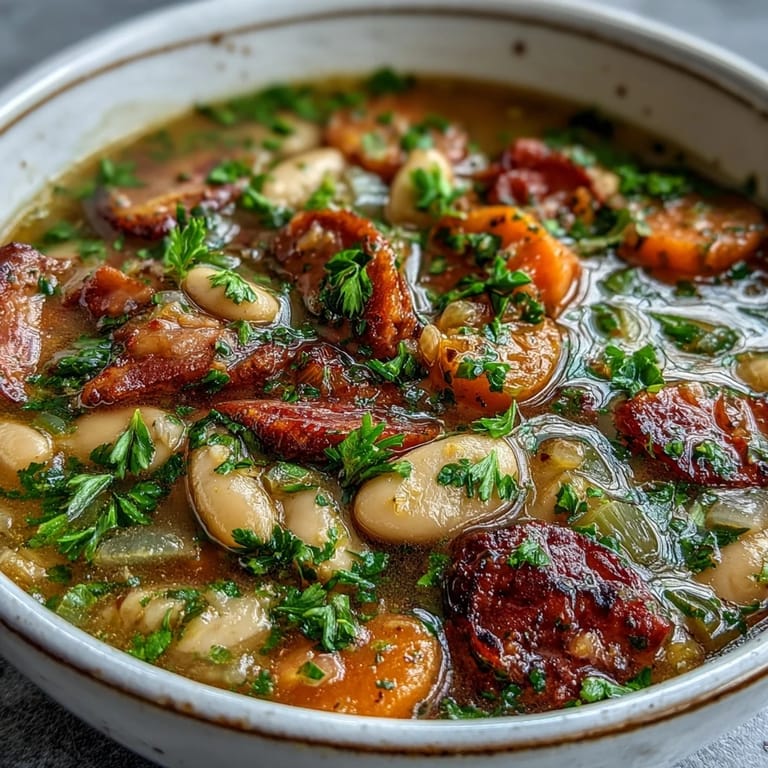
Save This soup has become my answer to almost every situation that calls for nourishment—sickness, sadness, celebration, or just a Tuesday that needs something warm. It's honest food that doesn't pretend to be anything other than exactly what it is, and somehow that simplicity is exactly what makes it necessary.
Recipe FAQs
- → How long should lima beans be soaked?
Soaking lima beans overnight helps soften them, reducing cooking time and ensuring even tenderness.
- → Can smoked turkey replace ham?
Yes, smoked turkey provides a lighter flavor while maintaining the dish’s smoky and savory character.
- → What type of broth works best?
Low-sodium chicken or vegetable broth offers a flavorful base without overwhelming the delicate bean and ham flavors.
- → How do I know when the beans are done?
Beans should be tender but intact, easily pierced with a fork after about 1 hour 15 minutes of simmering.
- → Can I make this dish vegetarian?
Omit the ham and add smoked paprika for depth, then use vegetable broth for a satisfying vegetarian alternative.