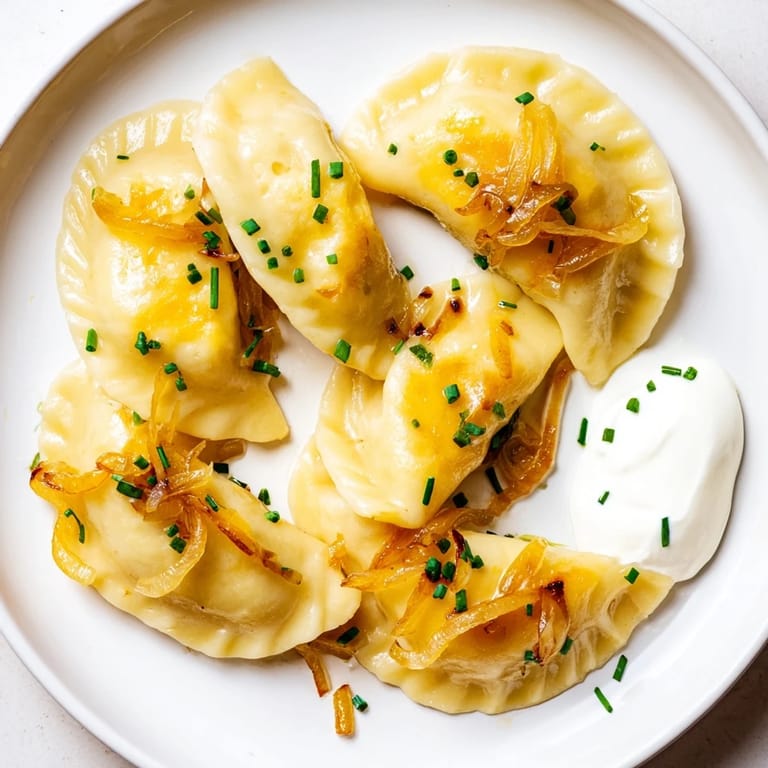
 Save
Save My grandmother's kitchen always smelled like butter and onions on pierogi day, the kind of aroma that would drift through the whole house and announce the occasion before anyone said a word. The first time she let me help, I was maybe seven, watching her weathered hands fold each dumpling with a speed that seemed impossible. She never rushed, never looked stressed—just this quiet rhythm of fold, pinch, stack. Years later, I realized those simple potato and cheese pockets held something bigger than just filling: they were how she said I love you to everyone at her table.
I made these for a dinner party once when I was trying way too hard to impress someone's parents, and I remember standing in my tiny kitchen at midnight the night before, panicking because my dough felt too sticky. My roommate walked in, tasted it without judgment, and said it was perfect—tender enough to hold filling but strong enough not to tear. That confidence gave me the courage to keep going, and by the time the guests arrived, I'd already frozen two full trays. Everyone went back for seconds, and honestly, I think that's when I knew this recipe was keepsake-worthy.
Ingredients
- All-purpose flour (3 cups): The structure of everything—use a flour you trust because cheap flour can make the dough tough and hard to work with.
- Egg (1 large): This binds everything together and gives the dough richness; don't skip it even if you're tempted.
- Lukewarm water (¾ cup): Temperature matters more than you'd think—too hot kills the gluten, too cold makes kneading miserable.
- Sour cream (2 tbsp): This is the secret that makes your dough tender and slightly tangy in the best way.
- Salt (1 tsp for dough): Seasoning at this stage prevents you from having to rescue bland dough later.
- Unsalted butter (2 tbsp melted, plus 3 tbsp for onions): Melted butter in the dough adds flavor and helps the dough stay supple; the extra butter makes those onions shine.
- Russet potatoes (1 ½ lbs): Their starch content makes them mash smooth and hold the filling together without being gluey.
- Farmers cheese (1 cup): If you can find it, use it—it has a tanginess that cottage cheese or ricotta can't quite match, though both work in a pinch.
- Sharp cheddar (½ cup grated): Don't use mild cheddar; you want enough flavor to stand up to the potato.
- Onion (1 small for filling, 2 large for serving): Caramelized onions on top turn this from good to memorable.
- Black pepper and salt: Season to taste, but remember the filling will taste a bit less seasoned once it's cooked into the dough.
Tired of Takeout? 🥡
Get 10 meals you can make faster than delivery arrives. Seriously.
One email. No spam. Unsubscribe anytime.
Instructions
- Mix and knead your dough:
- Pour your flour and salt into a bowl, make a little well in the center like you're creating a edible bowl, then crack your egg right into it. Add the melted butter, sour cream, and water, then start stirring from the center outward—it'll look shaggy and impossible at first, but keep going. Once it comes together, flour your counter and knead for about five to seven minutes until the dough is smooth and springs back when you poke it; this is where the magic happens, because you're developing the gluten that will hold everything together.
- Let the dough rest:
- Cover it with a damp towel and give it thirty minutes at room temperature—this is the part most people want to skip, but don't, because the dough will be way easier to roll out and won't snap back at you.
- Cook and mash your potatoes:
- Cut them into roughly equal pieces so they cook evenly, boil in salted water until a fork slides through with no resistance, then drain in a colander and let them sit for a minute to dry out slightly before mashing. You want them smooth but not gluey; if you overwork them, they'll get sticky and your filling will be heavy.
- Toast your onion:
- Melt two tablespoons of butter in a skillet over medium heat and add your finely chopped onion—let it go golden and sweet, which takes about five minutes and makes all the difference in the filling's depth.
- Combine the filling:
- Mix your mashed potatoes, sautéed onion, both cheeses, and a good pinch of salt and pepper together while everything is still slightly warm so the cheeses incorporate smoothly. Taste it—this is your only chance to adjust seasoning—then let it cool to room temperature before you fill anything.
- Roll and cut your dough:
- On a floured surface, roll the dough thin, about the thickness of a dime or three millimeters—thinner is better because thick dough becomes chewy rather than tender. Cut circles with a three-inch cutter or even a drinking glass if you don't have the right tool.
- Fill and fold each pierogi:
- Place about a heaping teaspoon of filling just off-center on each circle, fold the dough in half to create a half-moon, then pinch the curved edge really firmly to seal it—any gap is an invitation for the filling to escape into the water. Stack them under a towel so they don't dry out while you're working.
- Boil the pierogi gently:
- Bring a large pot of salted water to a simmer and cook in batches so they have room to move around—don't overcrowd or they'll stick together. When they float to the surface, give them one to two more minutes and they're done; boil them too long and they get heavy.
- Make your caramelized onions:
- In a large skillet, melt three tablespoons of butter over medium-low heat, add your sliced onions, and let them cook slowly for twenty to twenty-five minutes, stirring often—this isn't a race, because the long, slow cooking is what turns them sweet and golden instead of just soft and brown. You'll know they're ready when they're deep golden and smell like caramel.
- Pan-fry until crispy:
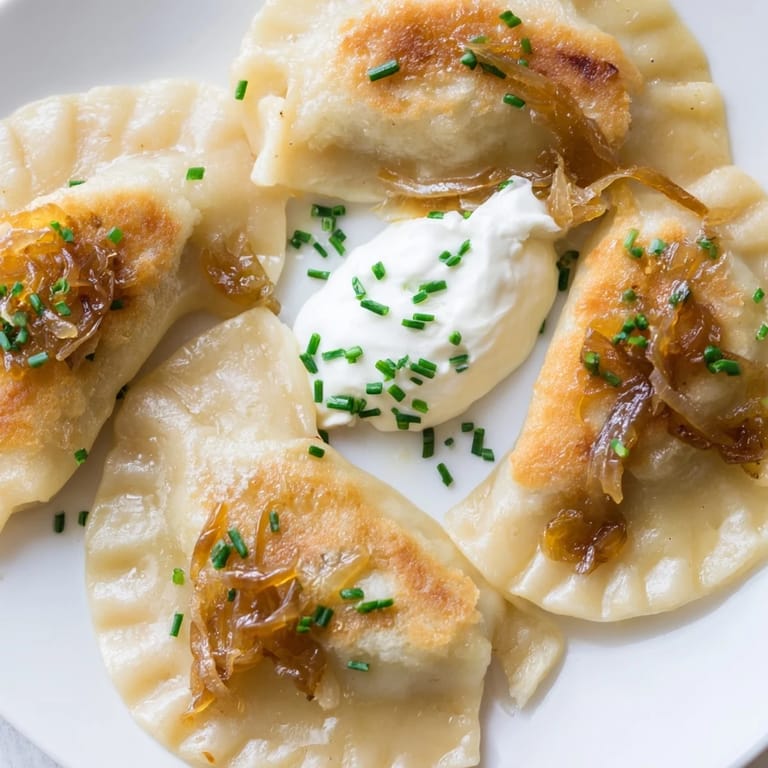
- In the same skillet with the leftover onion butter, add your boiled pierogi in batches and fry on both sides until they're golden and have a slight crust, about two to three minutes per side. This is where the texture transforms from pillowy to crispy-edged, which is the whole point.
- Serve while hot:
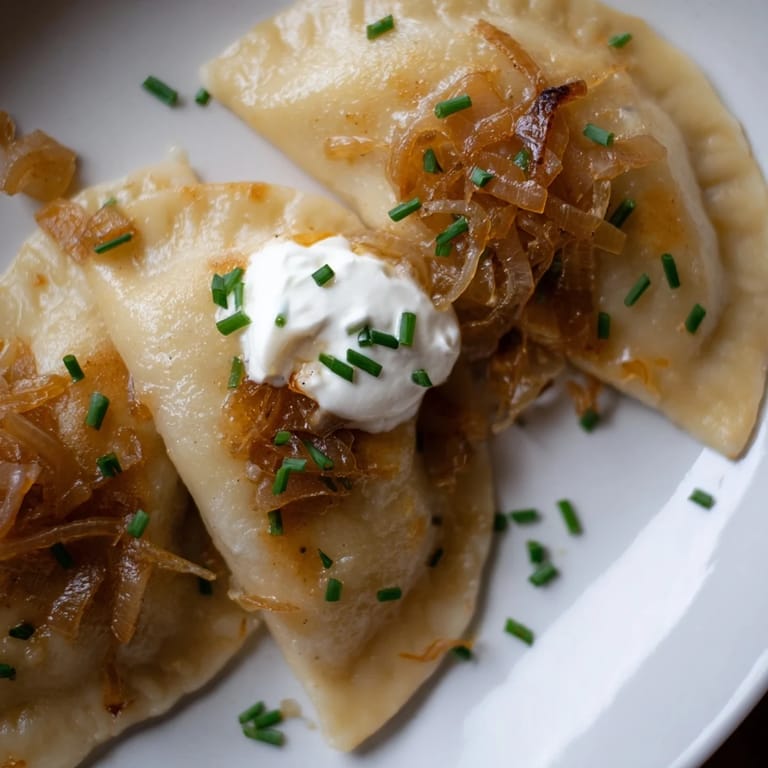
- Top each serving with a generous spoonful of caramelized onions, a dollop of sour cream, and fresh chives or parsley if you have them—the warmth of the pierogi will melt the sour cream slightly, creating something impossibly good.
 Save
Save There's something about serving these at a table full of people, watching someone take that first bite and close their eyes a little, that reminds me why I cook. That moment is worth every fold, every minute of caramelizing onions, every time I've messed up the dough and had to start again.
The Dough Matters More Than You Think
I used to think all pierogi dough was basically the same—flour, egg, water, done—but the sour cream is what separates a tender dumpling from a chewy disappointment. It adds just enough tang and tenderness that the dough actually wants to cooperate with you instead of fighting back. The melted butter helps too; it makes the dough pliable and forgiving, so even if you're not a rolling pin expert, you can still end up with something beautiful.
Why Farmers Cheese Is Worth Finding
If you can hunt down farmers cheese at a good grocery store or Eastern European market, it's worth the trip because it has a slight tang and a crumbly texture that cottage cheese or ricotta can't quite replicate. That said, life happens—I've made these with well-drained cottage cheese when I was in a pinch, and they were still wonderful. The cheddar is doing a lot of the heavy lifting on the flavor anyway, so don't stress if you can't find the exact ingredient.
Caramelized Onions Are Everything
The onions are honestly what transform these from good to unforgettable, but they require patience and time you can't skip. Low heat, frequent stirring, and no rushing—this is where a good pierogi dinner separates from an okay one. If you're short on time, at least cook the onions ahead so you're not waiting for them while everything else gets cold.
- Start the onions early because they need about twenty-five minutes and you can't rush sweet caramelization.
- If you want to make a non-vegetarian version, crisp some bacon lardons and toss them into the onions at the very end.
- Leftover caramelized onions are incredible on almost anything, so don't feel like you have to use them all in one meal.
 Save
Save These dumplings have a way of becoming tradition before you even realize it's happening. Make them once for someone you love and I promise you'll find yourself making them again.
Recipe FAQs
- → What type of cheese is best for the filling?
Farmers cheese or well-drained ricotta combined with sharp cheddar provide a creamy, tangy flavor perfect for the filling.
- → How do I prevent the dough from sticking?
Use a floured surface for rolling and handle the dough gently to keep it smooth and elastic without sticking.
- → What is the best method to cook the dumplings?
First boil the dumplings until they rise to the surface, then pan-fry them in butter for a crisp, golden finish.
- → How can I make the caramelized onions sweeter?
Cook the sliced onions slowly over low heat with butter, stirring often until they turn deep golden and develop natural sweetness.
- → Can the dumplings be frozen before cooking?
Yes, freeze uncooked dumplings on a tray first, then transfer to bags. They keep well for up to two months.