 Save
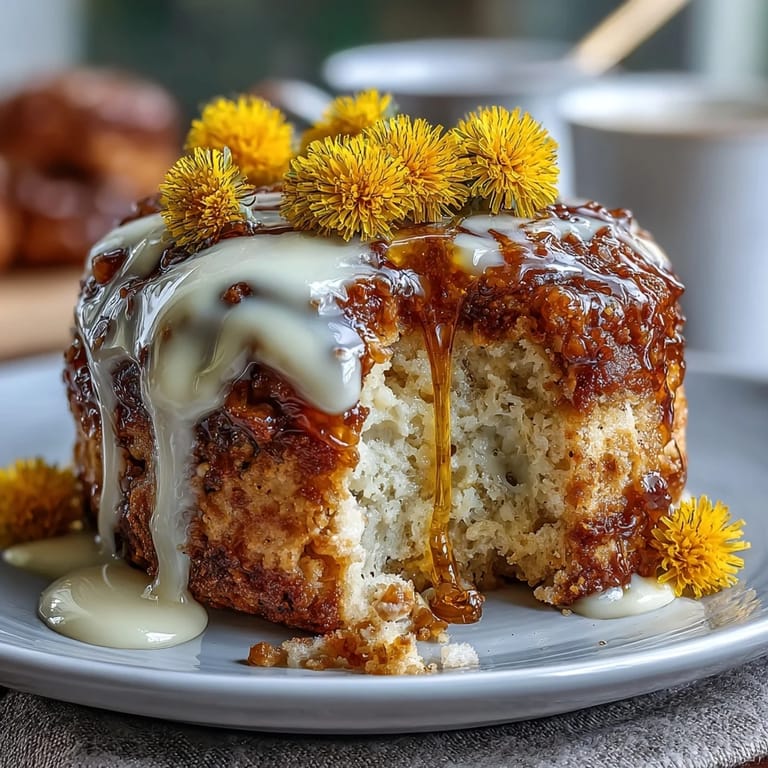
Save My neighbor's garden had taken over her entire fence that April, dandelion blooms spilling everywhere like she'd planted gold. She handed me a basket one morning with a shy smile, saying she couldn't bear to pull them all, and suddenly I was standing in my kitchen wondering what on earth to do with fifty yellow flowers. These scones came from that moment of necessity and curiosity—tender, honey-sweetened, and threaded through with something unexpectedly floral that makes spring taste the way it should.
I made these for my sister's birthday brunch last May, and she sat there with one half-eaten scone, eyes closed, just breathing in the aroma. She told me later that she'd been having a rough week and hadn't realized how much she needed to slow down until that moment. These scones became the thing she requested every spring after that, which taught me something important about feeding people you love.
Ingredients
- All-purpose flour (2 cups): The foundation of any good scone—make sure it's not packed tightly when you measure, or you'll end up with dense, sad hockey pucks instead of cloud-like wedges.
- Granulated sugar (1/4 cup): Just enough sweetness to balance the subtle earthiness of the dandelion without making these taste like dessert.
- Baking powder (1 tbsp): Your lift and rise—don't skip it or substitute old powder that's been sitting in your cabinet since last year.
- Fine sea salt (1/2 tsp): It brightens everything and makes the honey taste even more honey-like, if that makes sense.
- Cold unsalted butter (1/2 cup, cubed): Cold is non-negotiable here; warm butter gives you dense, greasy scones instead of tender, flaky ones.
- Whole milk, cold (2/3 cup): The dairy that brings everything together—use full-fat for richness, and yes, it needs to be cold.
- Dandelion petals (2 tbsp fresh, yellow parts only): Only gather these from gardens you trust or know haven't been sprayed; the yellow petals are mild and slightly sweet, while anything green tastes bitter and harsh.
- Honey (2 tbsp, plus 1 tbsp for drizzling): Pick one you genuinely love—its flavor comes through clearly here, so a floral honey makes these even more special.
- Egg, large (1): Your binding agent and the reason these brown beautifully in the oven.
- Clotted cream (to serve): The non-negotiable partner; if you can't find proper clotted cream, whipped cream works in a pinch, though you'll miss that dense, luxurious tang.
Tired of Takeout? 🥡
Get 10 meals you can make faster than delivery arrives. Seriously.
One email. No spam. Unsubscribe anytime.
Instructions
- Set your stage:
- Get your oven heating to 400°F and line a baking sheet with parchment—this gives you time to work and ensures nothing sticks. Everything that follows moves quickly, so this small prep matters.
- Build your dry base:
- Whisk flour, sugar, baking powder, and salt together in a large bowl, making sure there are no hidden pockets of baking powder that could leave bitter spots. This is your foundation, so don't rush it.
- Cut in the butter:
- Drop your cold butter cubes into the flour mixture and work them in with a pastry cutter or your fingertips until it looks like coarse breadcrumbs with some pea-sized pieces still visible. Those little butter flecks are what create those tender, flaky layers.
- Wake up the wet ingredients:
- Whisk together cold milk, honey, egg, and the fresh dandelion petals in a small bowl until the egg is fully incorporated and the petals are evenly distributed. Don't let this sit—the dandelion color will fade if you wait too long.
- Bring it together gently:
- Pour the wet mixture into your dry ingredients and stir with a fork just until everything comes together into a shaggy dough; this is where patience pays off because overmixing develops gluten and toughens your scones into disappointment. Stop stirring the moment you don't see dry flour anymore.
- Shape with a light hand:
- Turn the dough onto a lightly floured surface and gently pat it into a 1-inch-thick round—imagine you're coaxing it, not forcing it. Cut into 8 wedges as if you're slicing a pie, then transfer each one to your prepared baking sheet, leaving a little space between them.
- Let heat transform them:
- Bake for 16 to 18 minutes until they're golden brown and visibly puffed, which means the steam inside has done its magic. You'll smell that honey-floral perfume filling your kitchen, and that's your cue that they're almost ready.
- Finish with intention:
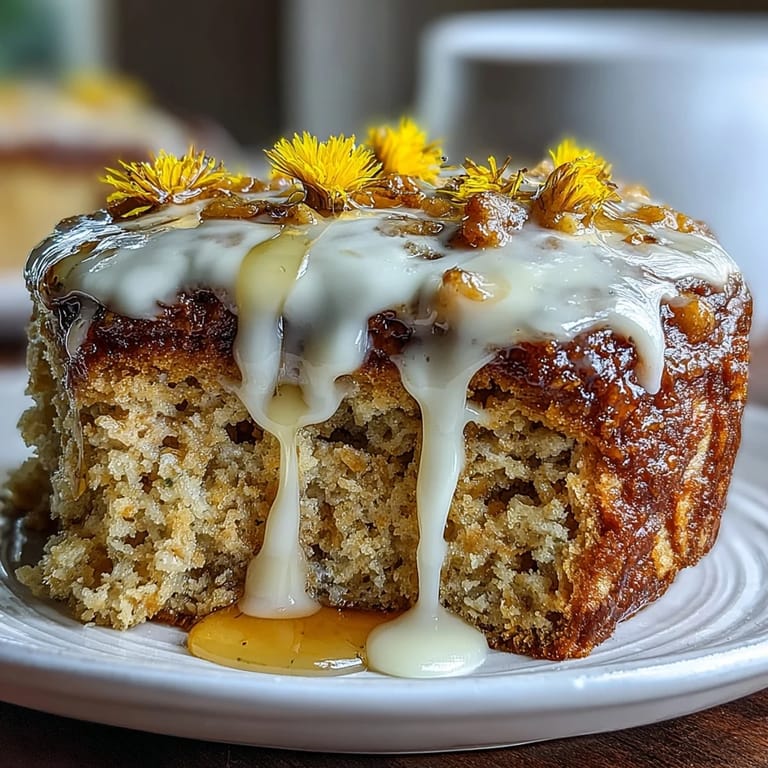
- While they're still warm, drizzle with honey and scatter a few more dandelion petals over top for color and a whisper of that floral note. Serve immediately with clotted cream and let people understand why spring deserves to taste like this.
 Save
Save There's a moment right when you pull these from the oven where the kitchen smells so good that everyone in the house suddenly remembers they're hungry and gathers without being called. That's when you know you've made something worth making.
The Dandelion Question
People always hesitate when I mention dandelions, worried they'll taste like a lawn or something faintly wrong. The truth is that a fresh, unopened dandelion flower has a mild, slightly sweet, almost honey-like quality that's nothing like the bitter greens. The key is picking only the golden, fully opened yellow petals and leaving everything else behind; it's the difference between a delicate garnish and a mistake you can taste.
Timing and Temperature
These scones demand that everything be cold—your butter, your milk, even your hands if they run warm—because those cold pockets of fat create steam that lifts and separates the dough into flaky layers. If your kitchen is warm, chill your bowl and even your flour for a few minutes before starting. The oven temperature matters equally; at 400°F you get that golden exterior while the inside stays tender, and even 25 degrees off makes a noticeable difference.
Make Them Your Own
Once you've mastered the base recipe, you can play with it in gentle ways that still honor what makes these special. Swap the dandelion for other edible flowers like violets or primroses, use lavender honey if you want something more perfumed, or add a touch of lemon zest for brightness. The real magic here is understanding that scones are a canvas, not a rigid formula.
- Toast the dandelion petals lightly in a dry pan before using them to deepen their flavor if you want something more pronounced.
- Make these the morning of your brunch rather than the day before; day-old scones lose their steam and become dense and forgettable.
- If clotted cream isn't available, mascarpone mixed with a tiny bit of honey gets you surprisingly close to that luxurious, tangy richness.
 Save
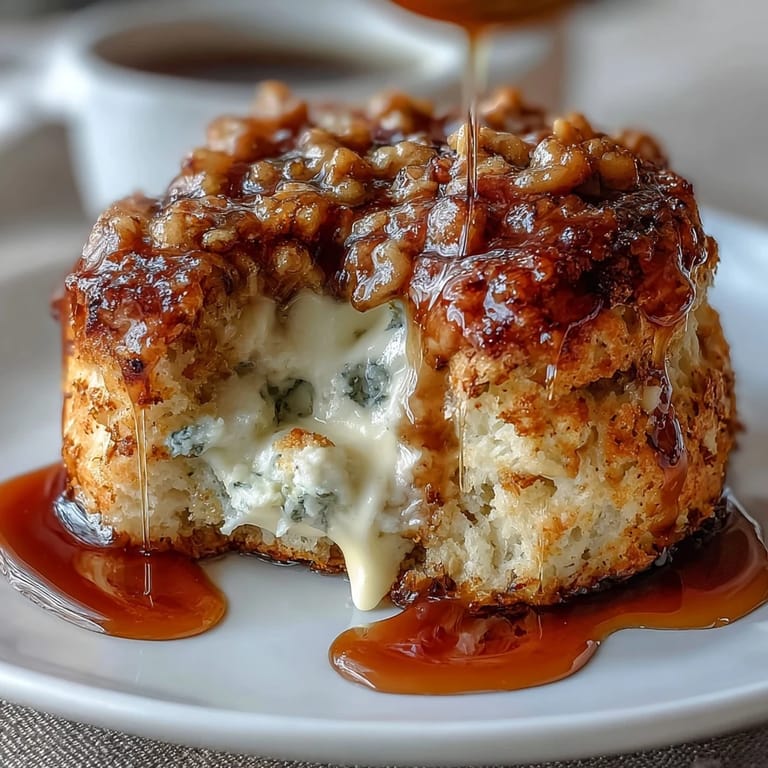
Save Spring brunch is about more than food; it's about stepping outside after months of cold and making something that tastes like you've been paying attention. These scones do that beautifully.
Recipe FAQs
- → Can I use dried dandelion petals instead of fresh ones?
Fresh petals offer the best floral aroma and texture; dried petals may lack that brightness and could affect the flavor balance.
- → What can I substitute for clotted cream when serving?
Whipped cream or mascarpone make excellent alternatives and maintain a rich, creamy complement to the scones.
- → How do I ensure the scones stay tender and flaky?
Use cold butter and mix the dough gently without overworking to preserve a light, crumbly texture.
- → Is there a best way to store leftover scones?
Keep them in an airtight container at room temperature for up to two days, or freeze to extend freshness.
- → What beverages pair well with these scones?
Floral white teas or light sparkling wines complement the honey and dandelion flavors beautifully.