 Save
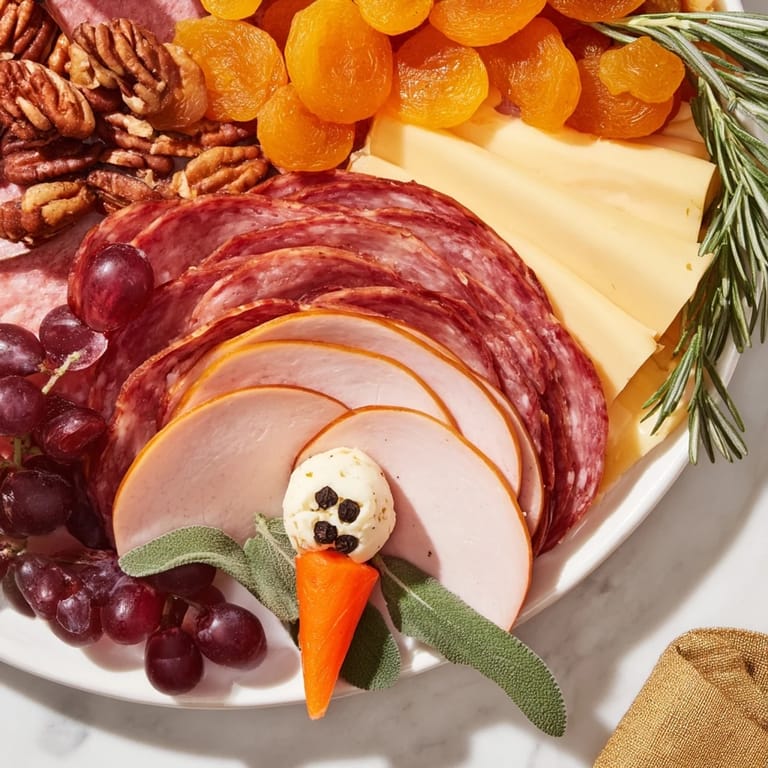
Save I'll never forget the Thanksgiving when my sister arrived with this stunning turkey tail charcuterie board. I was expecting the usual relish tray, but instead, she unveiled this masterpiece that looked like an actual turkey had somehow landed on our table. The meats and cheeses fanned out in perfect overlapping rows, the golden cheese ball nestled at one end with peppercorn eyes staring back at us. That moment taught me that sometimes the most memorable dishes aren't complicated—they're just thoughtfully arranged with a touch of playful creativity. I've recreated it every Thanksgiving since, and it never fails to be the first thing guests gather around.
I remember my nephew asking if the cheese ball turkey was real before biting into it, and the table erupted in laughter. That's when I realized this board isn't just food—it's entertainment. It gives people something to talk about while they're picking and snacking, turning an appetizer into a moment of connection.
Ingredients
- Smoked turkey breast, thinly sliced (100 g): This is your star player. Ask the deli counter to slice it paper-thin so it fans beautifully and has that silky texture that melts on your tongue.
- Salami, thinly sliced (100 g): I learned to buy the good quality stuff because the thin slices really let you taste the difference. It adds a salty punch that cuts through the richness of the cheeses.
- Prosciutto, thinly sliced (100 g): If you can find it, this is worth the splurge. It drapes like silk and looks elegant as it curves along the board.
- Sharp cheddar, sliced (150 g): The sharpness is key here—it needs to stand up to the salty meats without getting lost. I prefer blocks that I can slice myself for better control.
- Swiss cheese, sliced (100 g): The holes in Swiss make it visually interesting and add a mild sweetness that balances everything else.
- Gouda, sliced (100 g): This is the creamy bridge between sharp cheddar and Swiss. It adds richness and a subtle smokiness that echoes the turkey.
- Round butter crackers (1 cup): These are sturdy enough to hold a pile of meat and cheese without crumbling, and their neutral flavor doesn't compete.
- Whole wheat crackers (1 cup): For variety and a nuttier note that pairs beautifully with the gouda.
- Seeded baguette slices (1 cup): I toast these lightly before arranging them—it keeps them from getting soggy if anyone dips them in anything.
- Dried apricots (1/2 cup): They add a pop of color and a sweet-tart contrast that's essential for balance.
- Red grapes (1/2 cup): Fresh fruit brightens the whole board and gives people a palate cleanser between bites of rich cheese.
- Pecan halves (1/2 cup): Toasting them first, even just for a minute, brings out their buttery flavor and makes them smell incredible.
- Fresh rosemary sprigs: More than just decoration—when people brush past them while grabbing food, their hands pick up the fragrance, which adds to the sensory experience.
- Fresh sage leaves: I learned that sage is the secret ingredient that makes people say, 'What is that amazing smell?' without quite being able to identify it.
- Small round cheese ball (for the head): This is your canvas for creativity. A simple herb-coated ball works, or you can use a small wheel of brie or goat cheese.
- Black peppercorns (2 whole): Don't use ground pepper—the whole corns sit perfectly in the cheese ball and actually look like eyes.
- Small piece of red bell pepper (for wattle): The bright red is unmistakably festive and adds that final touch of personality to your turkey character.
- Thin carrot slice (for beak): A raw slice works fine, but I sometimes blanch it for 30 seconds to soften it slightly and make it more pliable for shaping.
Tired of Takeout? 🥡
Get 10 meals you can make faster than delivery arrives. Seriously.
One email. No spam. Unsubscribe anytime.
Instructions
- Start with your canvas:
- Choose a large board—you want plenty of room to really let the fan pattern breathe. I use a round wooden one because it naturally guides the eye around the arrangement. Clean it well and make sure it's completely dry before you start, or everything will slip around.
- Create the tail base:
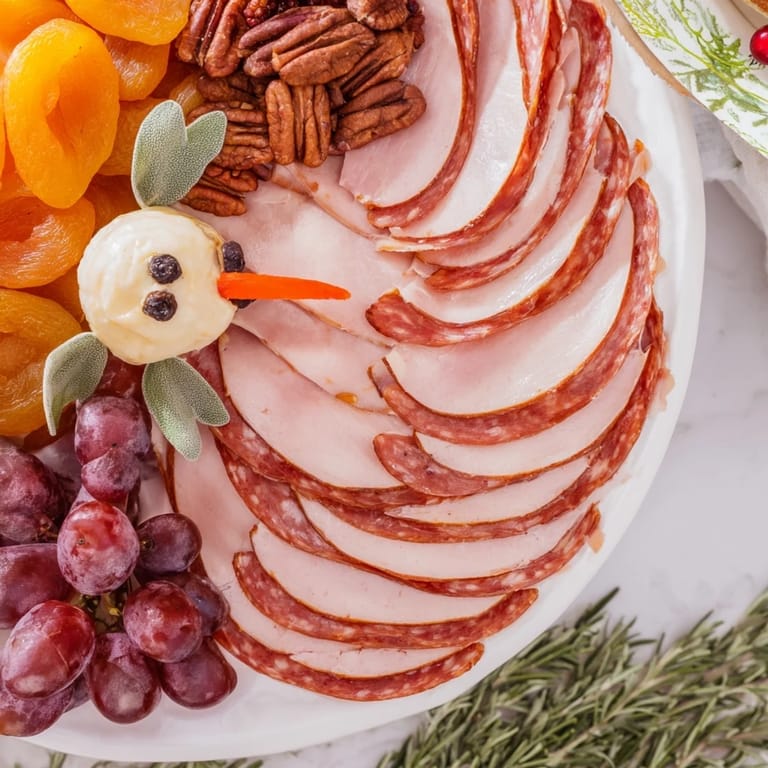
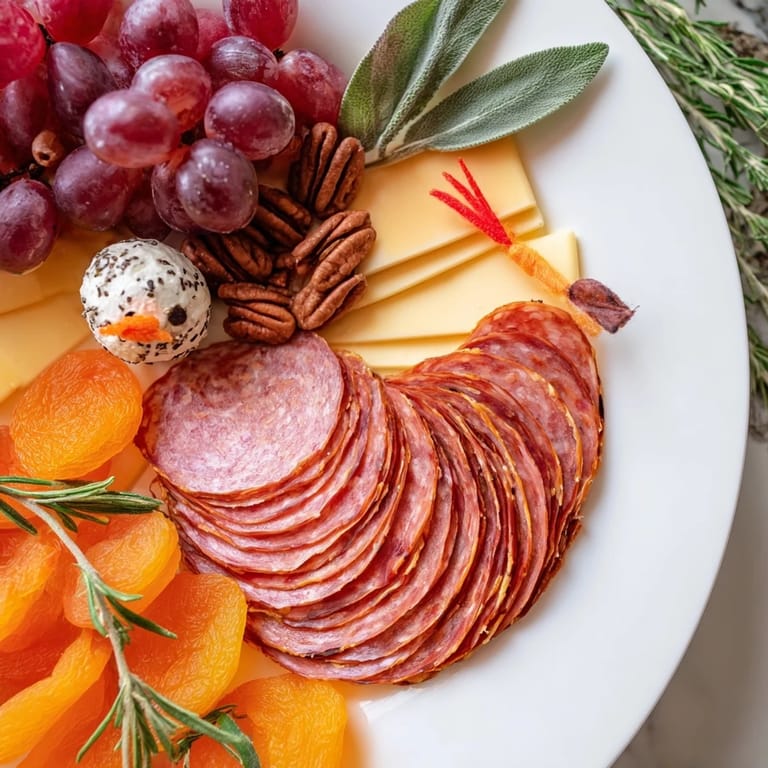
- This is where the magic happens. Start at the top of your board and layer the smoked turkey, salami, and prosciutto in gently overlapping rows, working downward and outward. Think of how a turkey's tail feathers fan open—each row should curve slightly, getting wider as you go down. Let each slice overlap the one before by about half. Your hands should work gently here, almost like you're conducting an orchestra.
- Build the color and texture:
- Now add your crackers and cheese slices in rows beneath the meats, following the same fanning pattern. Alternate between your three cheese varieties and your two cracker types so no two similar items sit right next to each other. This is where you create visual rhythm—the contrast keeps eyes moving around the board.
- Scatter the jewels:
- In the curves and spaces between your neat rows, nestle clusters of apricots, grapes, and pecans. Don't overthink this part—scattered feels more inviting than perfectly placed. The grapes should nestle into little pockets, and the apricots should peek out like little treasures someone's about to discover.
- Add the greenery:
- Tuck your rosemary and sage sprigs along the base of the tail and in any gaps that need softening. This is the garnish that transforms food into art and your board into a forest scene.
- Craft the turkey's personality:
- Position your cheese ball at one end of the board where it becomes the head. This is your moment to have fun. Press your peppercorns into the cheese ball for eyes, position the red bell pepper piece below for the wattle (the dangly bit turkeys have), and lay your carrot slice at the front for the beak. Step back—you should feel delighted by what you've created.
- Final touches and presentation:
- Give everything a final look. Are there any gaps that feel empty? Fill them with an extra grape or a rosemary sprig. Does the board feel balanced visually from every angle? Rotate it and check. When you're satisfied, serve it immediately—charcuterie is best when the cheeses are still cool and the crackers are still crisp. Make sure your guests have room to reach everything without having to climb over the turkey's tail.
 Save
Save There's something almost sacred about that moment when the last guest reaches for their last piece and realizes they're going to miss this edible art. That's when you know you've done something special—created something that nourishes both the stomach and the spirit.
Adapting for Your Crowd
The beauty of this board is that it's a template, not a mandate. If you're cooking for vegetarians, skip the meats entirely and double up on cheeses and nuts—add some roasted vegetables like red peppers, zucchini ribbons, and roasted asparagus for texture and substance. For a gluten-free table, swap your crackers and baguette slices for gluten-free alternatives (I've found that seed crackers actually look better on the board anyway). The board works just as beautifully, and honestly, some guests appreciate the thoughtfulness of adjusting for their needs more than they appreciate the fancy meats.
The Story Behind Turkey Tail Boards
These boards became a thing in the last few years, and I think it's because we're all craving more playfulness in how we eat and celebrate together. Charcuterie has always been about abundance and generosity, but adding the turkey tail shape transforms it from just food into storytelling. Every time I make one, I remember that Thanksgiving when my sister taught me that presentation isn't shallow—it's actually an act of love, a way of saying 'I spent time thinking about how to delight you.'
Wine and Drink Pairings
This board pairs beautifully with wines that have good acidity to cut through the richness of cheese and cured meats. A crisp Sauvignon Blanc is my go-to because it's refreshing and won't overpower the delicate flavors you've worked to arrange. If your crowd prefers reds, a light Pinot Noir works beautifully. For non-alcoholic options, sparkling apple cider echoes the season and adds a festive touch without competing with the food. I've learned that whatever you serve, keep it chilled and offer plenty of it—people drink more when they're standing and grazing.
- Sauvignon Blanc stays crisp and bright alongside salty meats and creamy cheeses
- Sparkling apple cider feels celebratory and keeps the focus on the food itself
- Still water with lemon is underrated and lets people cleanse their palates between bites
 Save
Save Every time I make this board, I remember why I love cooking for people. It's not about perfection—it's about creating a moment where everyone feels welcomed and delighted. This turkey tail board does exactly that.
Recipe FAQs
- → How do I arrange the meats to mimic the turkey tail?
Layer the sliced meats in overlapping rows in a sweeping semicircle along the upper half of your serving board to resemble fanned tail feathers.
- → What cheese varieties work best for this board?
Sharp cheddar, Swiss, and gouda sliced thinly provide a balanced mix of flavors and textures that complement the meats and crackers.
- → Can I make this board vegetarian-friendly?
Yes, omit the meats and substitute with roasted vegetables or extra cheese varieties to maintain variety and appeal.
- → What fruits and nuts add the best contrast?
Dried apricots, red grapes, and pecan halves introduce sweet and crunchy elements that enhance the savory components.
- → How do I create the turkey's head decoration?
Place a small round cheese ball at one end of the board and decorate it with peppercorns for eyes, a red bell pepper piece for the wattle, and a thin carrot slice for the beak.
- → Any tips for serving this charcuterie board?
Serve immediately on a large board ensuring guests can easily access meats, cheeses, fruits, and crackers. Pair with light white wine or sparkling cider.