 Save
Save The first time I made lahmacun, I was standing in my friend Ayşe's kitchen on a Friday evening, watching her roll out impossibly thin circles of dough with the kind of practiced ease that only comes from making something hundreds of times. She'd invited me over casually, almost apologetically, saying she was just making "something simple for dinner," but when those golden, crispy flatbreads came out of the oven, still warm and fragrant with cumin and paprika, I understood why this humble street food holds such a place in Turkish hearts. Now whenever I make it, I chase that same magic—that moment when thin dough transforms into something unexpectedly special.
I remember bringing a batch to a potluck and watching them disappear faster than everything else on the table—someone asked if they were store-bought, which I took as the highest compliment possible. My neighbor, who'd grown up in Istanbul, tasted one and got quiet for a moment, then asked if I'd learned this "the right way," and I realized how much these little flatbreads meant to people, how they held memories of Istanbul street corners and family tables.
Ingredients
- All-purpose flour (300 g): The foundation of everything—this amount gives you enough dough for 8 generous lahmacuns without being unwieldy, and all-purpose flour strikes the right balance between structure and tenderness.
- Warm water (180 ml): Temperature matters here more than you'd think; too hot and you'll wake the yeast too quickly, too cool and nothing happens.
- Instant yeast (1 tsp): Just enough to give you a gentle rise without overwhelming the delicate flavor of the dough itself.
- Olive oil (2 tbsp for dough, 2 tbsp for topping): This is where richness comes from—don't skip it or use a substitute, because the flavor is essential to the final result.
- Ground lamb or beef (300 g): Lamb is traditional and brings a deeper, more complex flavor, but beef works beautifully too and is often more accessible; choose whichever speaks to you.
- Onion, garlic, tomato, and red bell pepper (finely chopped): These vegetables create the aromatic base, and the finer you chop them, the better they integrate into the topping and cook evenly.
- Tomato paste (2 tbsp): This concentrated flavor is your secret weapon—it adds depth without making the topping wet.
- Fresh parsley (2 tbsp): Save some extra for garnishing at the end; the brightness of fresh herbs is what lifts the whole dish.
- Cumin and paprika (1 tsp each): These spices are the soul of the dish, warming and familiar, and they bloom beautifully when mixed into the raw meat mixture.
- Chili flakes (1/2 tsp optional): Add these only if you like a gentle heat; they're optional but they do add an interesting warmth that makes people ask what they're tasting.
Tired of Takeout? 🥡
Get 10 meals you can make faster than delivery arrives. Seriously.
One email. No spam. Unsubscribe anytime.
Instructions
- Mix your dough foundation:
- Combine flour, sugar, and salt in a large bowl, then dissolve your yeast in warm water and let it sit for a minute—you'll see it start to foam, which is a good sign. Add this to the dry ingredients along with olive oil and mix until everything comes together into a shaggy dough.
- Knead until smooth:
- Work the dough for 5-7 minutes, either by hand or machine, until it becomes soft and smooth; you'll feel when it's ready because it'll stop being sticky and start feeling almost silky. Cover it and let it rise for 30 minutes in a warm spot until it's visibly puffy and about doubled in size.
- Build your meat topping:
- In another bowl, combine the ground meat with your chopped vegetables, tomato paste, fresh parsley, and all the spices, mixing with your hands until everything is evenly distributed and the mixture looks uniform. This hands-on approach helps you feel when the ingredients are properly combined.
- Heat your oven aggressively:
- Set it to 250°C (480°F) or the highest setting you have, and put your pizza stone or baking tray inside to heat up—this preheating is crucial because you want maximum heat to crisp the dough quickly. If you don't have a stone, a sturdy baking tray works fine, but make sure it's hot.
- Shape your lahmacuns:
- Divide your risen dough into 8 pieces and roll each one on a lightly floured surface into a very thin oval or round, about 20 cm across—this takes practice, so don't worry if the first few aren't perfect. The thinner you can get them, the crispier they'll be.
- Top with meat:
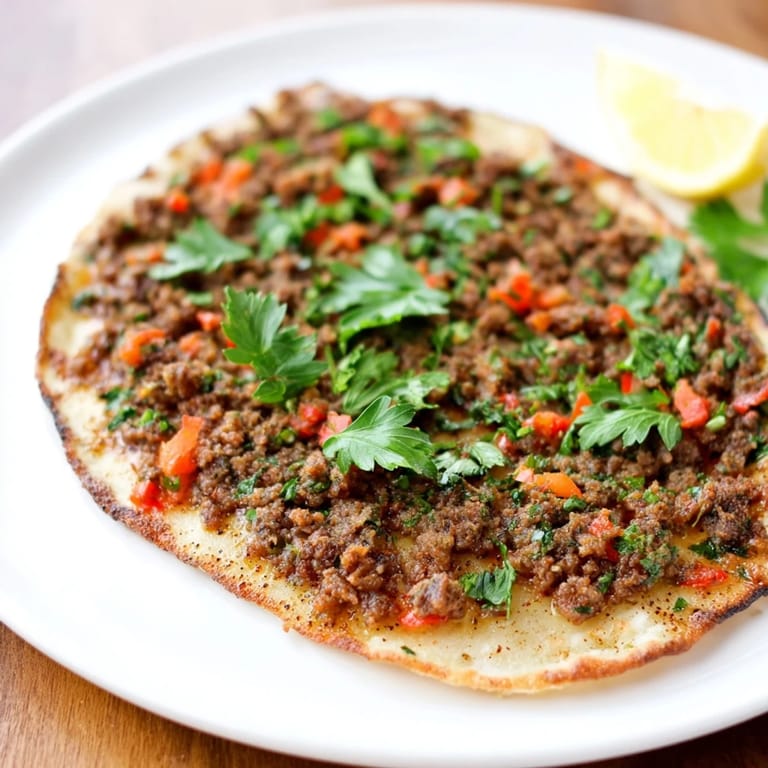
- Spread a thin, even layer of your meat mixture over each dough round, leaving a tiny border around the edges so the dough can puff slightly and get crispy. Don't overload them or the topping will slide off as it cooks.
- Bake until golden and fragrant:
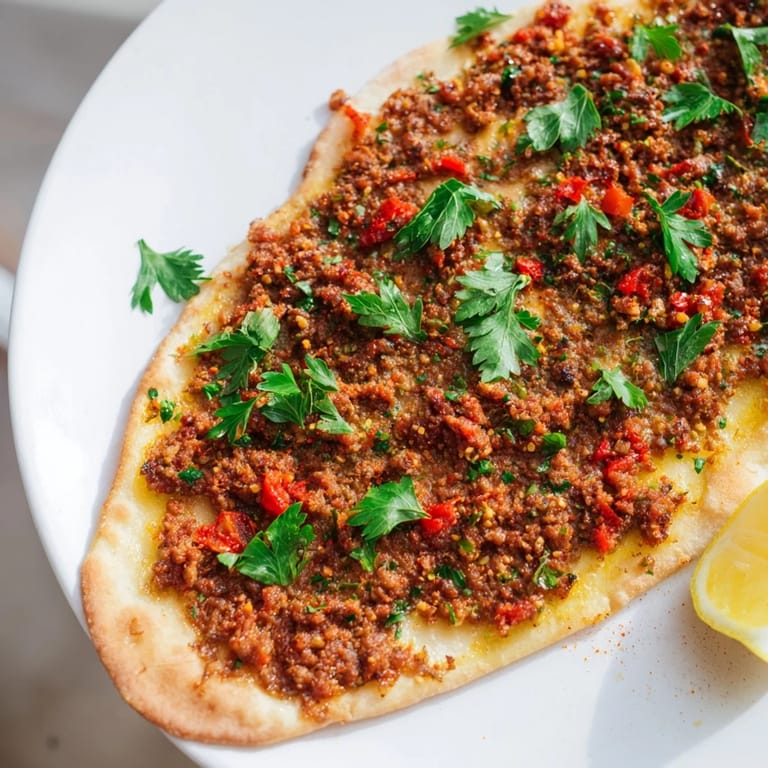
- Carefully transfer your topped dough to the hot baking tray or stone and bake for 6-8 minutes until the edges are deeply golden and crisp and the meat topping looks cooked through. You'll know they're ready when the aroma fills your kitchen and you can smell the cumin and paprika dancing together.
- Serve immediately and celebrate:
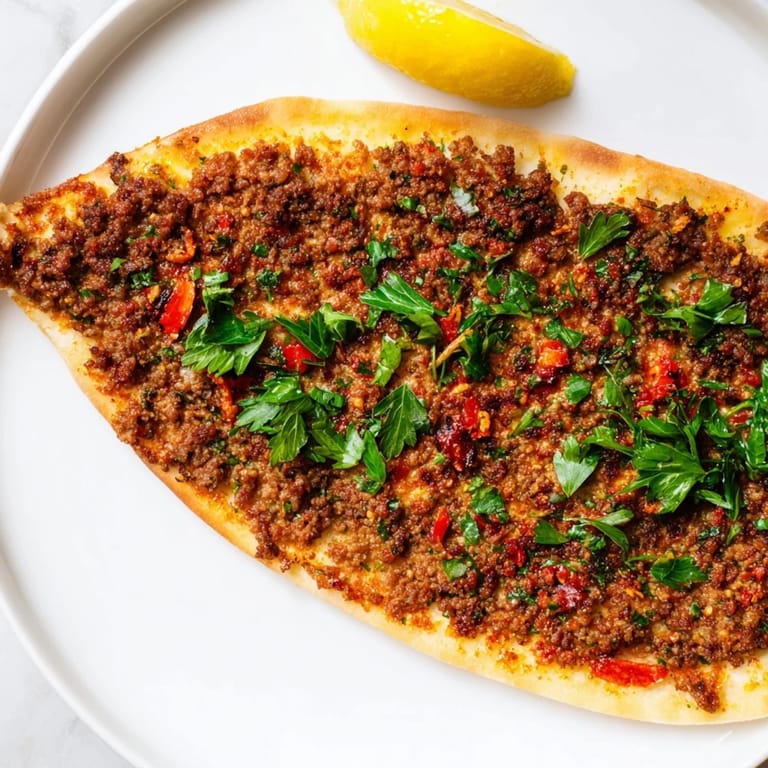
- Pull them from the oven and garnish with fresh parsley and a squeeze of lemon juice, which brightens everything instantly. If you like, add some thinly sliced onions and a pinch of sumac for extra brightness and texture.
 Save
Save I'll never forget the quiet moment when my partner tried one of my lahmacuns for the first time and wordlessly reached for another, then asked me to make them every week going forward. It's rare when something so simple—dough, meat, spices, lemon—becomes a reason people want to gather around your kitchen.
Rolling Dough Thin Takes Courage
The first few times I made lahmacun, I was terrified of tearing the dough, so I rolled it thick and safe, which meant I didn't get that ideal crispy-to-tender ratio. Once I stopped being precious about it and embraced the possibility of a small tear here and there, everything changed—turns out thin dough is more forgiving than you'd expect, and even if you do get a tiny hole, it cooks just fine. The secret is confidence and a light hand with the rolling pin; let the dough relax between rolls if it springs back.
Customize How You Serve
Turkish tradition has you roll each lahmacun around fresh herbs, sliced onions, tomatoes, and cucumbers, which transforms it into a handheld adventure where everyone builds exactly what they want. Some people squeeze lemon first, others add a pinch of sumac for tartness, and I've had friends who insisted on a dollop of yogurt on the side. The beauty is that there's no one right way to eat it—just serve your lahmacun warm and let people make it their own.
Why This Works as a Weeknight Dinner
Between the 30-minute dough rise and 8-minute bake time, you're looking at roughly 45 minutes of actual time investment, which means lahmacun fits perfectly into a busy evening when you still want something that tastes like you cared. The meat topping can be prepped while your dough rises, and once you've made it once, your hands know what they're doing and the whole process becomes almost meditative.
- Pair these with a simple salad and some ayran (Turkish yogurt drink) or a light wine for a meal that feels complete and special.
- Lahmacun also freezes beautifully if you want to make a double batch—just let them cool, stack them with parchment between each one, and reheat them in a hot oven until crispy again.
- Leftover toppings keep in the fridge for a few days and work wonderfully stuffed into peppers or mixed into grain bowls the next day.
 Save
Save Making lahmacun connects you to something much older and wider than yourself—these flatbreads have fed people across Turkey, the Levant, and beyond for centuries, and every time you make them, you're part of that conversation. There's something grounding about that.
Recipe FAQs
- → What type of meat is used for the topping?
Ground lamb or beef is typically combined with spices and vegetables for a flavorful meat topping.
- → How thin should the dough be rolled?
The dough is rolled into thin rounds about 20 cm (8 in) in diameter for a crisp texture.
- → Can this dish be made vegetarian?
Yes, substitution of the meat with a minced mixture of mushrooms and walnuts offers a delicious vegetarian option.
- → What is the ideal baking temperature?
Baking at 250°C (480°F) or the highest oven setting ensures a crispy base and well-cooked topping.
- → What sides pair well with this flatbread?
Lemon wedges, fresh parsley or mint, sliced onions with sumac, ayran, or light red wine complement the flavors effectively.