 Save
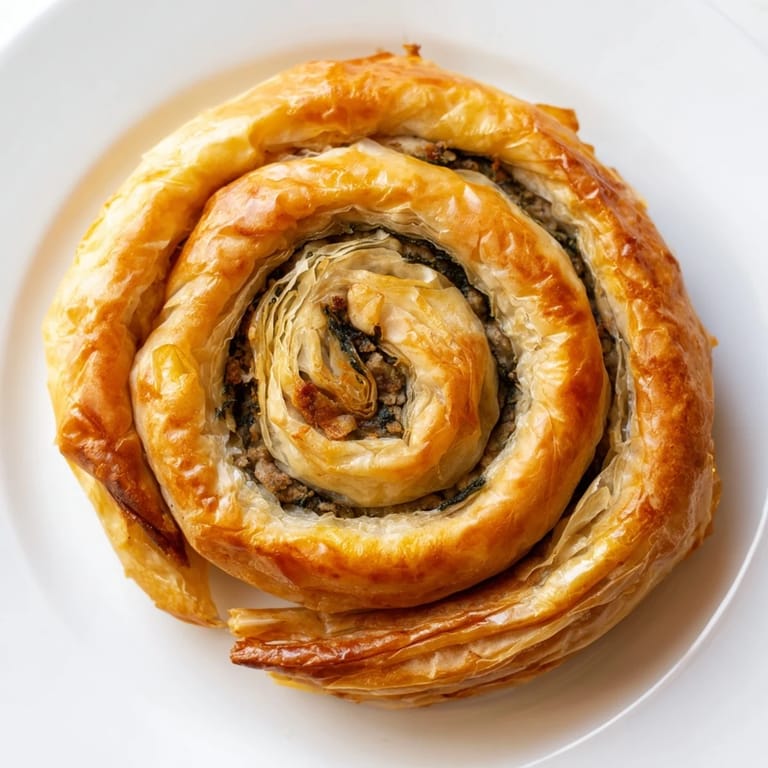
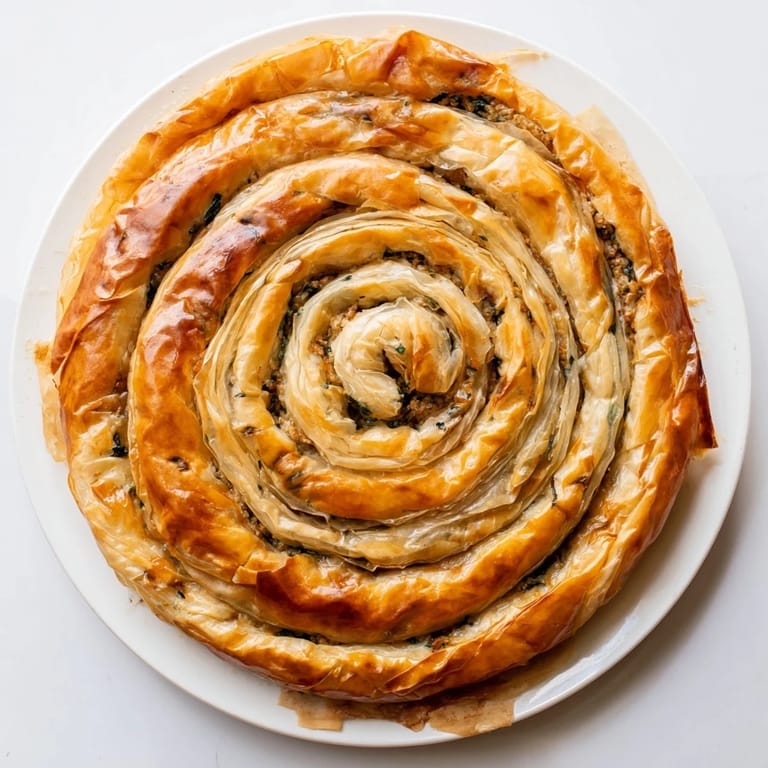
Save My first burek came straight from my neighbor's kitchen, still steaming in a paper-lined container she'd balanced carefully on my doorstep. The golden spiral caught the afternoon light, and when I broke off a piece, the phyllo shattered like parchment under my fingers while the filling—beef and spinach melded into something savory and deeply comforting—melted into warmth. She'd mentioned it casually over the fence, and suddenly I was determined to understand how something so delicate could hold such bold flavors. That first bite changed how I thought about pastries entirely, moving them beyond dessert into something worthy of a full meal and genuine hunger.
I remember making this for my sister's last-minute lunch party, stressed about timing and whether the phyllo would cooperate with my hands still shaky from coffee. But something shifted when I got into the rhythm of brushing and layering—the kitchen filled with the smell of butter hitting heat, and suddenly I wasn't nervous anymore, just present. She kept coming into the kitchen asking when it would be ready, and by the time it came out golden and perfect, everyone was genuinely impressed. That's when I realized burek could be my secret weapon for moments when I wanted to feel competent and generous at the same time.
Ingredients
- Ground beef: The 80/20 ratio gives you enough fat to keep everything tender and flavorful without making the filling greasy or heavy.
- Fresh spinach: Chopped and raw—it releases moisture as it cooks, which is exactly what you want to marry the beef together.
- Onion and garlic: Finely chopped so they distribute evenly and cook down into the filling without any sharp raw notes.
- Salt, black pepper, paprika: These three are the backbone, with paprika adding a warmth that feels almost protective.
- Phyllo pastry sheets: Let them thaw fully before opening the package, or they'll crack and frustrate you—I learned this the hard way.
- Unsalted butter and vegetable oil: Together they create a brushable mixture that doesn't smoke and crisps the pastry perfectly.
- Yogurt and water: Optional but worth it—they create a final glossy layer that promotes that shattering crunch.
Tired of Takeout? 🥡
Get 10 meals you can make faster than delivery arrives. Seriously.
One email. No spam. Unsubscribe anytime.
Instructions
- Get your oven and workspace ready:
- Heat to 190°C and line a baking tray with parchment—this prevents sticking and makes cleanup almost painless. Having everything prepared before you touch the phyllo is the difference between smooth and chaotic.
- Build the filling:
- Combine beef, spinach, onion, garlic, and seasonings in a large bowl, mixing until everything is evenly distributed. You're aiming for no clumps of meat or raw garlic—one thorough mix now saves awkward bites later.
- Prepare your butter mixture:
- Melt the butter and stir in the vegetable oil in a small bowl. This combination brushes on smoothly and prevents the pastry from burning while keeping it properly hydrated.
- Layer and brush the phyllo:
- Place one sheet on your work surface, brush lightly with the butter mixture, add another sheet, brush again, and repeat to build 2-3 layers. The butter wants to go on thin—just enough to glisten, not pool.
- Fill and roll:
- Spread a thin, even line of filling along one long edge, leaving a border so nothing spills out when you roll. Roll tightly from that filled edge, keeping tension as you go so nothing shifts inside.
- Form the spiral:
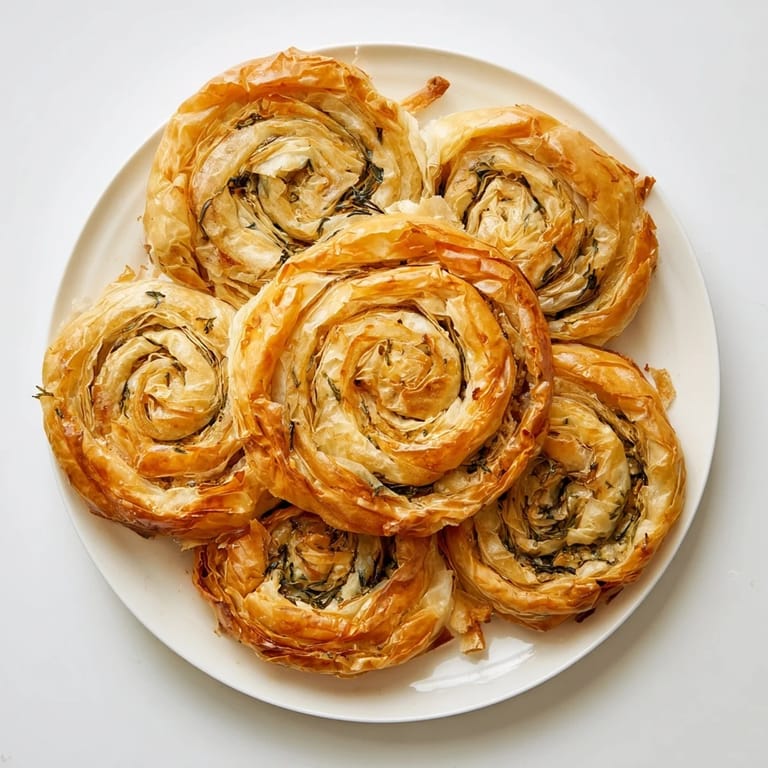
- Coil your roll gently like a snail shell, letting it settle naturally on the baking tray. If you're making multiple smaller spirals instead of one large one, space them so the heat circulates around each one.
- Final brush and optional yogurt wash:
- Generously coat the tops with remaining butter-oil mixture. If using the yogurt-water mixture, brush it on last for extra crispness and a subtle sheen.
- Bake to golden perfection:
- 35-40 minutes at 190°C until the pastry is deeply golden and you can hear it crackle slightly if you touch it. The edges will look darker than the center, which is exactly right.
- Rest before serving:
- Let it cool for 10 minutes so the filling sets and the layers don't collapse when you cut through them. Slice with a sharp knife using gentle downward pressure rather than sawing.
 Save
Save There's a moment, about halfway through baking, when the kitchen fills with a smell so rich and savory that everyone stops what they're doing. Someone always wanders in asking how much longer, and you know right then that this isn't just dinner—it's becoming a memory they'll bring up months later, asking if you'll make it again.
Serving and Pairings
Burek tastes best warm, cut into wedges and served with a dollop of plain yogurt or a crisp cucumber salad that cuts through the richness. I've also served it at room temperature for casual lunches, and it holds up beautifully—the filling stays flavorful and the pastry only softens slightly, which some people actually prefer. A simple green salad with lemon vinaigrette is my go-to because it feels like the balance the dish deserves.
Making It Your Own
Ground lamb or a beef-lamb blend pushes the flavor deeper and more complex if you want something richer. For vegetarian guests, skip the meat entirely and crumble tangy feta through the spinach—it creates a different dish but equally memorable. I've also experimented with adding a touch of cinnamon or a handful of fresh dill, and while that's stepping outside tradition, it's reminded me that good recipes are invitations to play, not rigid rules.
Storage and Make-Ahead Tips
Burek keeps beautifully—wrapped and refrigerated, it'll last three or four days, and reheating in a 160°C oven for 10-15 minutes brings back most of that original crispness. You can also assemble it completely, cover it tightly, and refrigerate overnight before baking, which is perfect if you're planning ahead. Freezing works too, though I find it's best enjoyed fresh or within a day, when the contrast between pastry and filling is most pronounced.
- Let it cool completely before wrapping for storage to prevent condensation from making the phyllo soggy.
- Reheat gently and slowly rather than blasting it with high heat, which can make the phyllo shatter before the inside warms through.
- If you're doubling the recipe for freezing, assemble everything before baking and label it clearly so you remember how long it's been in there.
 Save
Save Every time I make this, I'm struck by how something so labor-intensive to eat—all those delicate layers you have to work through—somehow tastes like comfort and effort combined. It's the kind of dish that reminds you why cooking for people matters.
Recipe FAQs
- → What type of meat is best for the filling?
Ground beef with an 80/20 lean-to-fat ratio is recommended for moist, flavorful filling; lamb or a beef-lamb mix can be used for richer taste.
- → How do I keep the phyllo sheets from drying out?
Cover phyllo sheets with a damp towel while assembling to maintain flexibility and prevent cracking.
- → Can I make a vegetarian version?
Yes, replace the meat with crumbled feta cheese and keep the spinach for a flavorful vegetarian variation.
- → What is the purpose of butter and oil in this dish?
Brushing phyllo with a butter and vegetable oil mixture adds richness, keeps layers separate, and creates a crispy, golden crust.
- → How is the pastry shaped before baking?
The filled phyllo sheets are rolled into a log, then coiled into a spiral shape, either as one large coil or multiple smaller ones on a tray.
- → What side dishes pair well with this pastry?
Serve alongside plain yogurt or a simple cucumber salad to complement the rich, savory flavors.