 Save
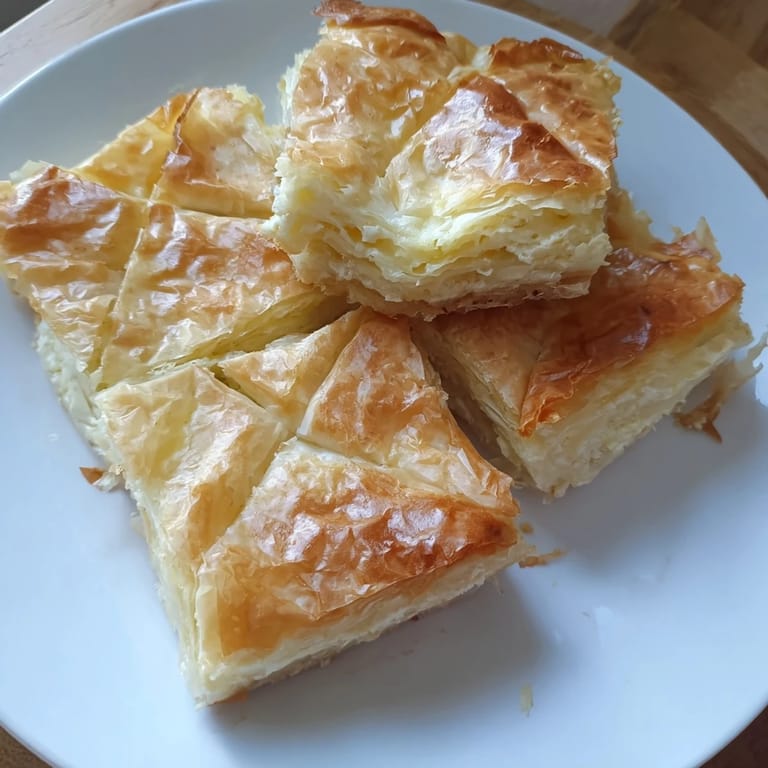
Save The first time I truly understood banitsa was at my neighbor's kitchen table on a sleepy Sunday morning, watching her pull a golden, crackling pastry from the oven while steam rose like small clouds. She cut it into neat squares and poured her homemade ayran over ice, and suddenly I realized this wasn't just breakfast—it was a ritual, a moment of quiet pride in something made with her own hands. I've been chasing that feeling ever since, layer by buttery layer.
Years later, I made this for a potluck and watched people's faces light up when they bit into a still-warm square—that buttery crunch followed by the soft, salty cheese sent everyone back for seconds. My grandmother called it "peasant food made noble," and she was right; there's something deeply satisfying about how simple ingredients transform into something that feels fancy without pretense.
Ingredients
- Feta cheese, crumbled (400 g): Use a good quality feta that's tangy but not overly salty, as it carries the entire soul of this dish.
- Plain yogurt (250 ml): The yogurt binds everything and adds that signature creamy-yet-sharp tang that makes people ask what your secret is.
- Eggs (4 large): They transform the filling from a dry mixture into something custardy and luxurious as it bakes.
- Phyllo dough (about 400 g, thawed): Room-temperature phyllo is infinitely easier to work with than cold, and it's far less likely to tear.
- Unsalted butter, melted (60 g): Brush it generously between layers—this is where the magic crispiness comes from.
- Whole milk (50 ml): It softens the filling slightly and helps the eggs cook through evenly without drying out.
- Salt (1/2 tsp) and freshly ground black pepper (1/4 tsp): Season thoughtfully, remembering the feta is already salty.
Tired of Takeout? 🥡
Get 10 meals you can make faster than delivery arrives. Seriously.
One email. No spam. Unsubscribe anytime.
Instructions
- Get your workspace ready:
- Preheat your oven to 180°C (350°F) and brush a 23 x 33 cm baking dish lightly with melted butter so nothing sticks. Have all your ingredients measured and nearby—phyllo moves fast, and you don't want to be scrambling.
- Make the filling:
- Whisk the eggs with yogurt, milk, salt, and pepper until completely smooth, then gently fold in the crumbled feta until just combined. The gentle hand here matters; you want texture, not a uniform paste.
- Protect your phyllo:
- Unroll the thawed dough and immediately drape a damp kitchen towel over it—even a few minutes of air exposure will make it brittle and impossible to layer. This is non-negotiable.
- Build the base:
- Lay one sheet of phyllo in the dish, brush it lightly with butter, then repeat with three more sheets, buttering each one. The butter is what creates those shatteringly crisp layers you're after.
- Layer and fill:
- Spread about one-quarter of the cheese mixture evenly over your phyllo base, then add three to four more buttered phyllo sheets on top. Repeat this pattern—more phyllo, more butter, more filling—until you've used everything, ending with a final stack of three to four buttered sheets on top.
- Cut before baking:
- Using a sharp knife, cut the entire assembled banitsa into squares or diamonds all the way through. Cutting first prevents the phyllo from shattering everywhere when you try to portion it after baking.
- Finish and bake:
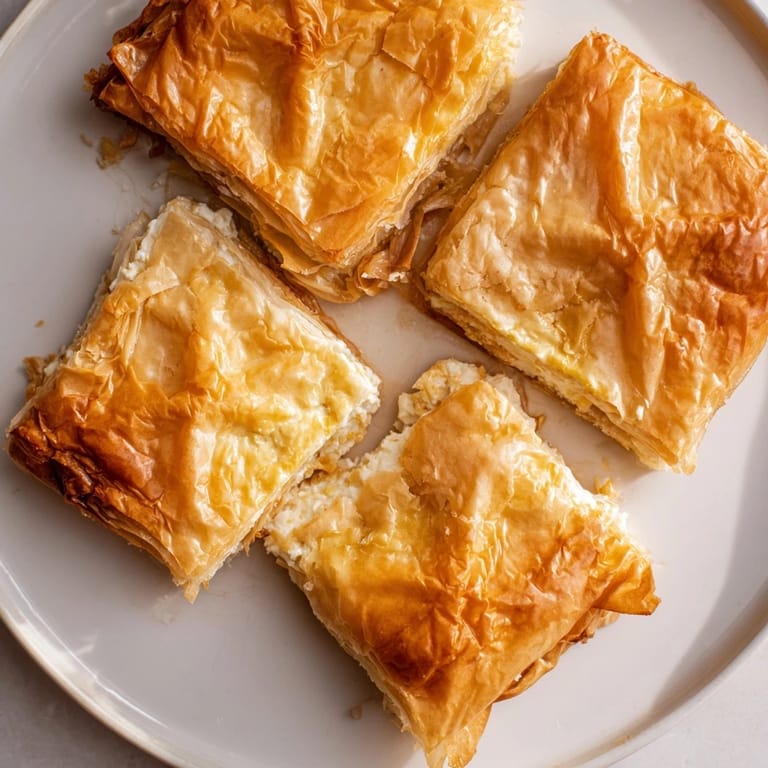
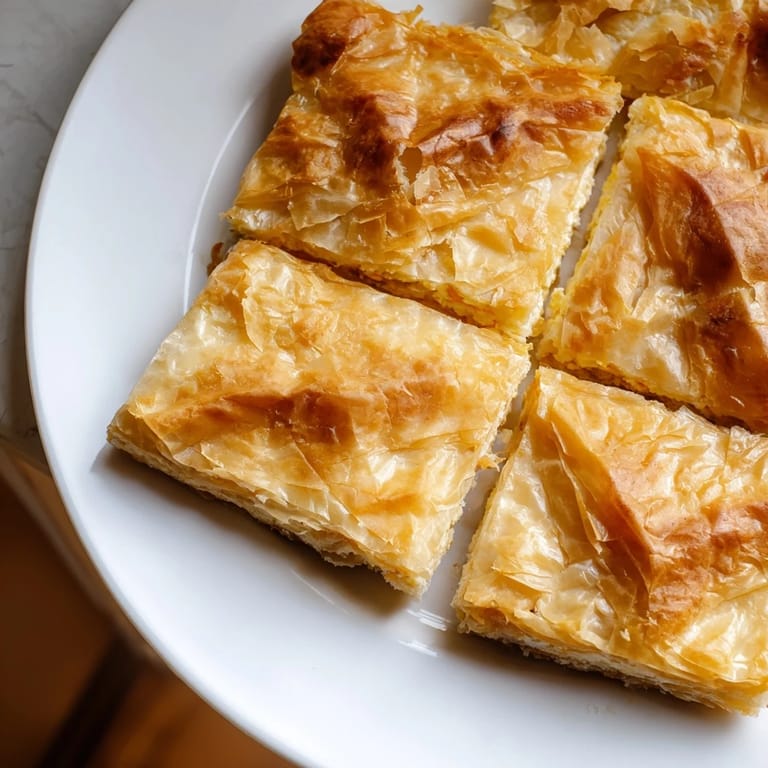
- Pour any remaining melted butter over the top and slide it into the oven for 30–35 minutes, until the top is deep golden and absolutely crispy. You'll know it's ready when the kitchen smells like buttered dreams and you can hear it crackling slightly as it cools.
- Rest before serving:
- Let it cool for 10 minutes—this gives the filling time to set so it doesn't collapse when you pick up a piece. Serve warm or at room temperature, though warm is always better.
 Save
Save I learned the hard way that banitsa is more forgiving of imperfect layers than it is of impatience—torn phyllo sheets still bake beautifully, but skipping the ten-minute rest will leave you with a piping-hot filling that burns your mouth. That moment when you pull it from the oven and hear it crackling in the cooling pan is the moment you know you've nailed it.
The Philosophy of Phyllo
Phyllo dough gets a reputation for being temperamental, but it's really just honest—it wants to be kept cool and covered, and in return it gives you something impossibly thin and crisp that no other dough can match. I used to fight with it, pulling sheets too fast, letting them dry out, cursing under my breath. Once I slowed down and respected what the dough needed, everything changed; now I actually enjoy the meditative rhythm of brushing butter between each delicate layer, watching them stack up into something that will shatter beautifully in someone's mouth.
Making It Your Own
The beauty of banitsa is that it's a canvas for whatever cheese you have or prefer—Bulgarian sirene, ricotta, even a mix of feta and goat cheese all work perfectly. Fresh herbs like dill or parsley scattered into the filling add brightness without changing the essential character of the dish, and I've even experimented with a whisper of nutmeg in the filling, which makes people pause mid-bite and ask what that warmth is. The skeleton of the recipe is sturdy enough to support your creativity while staying true to its roots.
Serving and Pairing
Banitsa reaches its full potential when eaten warm from the oven, maybe still slightly steaming, paired with something cool and tangy—ayran if you can find it, or a simple glass of cold yogurt thinned with water and salted. A crisp tomato-cucumber salad on the side cuts through the richness beautifully, and somehow a simple cup of strong coffee alongside makes the entire experience feel intentional and complete.
- Serve it for breakfast with fresh fruit and a cup of strong coffee, and watch people linger at the table.
- Wrap leftover pieces in foil and reheat gently in a low oven to restore some of the crispiness.
- Make it the night before, refrigerate unbaked, and pop it straight into the oven in the morning for a show-stopping breakfast.
 Save
Save Banitsa is one of those recipes that rewards patience and attention without demanding technical skill, and once you've made it once, you'll understand why it's been feeding Bulgarian families for generations. Make it for someone you care about, and you're not just serving food—you're sharing a little piece of history and comfort.
Recipe FAQs
- → What type of cheese is traditionally used?
Feta cheese is commonly used for its salty, tangy flavor and crumbly texture that combines well with eggs and yogurt.
- → How do I prevent the phyllo dough from drying out?
Cover phyllo sheets with a damp cloth while working to keep them moist and pliable.
- → Can I add herbs to the filling?
Yes, fresh chopped dill or parsley enhances the flavor and freshness of the dish.
- → What is the best way to bake it evenly?
Use a moderate oven temperature around 180°C (350°F) and bake until the top is golden and crisp, approximately 30–35 minutes.
- → How should it be served?
Banitsa is delicious served warm or at room temperature, often accompanied by yogurt drinks or fresh salad.