 Save
Save There's something about the smell of roasting butternut squash that fills a kitchen with instant warmth, even before winter officially arrives. I discovered this soup on an unexpectedly chilly September evening when my farmer's market bag held more squash than my usual recipes could handle. What started as an experiment in using up produce became my go-to comfort in a bowl, something I now make whenever I need the kitchen to feel like a hug. The combination of caramelized sweetness from roasted squash and the subtle earthiness of spices creates something that tastes far more impressive than its straightforward method suggests.
I served this to a friend who'd been under the weather, and watching her expression shift from exhaustion to something lighter as she tasted it reminded me why I love feeding people. She asked for the recipe before finishing her bowl, which meant more than any compliment ever could.
Ingredients
- Butternut squash, 1 medium (about 1.2 kg), peeled, seeded, and diced: Roasting brings out its natural sweetness and deepens the flavor profile in ways raw squash simply cannot achieve.
- Onion, 1 large, chopped: This becomes the aromatic foundation, almost dissolving into the soup and creating a subtle sweetness.
- Carrots, 2 medium, peeled and chopped: They add body and a gentle sweetness that balances the spices beautifully.
- Garlic, 2 cloves, minced: Fresh garlic adds complexity without overpowering the delicate squash flavor.
- Vegetable stock, 800 ml: The liquid foundation that carries all the flavors, so use one you actually enjoy the taste of.
- Coconut milk, 200 ml (or heavy cream for richness): This creates silkiness and adds a subtle sweetness that complements the roasted vegetables perfectly.
- Olive oil, 2 tablespoons: Use good quality oil since its flavor matters here, not hidden under other ingredients.
- Ground cumin, 1/2 teaspoon: This warm spice deepens the earthiness without announcing itself loudly.
- Ground nutmeg, 1/4 teaspoon: A whisper of nutmeg ties everything together with an almost nostalgic note.
- Salt and black pepper, to taste: Season as you go, tasting frequently since coconut milk's sweetness affects how much salt feels right.
- Fresh parsley or coriander, chopped (optional garnish): Adds brightness and a fresh note that cuts through the richness.
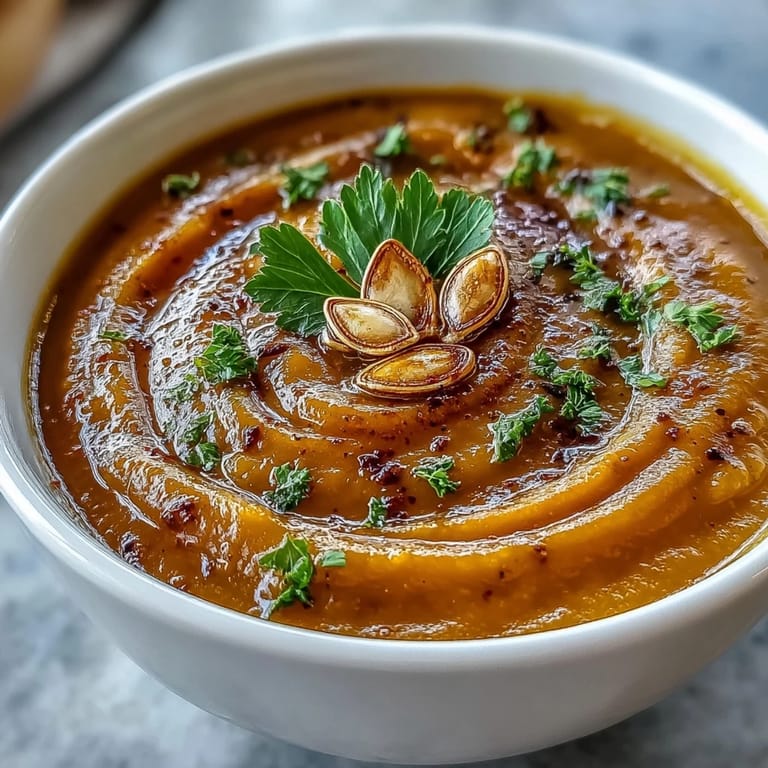
- Toasted pumpkin seeds (optional garnish): They provide texture and a nutty contrast to the silky soup.
Tired of Takeout? 🥡
Get 10 meals you can make faster than delivery arrives. Seriously.
One email. No spam. Unsubscribe anytime.
Instructions
- Get your oven ready and prepare the star ingredient:
- Preheat your oven to 200°C (400°F) and toss your diced butternut squash with 1 tablespoon of olive oil, a pinch of salt, and a grind of pepper. Spread it on a baking tray in a single layer so each piece can caramelize properly.
- Roast until golden and tender:
- Let the squash roast for 25 minutes, until the edges turn golden and the flesh yields easily to a fork. The kitchen will smell incredible, and you'll know it's ready when the pieces have begun to char slightly at the edges.
- Build your aromatic base:
- While the squash roasts, heat the remaining tablespoon of olive oil in a large pot over medium heat and add your chopped onion and carrots. Cook them gently for 5 to 7 minutes, stirring occasionally, until they soften and begin to turn translucent at the edges.
- Wake up the spices:
- Add your minced garlic along with the cumin and nutmeg, stirring constantly for just about 1 minute until the kitchen fills with that toasted, warm aroma. This brief cooking moment is what transforms simple ingredients into something aromatic and special.
- Bring everything together:
- Add your beautiful roasted squash to the pot and pour in the vegetable stock, bringing it to a gentle boil before reducing the heat to a simmer for 10 minutes. This allows all the flavors to meld while the liquid reduces slightly.
- Transform into velvet:
- Remove from heat and carefully blend the soup using an immersion blender until it reaches that silky, luxurious texture, or transfer in batches to a regular blender if that's what you have. Be patient with this step because the smoother you go, the more impressive your soup will be.
- Finish with richness:
- Stir in your coconut milk (or cream) and heat gently without boiling, then taste and adjust your salt and pepper until it feels perfectly balanced to you. Coconut milk adds its own sweetness, so you may need less salt than you'd expect.
- Serve with intention:
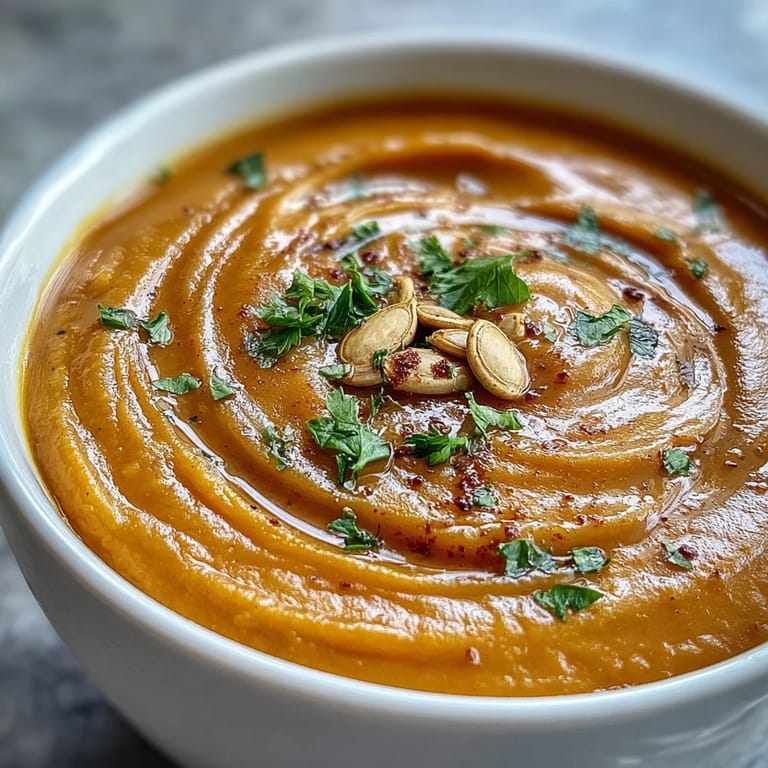
- Ladle into bowls and finish with fresh herbs, toasted pumpkin seeds, and a delicate swirl of coconut milk or cream if you're feeling fancy.
 Save
Save Last winter, I made this soup for a small gathering on a night when snow had just begun falling, and it became the kind of meal people remembered not because it was fancy, but because it made everyone feel cared for. That's when I realized this recipe had moved beyond nutrition into something about warmth and belonging.
The Secret of Roasting
Roasting butternut squash transforms it from a mild vegetable into something almost caramelized, with deep sweet notes that raw or steamed squash simply cannot achieve. The dry heat of the oven concentrates the sugars and creates those golden, slightly charred edges that taste like intentional flavor rather than accident. I used to simmer squash directly in the stock, wondering why the result always felt flat, until I finally committed to the extra roasting step and understood immediately why it matters.
Playing with Texture and Temperature
Some days I make this soup perfectly smooth, and other times I leave it slightly chunky because I'm in a different mood or cooking for someone who prefers texture. The beauty of a blended soup is its flexibility, and an immersion blender gives you more control than a regular blender because you're standing right there, deciding exactly how much texture remains. I've also discovered that chilling it slightly and serving it at room temperature on warmer days creates an entirely different experience, which means this recipe actually spans seasons if you're willing to experiment.
Variations and Kindnesses
This soup welcomes additions without complaint, which is one of my favorite qualities about it. If you have fresh sage or thyme, add it while the aromatics are softening. If chili flakes call to you, stir in a small pinch while the spices bloom for a gentle heat that builds slowly. The choice between coconut milk and dairy cream shifts the personality entirely, with coconut milk creating something lighter and subtly tropical, while cream makes it feel more traditionally autumnal.
- A swirl of good quality olive oil on top just before serving adds richness and helps the garnish stick around.
- Serving alongside crusty bread or with crackers transforms a cup of soup into something substantial enough for lunch.
- This soup freezes beautifully for up to three months, making it perfect for cooking on a calm day and eating on chaotic ones.
 Save
Save This butternut squash soup has become my quiet companion through countless seasons, reliable and comforting in a way that reminds me why cooking for others matters. It's the kind of recipe that works equally well for feeding yourself on a lonely Tuesday or for impressing people you're trying to show care to.
Recipe FAQs
- → Why roast the butternut squash instead of boiling it?
Roasting concentrates the squash's natural sugars and creates caramelized notes that add depth. This extra step transforms a simple soup into something remarkable, with sweetness you can't achieve through boiling alone.
- → Can I make this soup ahead of time?
Absolutely. This soup actually improves overnight as flavors meld. Store in the refrigerator for up to 4 days, or freeze for 3 months. Reheat gently, adding a splash of liquid if needed.
- → What's the difference between using coconut milk and heavy cream?
Coconut milk adds subtle tropical sweetness and keeps it vegan. Heavy cream provides richer, more traditional European-style luxury. Both create equally silky textures—it's purely a flavor preference.
- → How can I adjust the consistency?
Too thick? Add more stock, a little at a time. Too thin? Simmer longer to reduce. For extra creaminess without dairy, blend in a cooked potato or add more coconut milk.
- → What can I serve alongside this soup?
Crusty bread is perfect for soaking up every drop. A simple green salad with citrus vinaigrette cuts through the richness. For a heartier meal, pair with a grilled cheese sandwich or roasted chicken.