 Save
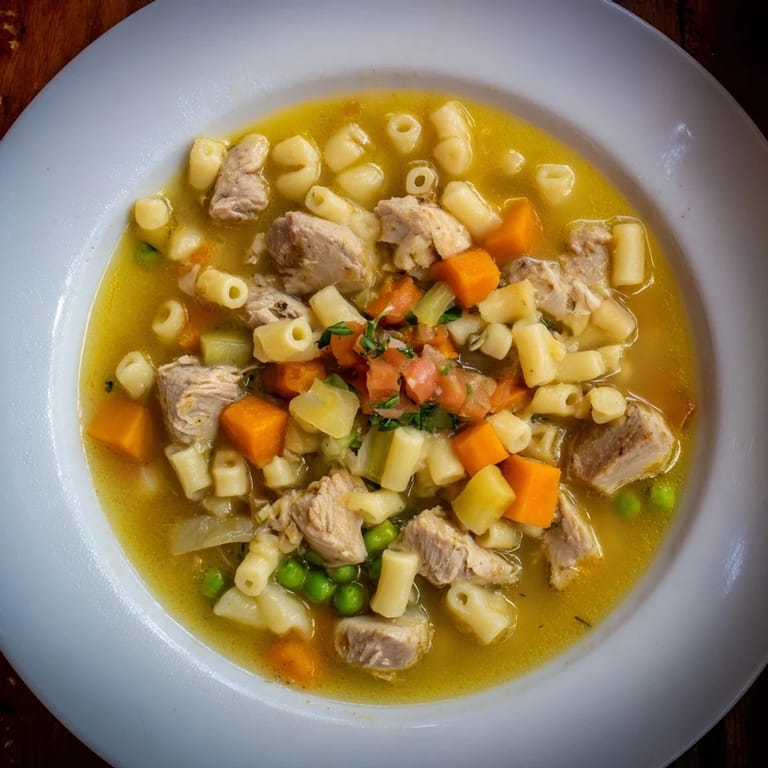
Save One rainy Tuesday, I stood at the stove stirring a pot that smelled like my grandmother's kitchen but looked nothing like her famous pot pie. The crust had failed me twice that week, so I dumped pasta into the filling instead. My husband walked in, tasted it straight from the ladle, and said it was better than the original. Sometimes the best recipes come from giving up on perfection.
I made this for my sister the night she moved into her first apartment. We sat on her kitchen floor with mismatched bowls, no furniture yet, and she told me it tasted like home. That is when I knew this soup was a keeper.
Ingredients
- Cooked chicken breast: Rotisserie chicken is your shortcut here, shred it with your hands for the best texture and save the carcass for stock another day.
- Carrots: Dice them small so they cook evenly and do not crunch when you are craving something soft and warm.
- Celery: This adds a subtle herbal note that makes the whole pot smell like comfort, do not skip it even if you think you do not like celery.
- Frozen peas: They go in at the end so they stay bright green and sweet, no need to thaw them first.
- Yellow onion: The base of almost every good soup, it melts into the background but you would miss it if it was not there.
- Garlic: Two cloves is just enough to notice without overpowering the gentle, homey vibe of this dish.
- Fresh parsley: Stir it in at the end for a pop of color and a hint of freshness that cuts through the cream.
- Ditalini pasta: These little tubes are the perfect size for spooning, but any small pasta works if that is what you have.
- Chicken broth: Low sodium gives you control over the salt, and please use real broth not water, it makes all the difference.
- Whole milk and heavy cream: This duo creates a velvety base that clings to every spoonful without feeling too heavy.
- Butter: Unsalted lets you season intentionally, and it makes the vegetables glisten as they soften.
- All purpose flour: The secret to thickening the soup just enough so it coats the back of your spoon.
- Thyme and sage: These dried herbs bring that classic pot pie warmth, sage is optional but I always add it.
- Salt and pepper: Taste as you go, every stove and every broth is a little different.
Tired of Takeout? 🥡
Get 10 meals you can make faster than delivery arrives. Seriously.
One email. No spam. Unsubscribe anytime.
Instructions
- Start with the vegetables:
- Melt butter in your largest pot and add onion, carrots, and celery, letting them sizzle and soften for five minutes. The kitchen will start to smell like something worth waiting for.
- Build the base:
- Toss in garlic and let it bloom for a minute, then sprinkle flour over everything and stir it around for two minutes. This cooks out the raw taste and sets you up for a silky broth.
- Add the liquids:
- Whisk in the chicken broth slowly to avoid clumps, then pour in the milk and cream. Bring it to a gentle simmer, stirring occasionally so nothing sticks to the bottom.
- Cook the pasta:
- Add ditalini, thyme, sage, salt, and pepper, then let it bubble uncovered for ten minutes. Stir now and then, and watch the pasta swell as the soup thickens around it.
- Finish with chicken and peas:
- Stir in your cooked chicken and frozen peas, simmering for three to five minutes until everything is heated through. Taste it now and adjust the salt if needed.
- Serve it warm:
- Pull the pot off the heat, stir in fresh parsley, and ladle it into bowls. A little extra parsley on top makes it look like you tried, even on a weeknight.
 Save
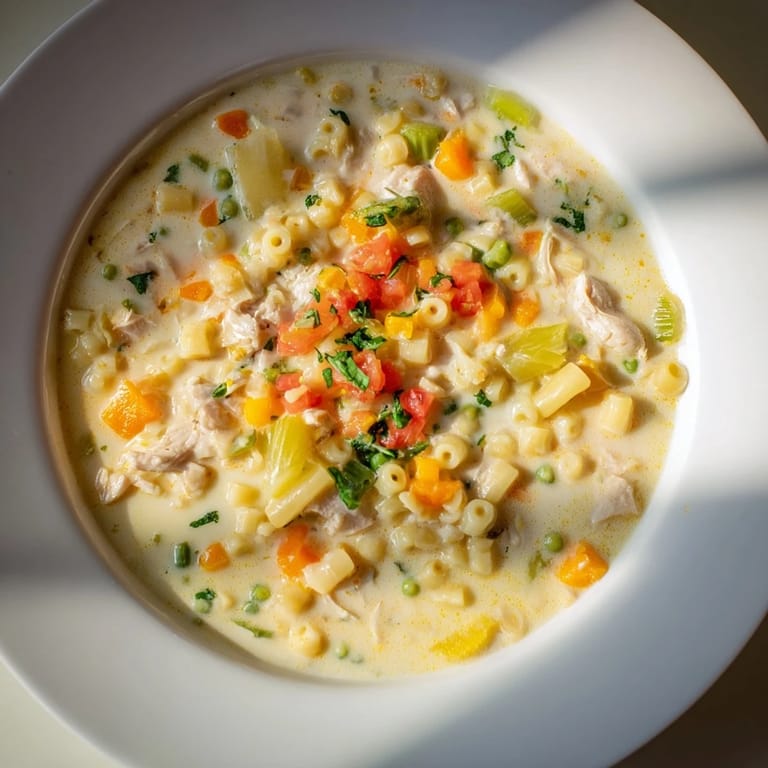
Save The first time I brought this to a potluck, someone asked if I had been cooking all day. I smiled and did not tell them it took less time than a frozen pizza. Sometimes the kindest thing you can do is let people think you are magic.
Make It Your Own
If you want a little brightness, add a splash of dry white wine when you pour in the broth. I have also stirred in a handful of spinach at the end when I am pretending to eat more greens. For a gluten free version, swap in your favorite gluten free pasta and use a gluten free flour blend for thickening.
What to Serve Alongside
This soup is hearty enough to stand alone, but I love it with a crisp green salad dressed simply in lemon and olive oil. Crusty bread for dipping is never a bad idea, and if you are feeling fancy, a glass of chilled white wine makes it feel like a dinner party even if you are in sweatpants.
Storage and Reheating
Leftovers keep in the fridge for up to three days in an airtight container. The soup thickens as it sits, so when you reheat it on the stove, stir in a little extra broth or milk until it loosens up. I do not recommend freezing this one because the pasta gets mushy and the cream can separate, but it is so good you probably will not have leftovers anyway.
- Store in a container with a tight lid to keep it fresh.
- Reheat gently on the stovetop, adding liquid as needed.
- Best enjoyed within three days for optimal texture.
 Save
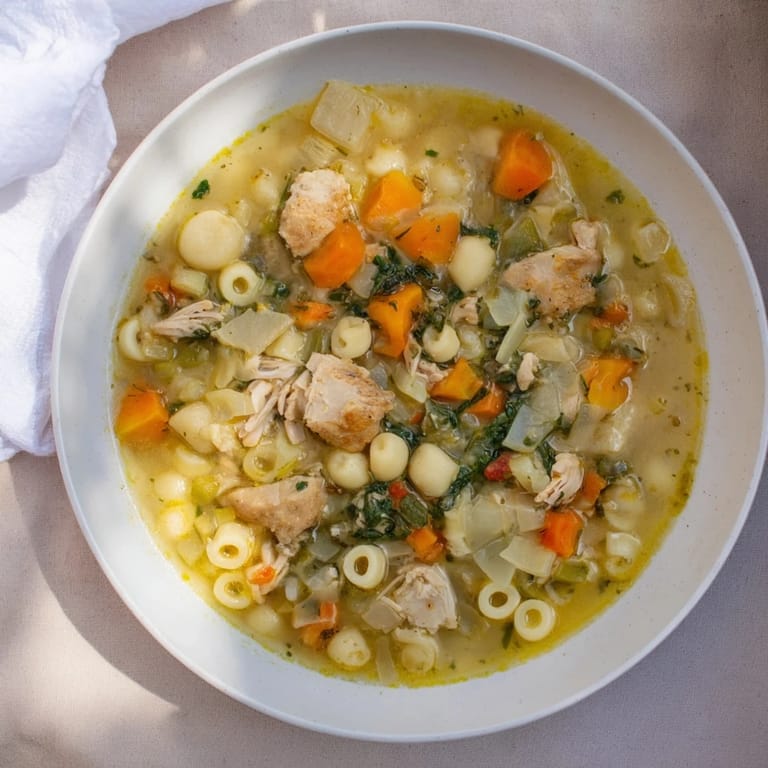
Save This soup has become my answer to cold nights, bad days, and the question of what is for dinner. I hope it finds a spot in your rotation too.
Recipe FAQs
- → What type of pasta works best?
Ditalini pasta is preferred for its size and shape, allowing it to absorb the creamy broth and blend well with the vegetables and chicken.
- → Can I use leftover chicken?
Yes, cooked shredded or diced chicken breast can be used, keeping preparation quick and simple.
- → How can I adjust the thickness?
The soup’s thickness comes from a butter-flour roux and cream. Adjust the flour amount or cook slightly longer to thicken more.
- → What herbs add the best flavor?
Thyme and sage complement the dish well, lending an aromatic, earthy character to the creamy broth.
- → Can I modify this for dietary needs?
Yes, substitute gluten-free pasta and flour for a gluten-free version, and use dairy alternatives if needed.
- → What dishes pair well with this soup?
A crisp green salad or crusty bread makes an excellent accompaniment, balancing the creamy richness.