 Save
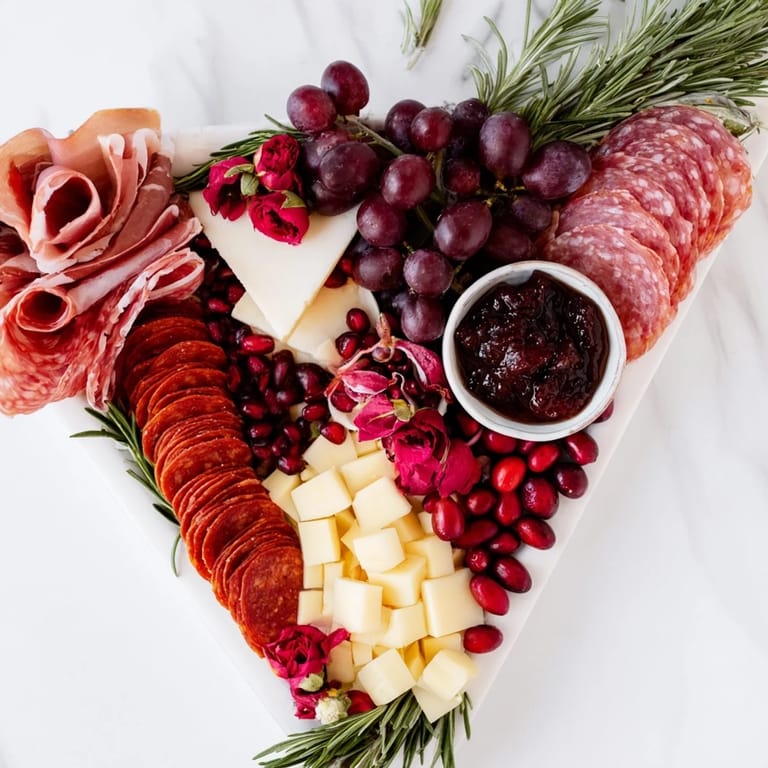
Save The first time I assembled a board entirely in shades of crimson, I was nervous about whether it would feel intentional or just accidentally monochromatic. But the moment the light caught the wine-soaked cheeses alongside the glossy pomegranate seeds, I understood—this wasn't a limitation, it was a language. Red wine, ruby meats, scarlet peppers, deep berries all speaking to each other in a conversation I hadn't planned but somehow felt inevitable.
I made this for a dinner party on a cold November evening when I wanted to feel sophisticated without spending hours in the kitchen. My friend Sarah took one look at the board and said, 'This tastes like you had time to think,' which made me laugh because really I'd thrown it together in twenty minutes. But that's the magic of a charcuterie board—presence matters more than effort.
Ingredients
- Prosciutto: Paper-thin and delicate, it needs gentle handling so the folds stay pretty on the board.
- Bresaola: Air-dried beef with a deep, almost mineral richness that anchors the whole flavor story.
- Spicy chorizo: Thinly slice this just before assembly so it doesn't dry out, and it'll add a warm kick that surprises people.
- Smoked beef salami: The quiet backbone that ties the meats together without demanding attention.
- Drunken Goat cheese: Wine-soaked and tangy, it's worth seeking out because it tastes like someone made a cheese specifically for this moment.
- Red Wine Cheddar: Creamy and slightly sweet, it bridges the gap between the sharp and the mellow.
- Merlot BellaVitano: Aged and complex, this one tastes like the board's finishing touch if such a thing existed.
- Red grapes: Choose ones that are plump and juicy—they provide pockets of sweetness and relief between the salty elements.
- Pomegranate seeds: They glitter like tiny jewels and add unexpected tartness, plus they're fun to eat.
- Red onion jam: A tiny spoonful changes everything, adding bright acid and caramelized depth without overwhelming.
- Roasted red peppers: Silky and slightly sweet, they soften the intensity of the cured meats beautifully.
- Dried cranberries: A whisper of sweetness and texture that catches the light among the darker elements.
- Baguette slices: Toast them lightly if you like, or leave them soft—either way they're the neutral stage for everything else.
- Red beet crackers: Earthy and slightly sweet, they keep the color story going while adding a satisfying crunch.
- Fresh rosemary: The aroma when guests lean in is part of the experience, and the needles add wispy texture.
Tired of Takeout? 🥡
Get 10 meals you can make faster than delivery arrives. Seriously.
One email. No spam. Unsubscribe anytime.
Instructions
- Start with intention:
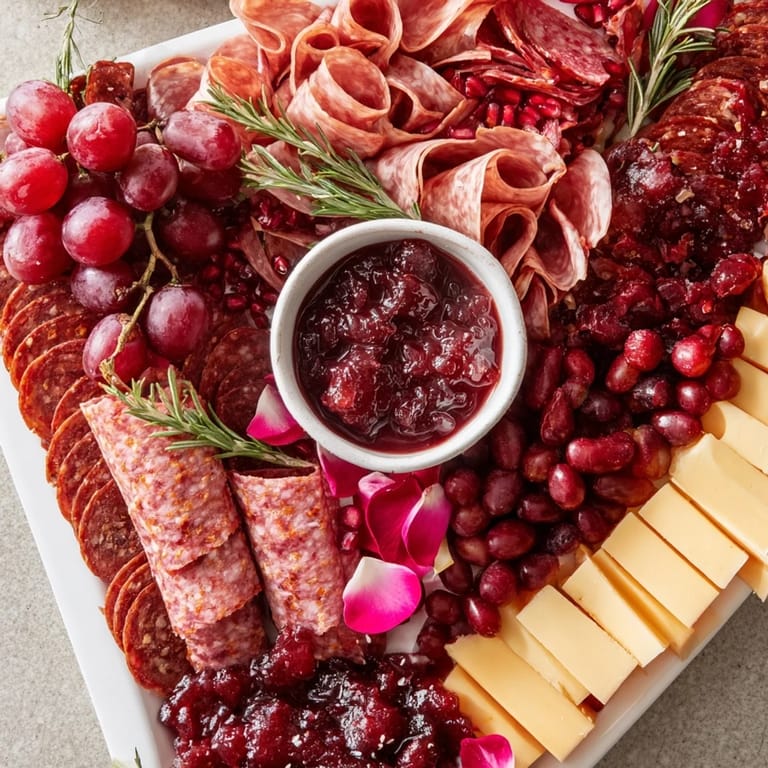
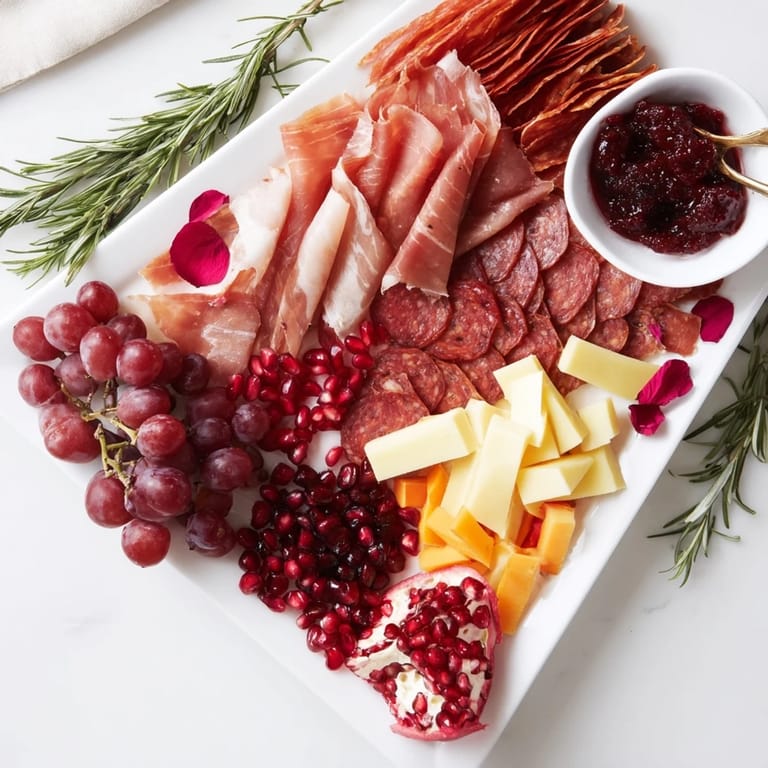
- Choose your board—triangular, oval, whatever feels right—and imagine the meats as the anchors. Fold and roll each one differently so they look like you have style, not just skill, and place similar textures nearby so the eye can rest between flavors.
- Build the cheese architecture:
- Slice each cheese type into generous bite-sized pieces and fan them out in loose clusters. The wine-soaked ones should catch some light, so angle them toward where people will be standing.
- Scatter with intention:
- Grapes, pomegranate seeds, and cranberries aren't fillers—they're flavor bookends. Place them to create little pockets of color and give people permission to pop something sweet and tart between salty bites.
- Add the deep notes:
- Nestle the roasted peppers and rest a small spoon in the red onion jam. These bridge flavors, so position them where they'll catch people's attention as they're deciding what to try.
- Fill the white space:
- Arrange baguette slices and beet crackers in the gaps, overlapping them so they look generous and inviting, not sparse.
- Finish and breathe:
- Tuck rosemary sprigs throughout and scatter rose petals if you're feeling it. Step back, let the board rest at room temperature for a few minutes, and then trust it.
 Save
Save There was a moment during that November dinner when everyone fell quiet and just looked at the board, then looked at each other with permission to dive in. That's when I realized a charcuterie board isn't really about the ingredients—it's about creating a moment where people can slow down and choose their own adventure. Every bite became a conversation starter, every flavor combination they discovered was theirs.
The Color as Language
Leaning into monochromatic color schemes isn't about restriction, it's about restraint. When I stopped worrying about balancing every color in the spectrum and instead let deep reds and burgundies talk to each other, the board became more striking, not less. The eye travels differently across a unified palette, finding rhythm in texture and shape rather than scrambling to process competing colors. It feels intentional in a way that a rainbow board sometimes doesn't.
Timing and Temperature
The window between 'perfect' and 'sad' on a charcuterie board is smaller than you'd think. I learned this the hard way when I assembled a board two hours early for a party and watched the cheeses slowly surrender to the room. Now I'm ruthless about timing—everything is sliced, arranged, and ready in my mind before I touch a single ingredient. The actual assembly takes fifteen minutes if you've thought it through, and the board stays luminous and intentional for the hour or two that matters most.
Making It Your Own
This recipe is a template written in flavor and color, but the real magic happens when you start swapping things in based on what's available or what calls to you at the market. A wine-soaked blue cheese would add almost-bitter complexity, aged Manchego rubbed with paprika brings smokiness and earthiness, and any cured meat you trust is worth featuring. The board isn't precious—it's a conversation, and you get to decide what you're saying.
- Don't skip the room temperature step even if you're short on time, because it changes everything about how the flavors land.
- A bold red wine like Cabernet Sauvignon or Malbec is the perfect companion, and honestly, the pairing matters as much as the board itself.
- If someone needs gluten-free crackers or has dairy concerns, just swap in alternatives without apologizing—the board adapts beautifully.
 Save
Save A charcuterie board is just an arrangement of good things, but it becomes a memory the moment people gather around it. When you're making this one, make it for the moment, not the Instagram, and watch how it brings people together.
Recipe FAQs
- → What types of meats are included in the Crimson Crest board?
This board features premium red meats including prosciutto, bresaola, spicy chorizo, and smoked beef salami, each thinly sliced for optimal texture and flavor.
- → How are the cheeses prepared for this arrangement?
Cheeses such as Drunken Goat, Red Wine Cheddar, and Merlot BellaVitano are soaked in red wine and sliced or cubed to perfectly complement the meats and accompaniments.
- → What accompaniments enhance the flavors on the board?
Fresh red grapes, pomegranate seeds, dried cranberries, roasted red peppers, and red onion jam add contrast and vibrant notes to the selection.
- → What garnishes are suggested for serving?
Fresh rosemary sprigs provide aromatic freshness while edible rose petals offer visual appeal, making the presentation elegant and inviting.
- → Can the baguette and crackers be substituted for dietary needs?
Yes, gluten-free crackers or alternative breads can be used to accommodate gluten sensitivities without compromising texture contrast.
- → Is any cooking required for preparing the board?
No cooking is needed; preparation involves slicing, arranging, and garnishing the various components for a balanced and appealing display.