 Save
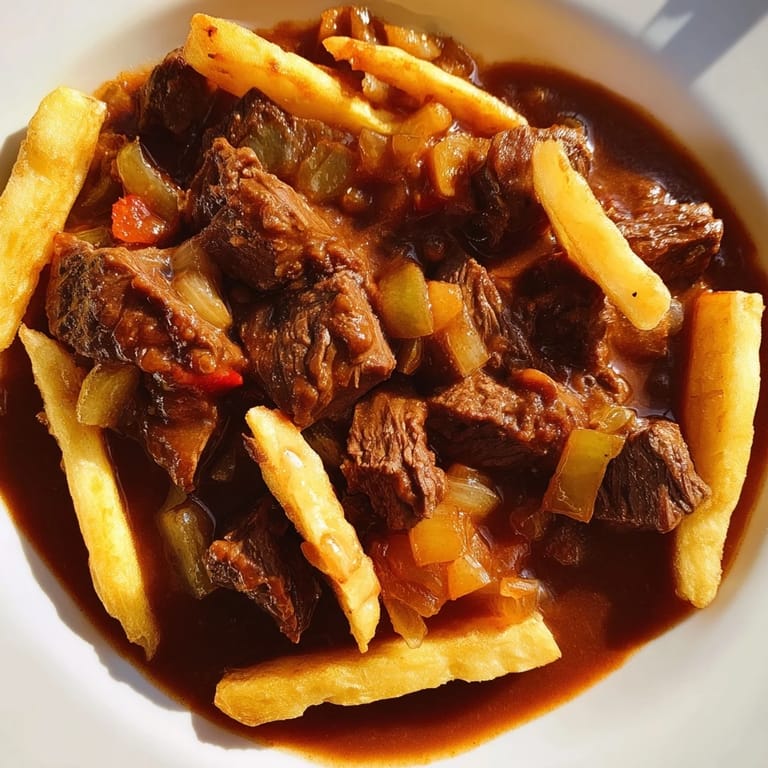
Save My first encounter with Czech goulash happened on a freezing December evening when a friend's grandmother invited me to her Prague kitchen. The smell hit me before I even stepped inside—paprika and beef simmering for hours, creating this deep, almost chocolatey aroma that made everything else fade away. She worked methodically, never rushing, while I watched the onions turn golden and the meat develop this rich crust. When she crowned the bowls with those impossibly crispy potato strips, I understood why this dish had survived generations. It wasn't fancy or complicated, just honest food made with attention and care.
I made this for my partner on a rainy Sunday when we both needed something grounding and real. There's something about standing over a pot for two hours, occasionally stirring, tasting, adjusting—it became a kind of meditation. By the time those golden potato strips hit the bowl, the whole house felt warmer, and somehow we both felt better about the day.
Ingredients
- Beef chuck (800 g, cubed): This cut becomes incredibly tender through long, slow cooking and releases gelatin that thickens and enriches the sauce naturally.
- Sweet Hungarian paprika (2 tbsp): Quality paprika is everything here—it should smell slightly smoky and sweet, never harsh, so source it from a good spice supplier if you can.
- Caraway seeds (1 tsp): These tiny seeds give Czech goulash its authentic personality with a subtle earthiness that creeps up on you pleasantly.
- Marjoram (1 tsp): This herb is the quiet backbone of the dish, adding a gentle herbal note that distinguishes it from other goulash styles.
- Onions (2 large, chopped): They dissolve almost completely into the sauce, becoming the foundation of its body and sweetness.
- Garlic (3 cloves, minced): Add this after the onions have softened so it doesn't burn and turn bitter in the hot pan.
- Tomato paste (2 tbsp): A small amount deepens the color and adds subtle acidity without making the dish taste tomato-forward.
- Beef broth (750 ml): Use good quality broth or even better, make your own—it's the liquid gold that becomes your sauce.
- Bell pepper (1, diced): Add this partway through cooking so it softens without losing its bright presence entirely.
- All-purpose flour (1 tbsp): This light dusting helps thicken the sauce and catch fond from the pan, creating silky richness.
- Potatoes (4 large): Starchy varieties work best for frying, giving you that fluffy interior and shatteringly crisp exterior.
- Vegetable oil (500 ml for frying): You'll need enough depth so the potatoes can fry freely without crowding and steaming themselves.
Tired of Takeout? 🥡
Get 10 meals you can make faster than delivery arrives. Seriously.
One email. No spam. Unsubscribe anytime.
Instructions
- Start with the aromatics:
- Heat your oil in a heavy pot over medium heat and let the onions cook slowly until they're genuinely golden—this takes patience but builds the base flavor of everything that follows. Once they're soft and caramelized, you'll smell how different they are from raw onions.
- Bloom the spices:
- Add the garlic, caraway, and paprika, stirring for about a minute until the paprika releases its color and fragrance into the oil. This step is crucial—you're waking up the spices without letting them scorch.
- Sear the beef:
- Add your meat cubes and let them sit undisturbed for a minute or two before stirring, so they develop a golden crust that will add depth to your final sauce. Don't rush this part—you're building layers of flavor.
- Build the base sauce:
- Stir in the tomato paste, herbs, salt, pepper, and bay leaf, coating everything in this fragrant paste. The meat should glisten with it, and your kitchen will smell incredible at this point.
- Thicken and combine:
- Dust the flour over everything and stir it in thoroughly—this helps create that silky, velvety texture the sauce should have. Add your bell pepper and broth, bringing everything to a boil before reducing to a gentle simmer.
- The long simmer:
- Cover your pot and let it bubble quietly for an hour and a half to two hours, stirring occasionally and tasting as you go. The beef should shred almost with a spoon when it's ready, and the sauce should coat it like velvet.
- Prepare the potatoes:
- While the goulash does its long cook, cut your potatoes into thin matchsticks and soak them in cold water to remove excess starch—this is what gives you that contrast between crispy outside and fluffy inside. Pat them absolutely dry before frying or they'll steam instead of crisp.
- The perfect fry:
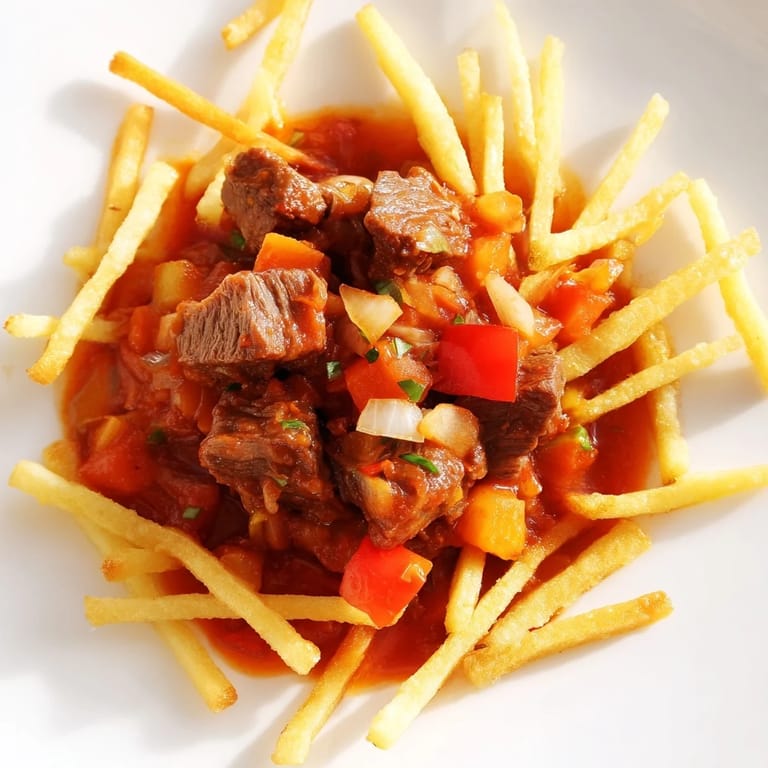
- Heat your oil to 180°C and fry the potato strips in small batches, listening for that sizzle that tells you they're crisping properly. A few minutes in and they should be golden—pull them out and drain on paper towels, then season immediately with salt while they're still hot and will accept seasoning eagerly.
- Final touches:
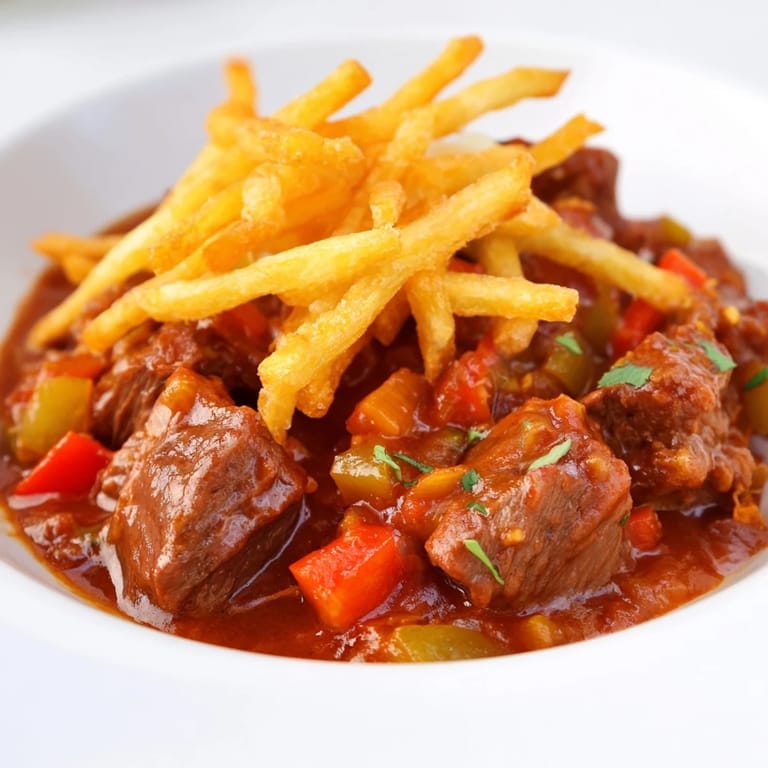
- Remove that bay leaf from your goulash, taste the sauce one more time, and adjust the seasoning if needed—sometimes you need a pinch more salt or a grinding of pepper. The magic happens when you pile those crispy potato strips directly onto the hot goulash, creating this beautiful textural contrast.
 Save
Save There's a moment near the end of cooking when the smell becomes almost unbearably good, when you catch yourself standing in front of the open fridge for no reason other than you want to feel the warm air and breathe it in. That's when I know the goulash is nearly perfect, when it's moved from being just dinner to becoming an experience.
The Paprika Question
Hungarian paprika is the soul of this dish, and I learned this lesson the hard way when I once grabbed regular paprika from my spice rack in a hurry. The result was flat and one-dimensional, missing the depth and subtle sweetness that distinguishes real Czech goulash from just beef stew with paprika. Seek out Hungarian paprika from a good source, smell it before you buy it, and store it in a cool, dark place so it doesn't lose its character. The difference is genuinely worth the effort.
Why Crispy Potatoes Matter
The potato strips aren't just a side or a garnish—they're essential to the whole experience of eating this dish. In Czech restaurants, you'll see goulash served exactly this way, and it's because the contrast between the soft, rich, paprika-stained beef and that absolutely shatteringly crisp potato is what makes your mouth wake up with each bite. Without them, you have a delicious stew, but with them, you have something with personality and presence.
Serving and Pairing
This dish welcomes a dollop of cool, tangy sour cream stirred into the bowl just before eating—it cuts the richness and adds brightness that makes you want another spoonful. Fresh parsley scattered over the top brings a green note that prevents the whole thing from feeling too heavy, and if you're inclined toward heat, a pinch of hot paprika or chili flakes adds a gentle burn that lingers pleasantly.
- A Czech Pilsner beer is the traditional pairing, crisp and clean to balance the richness of the sauce.
- If you prefer wine, a light red like Pinot Noir or even a dry rosé works beautifully without overpowering the paprika.
- Leftovers taste even better the next day once the flavors have settled together, so don't hesitate to make this a day ahead.
 Save
Save This is food that says welcome, that fills a table with warmth and conversation. Make it when someone needs comfort, when the weather turns cold, or when you just want to spend an afternoon creating something real and generous.
Recipe FAQs
- → What cut of beef is best for this dish?
Beef chuck cut into cubes works best due to its balance of meat and fat, becoming tender and flavorful after slow cooking.
- → How can I ensure the paprika doesn't burn?
Stir the paprika quickly over medium heat and combine it with garlic and other ingredients promptly to prevent burning.
- → What is the purpose of frying thin potato strips?
Thin potato strips fried to crispiness add texture and a delicious crunch, perfectly complementing the rich beef sauce.
- → Can I make this dish gluten-free?
Yes, use gluten-free flour to coat the beef and ensure that all other ingredients are gluten-free to maintain the dish's integrity.
- → How long should the beef simmer for tender results?
Simmer the beef gently for 1.5 to 2 hours until it becomes very tender and the sauce thickens nicely.
- → What spices enhance the paprika flavor?
Caraway seeds and marjoram complement the paprika, adding depth and a traditional aromatic profile.