 Save
Save My cousin texted me last spring asking if I could bring something special to her garden brunch, and I found myself wandering through the liquor aisle thinking about what makes a mimosa feel like an occasion rather than just a Sunday morning drink. That's when elderflower caught my eye—I'd tasted it once in a London bar and never forgot that delicate, almost perfumed note. I grabbed a bottle, paired it with guava nectar for warmth and tropical brightness, and suddenly had something that felt entirely my own. The first sip that morning, sitting under her pergola with sunlight filtering through the vines, made everyone pause mid-conversation. Sometimes the best recipes come from trying to impress people you love.
What surprised me most was how forgiving this drink became once I understood its bones. A friend who usually drinks coffee brought a champagne flute to my kitchen while I was tinkering with ratios, took one sip, and said it tasted like "springtime decided to become drinkable." That kind of reaction—unexpected, genuine, a little bit astonished—told me I'd stumbled onto something that works across different palates and occasions.
Ingredients
- Guava nectar (1 cup chilled): This is your foundation, bringing natural sweetness and tropical fruit character without being cloying—the best ones are thick and pulpy, not thin juice.
- Elderflower liqueur like St-Germain (1/2 cup): The magical ingredient that transforms a regular mimosa into something memorable, with its delicate floral notes that somehow feel both sophisticated and approachable.
- Champagne or sparkling wine (1 bottle, 750 ml, chilled): Choose something you'd actually enjoy drinking on its own—the bubbles are your texture and brightness, so they deserve respect.
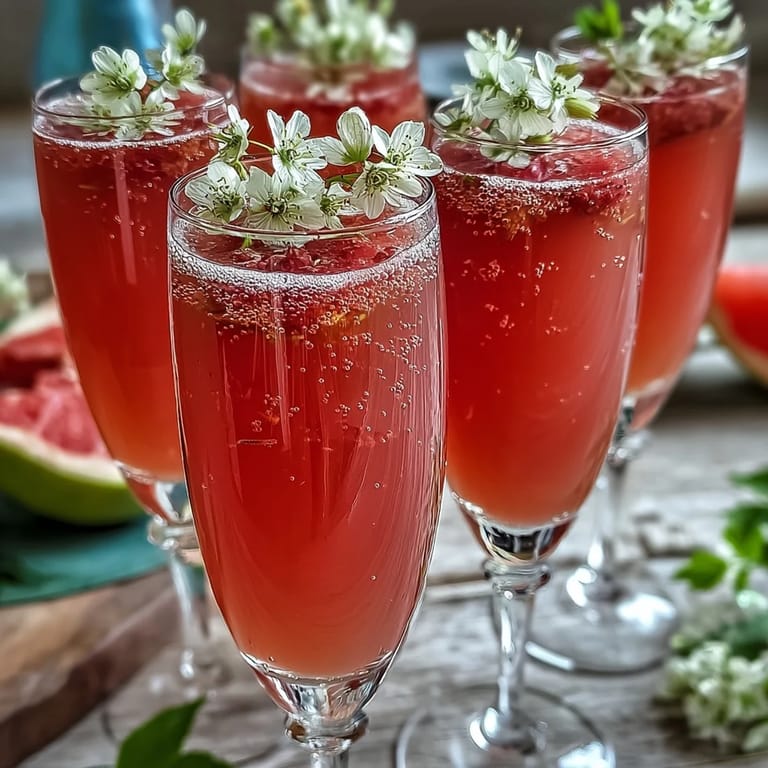
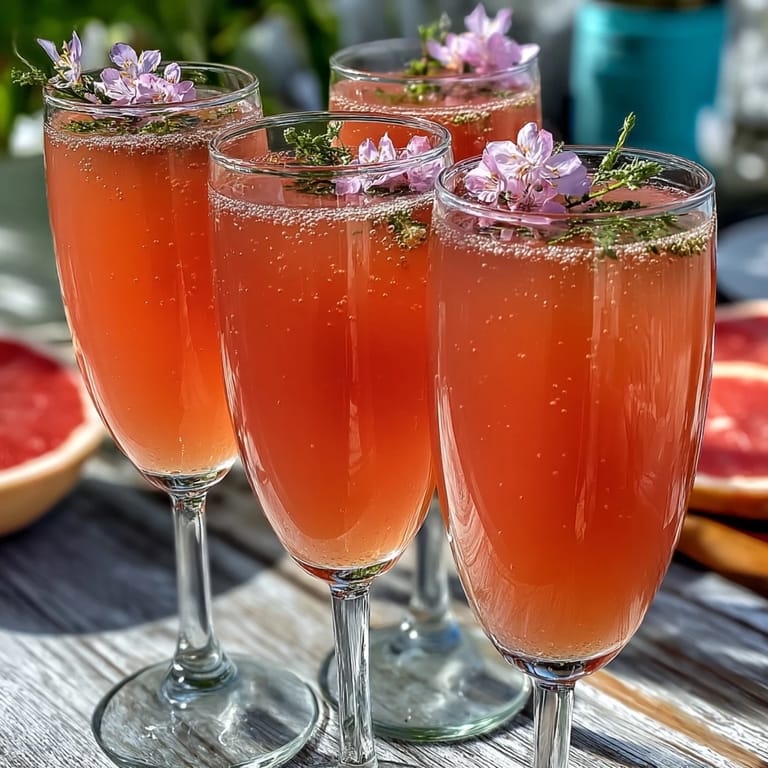
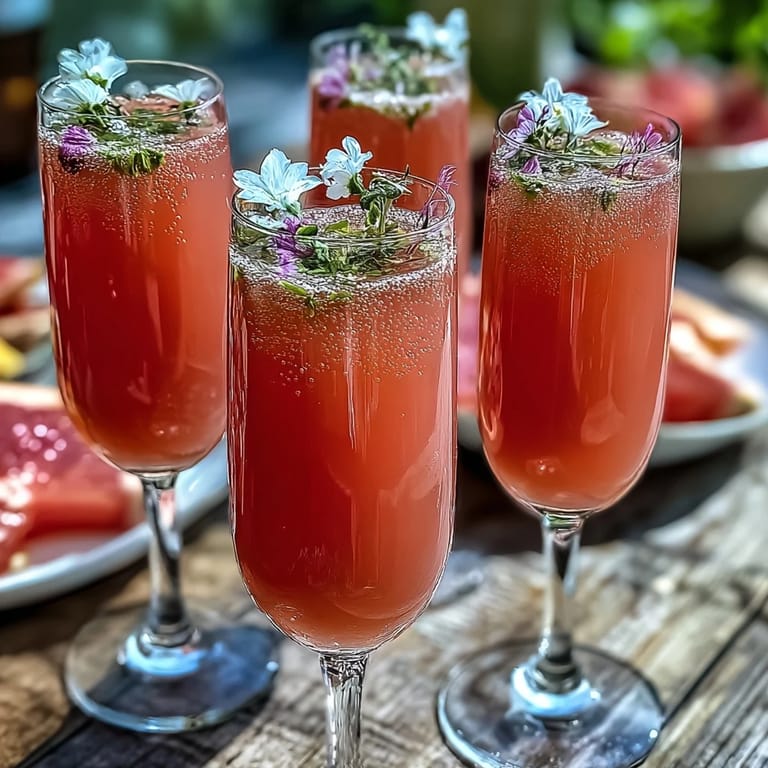
- Edible flowers or guava slices (for garnish, optional): These aren't just decoration; they signal to your guests that you've thought about the whole experience, and they add a gorgeous visual moment when the drink hits the table.
Tired of Takeout? 🥡
Get 10 meals you can make faster than delivery arrives. Seriously.
One email. No spam. Unsubscribe anytime.
Instructions
- Start with guava as your base:
- Pour 1/4 cup of chilled guava nectar into each champagne flute, letting it settle at the bottom and create that beautiful peachy-golden layer. This is your foundation, so take a breath and appreciate the color for a moment.
- Add the elderflower gently:
- Measure out 2 tablespoons of elderflower liqueur and pour it slowly into each flute, watching how it mingles with the guava without fully mixing yet. You're building layers of flavor that your first sip will discover one by one.
- Top with champagne like you mean it:
- Pour the chilled champagne slowly and steadily until each flute is full, tilting the glass slightly so the bubbles don't escape in an aggressive rush. Listen to that delicate fizz—it's telling you everything is working.
- Stir with intention:
- Use a bar spoon or the back of a long spoon to gently combine everything, moving from bottom to top so the guava rises up and mingles with the floral notes and bubbles. Three or four smooth strokes is all you need; you're blending, not bruising.
- Finish and serve immediately:
- Crown each glass with an edible flower or a thin, translucent slice of guava if you have them, then hand these off right away while the bubbles are still dancing. The moment between making and sharing is where the magic lives.
 Save
Save There was a moment at my cousin's brunch when someone asked what made this different from a regular mimosa, and I realized I couldn't quite explain it without sounding pretentious—until they took another sip and just nodded, understanding without needing words. That's when I knew this wasn't just a recipe; it was a small act of generosity in a glass.
Making This Your Own
One afternoon I experimented with fresh guava puree instead of nectar, and while it was delicious, the drink became harder to balance and felt less like a cocktail and more like a fruit smoothie with bubbles. The nectar's consistency matters because it dissolves smoothly into the champagne, creating that unified, sophisticated sip rather than separated layers. I learned that sometimes the convenience item is there for a reason, and honoring the simplicity of the recipe is its own kind of creativity.
When to Serve This
I've made these for spring brunches, summer garden parties, and even a surprise morning celebration for a friend's job promotion—they feel equally at home in all those contexts. The beauty is that four servings means it's intimate enough for a quiet Saturday morning with one other person, but you can easily double or triple the batch for a larger gathering without any stress.
Beyond the Basic Recipe
The floral-tropical combination opens up interesting territory if you ever want to play around. I've added a small splash of fresh lemon juice for brightness, muddled a few basil leaves for something unexpected, and even tried a drop of vanilla extract to see what would happen. None of these substitutions are necessary—the original is honestly perfect—but they remind me that recipes are permissions, not prisons, and the joy of cooking is often in the tinkering.
- For a non-alcoholic version, swap the elderflower liqueur for elderflower syrup and use sparkling water or alcohol-free sparkling wine instead of champagne.
- If you can't find guava nectar, passion fruit or peach nectar work beautifully and bring their own character to the drink.
- Make these ahead by measuring out the guava and elderflower into each flute, then simply top with champagne when guests arrive.
 Save
Save This cocktail taught me that sometimes the most elegant moments come from understanding a few quality ingredients and respecting how they want to work together. Share these with people who deserve a little more than an ordinary morning.
Recipe FAQs
- → What does elderflower liqueur taste like?
Elderflower liqueur has a delicate, floral sweetness with subtle notes of pear, citrus, and honey. It adds sophistication without overpowering the tropical guava flavors.
- → Can I make this non-alcoholic?
Yes, substitute elderflower syrup for the liqueur and replace champagne with sparkling water or non-alcoholic sparkling wine. The floral and tropical flavors remain vibrant.
- → What other garnishes work well?
Beyond edible flowers and guava slices, try fresh mint sprigs, lemon twists, or candied ginger. These garnishes complement the floral and tropical notes beautifully.
- → How sweet is this cocktail?
The natural sweetness from guava nectar balances the dry champagne. Adjust sweetness by varying the guava nectar amount or choosing a sweeter sparkling wine.
- → Can I prepare this in advance?
Mix the guava nectar and elderflower liqueur ahead of time and refrigerate. Add champagne just before serving to maintain carbonation and freshness.
- → What foods pair best with this drink?
This mimosa pairs wonderfully with fruit platters, light pastries, croissants, quiches, or classic brunch dishes. The tropical notes complement both sweet and savory options.