 Save
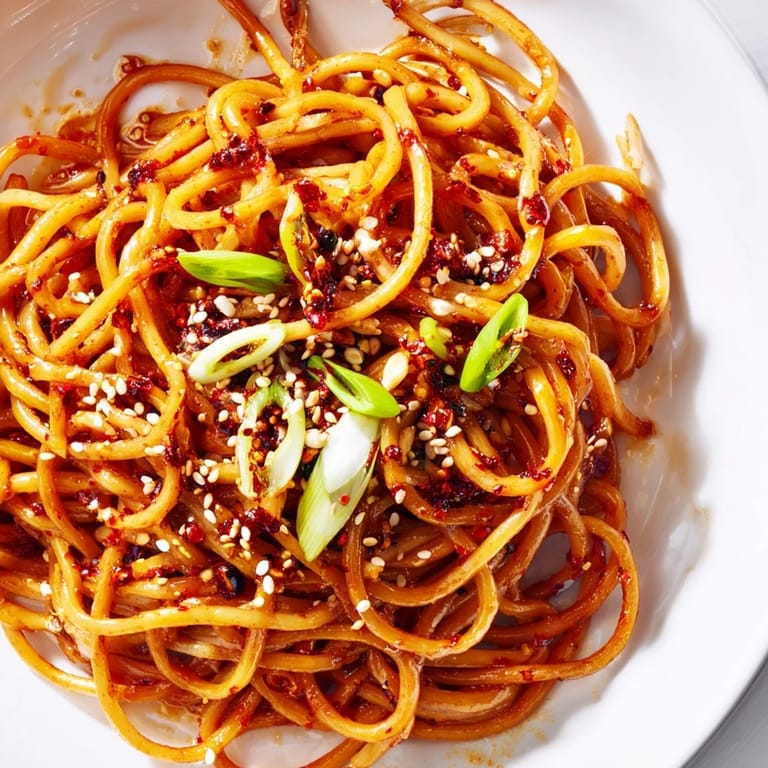
Save There's a particular kind of magic that happens when hot oil meets chili flakes—that sudden pop and crackle that fills your kitchen with a warmth you can almost taste before the first bite. I discovered this dish late one night, standing in front of an almost-empty pantry, needing something quick but exciting. Twenty minutes later, I was twirling noodles on a chopstick, amazed at how such simple ingredients could create something so boldly flavorful and genuinely comforting.
I made this for a friend who swears they don't like spicy food, and watching them go back for seconds while fanning their mouth and grinning told me everything I needed to know. They came back the next week asking for the recipe, admitting that somehow the garlic and vinegar balanced the heat in a way that made it addictive rather than punishing.
Ingredients
- Wheat noodles (200 g): Use whatever chewy noodle you can find—Chinese wheat noodles are ideal, but linguine works beautifully too; the key is saving that starchy cooking water, which becomes a hidden thickener.
- Garlic (4 cloves): Mince it finely so it distributes evenly and blooms properly when the hot oil hits it, releasing all its fragrant oils.
- Scallions (2): Keep the white and green parts separate; the whites go into the oil to cook, the greens sprinkle over at the end for a bright, fresh finish.
- Toasted sesame seeds (1 tablespoon): Toast them yourself if you can—the difference between raw and toasted is the difference between a dish and a revelation.
- Chili flakes (2½ tablespoons): Sichuan or Korean varieties have more depth than standard red pepper flakes; they taste like something more than just heat.
- Sichuan peppercorns (½ teaspoon, optional): These create a gentle numbing sensation that makes the spice feel more textured and interesting, not just painful.
- Ground white pepper (¼ teaspoon): Subtler than black pepper, it adds a warm, gentle bite without overpowering.
- Sugar and salt (½ teaspoon each): These balance the heat and acidity, making the flavors rounder and less aggressive.
- Neutral oil (3 tablespoons): The oil is your delivery mechanism—it carries all the aromatics into the chili flakes and creates that glossy, luxurious coating on the noodles.
- Light soy sauce (1½ tablespoons): The backbone of the sauce, providing umami and saltiness without overwhelming everything else.
- Chinese black vinegar (1 tablespoon): This is worth hunting down; it's darker and more complex than regular rice vinegar, adding a subtle sweetness and depth.
- Dark soy sauce (1 teaspoon, optional): Adds color and a slightly deeper, almost molasses-like note to the sauce.
- Toasted sesame oil (½ teaspoon): Use sparingly—it's potent and aromatic, meant to enhance rather than dominate.
Tired of Takeout? 🥡
Get 10 meals you can make faster than delivery arrives. Seriously.
One email. No spam. Unsubscribe anytime.
Instructions
- Boil your noodles:
- Cook them according to the package, but don't rinse them when you drain them—that starch is going to be your friend in the sauce. Set them aside and keep about 2 tablespoons of that cloudy cooking water; it's liquid gold for this dish.
- Build your aromatics bowl:
- In a heatproof bowl, combine the minced garlic, white parts of the scallions, chili flakes, Sichuan peppercorns if you're using them, white pepper, sugar, salt, and sesame seeds. This is your flavor foundation, waiting to be awakened.
- Heat the oil carefully:
- In a small saucepan, warm your neutral oil over medium-high heat until it shimmers and moves like water across the pan—you want it hot enough to bloom the spices but not smoking. This usually takes about 2-3 minutes.
- Make the magic happen:
- Slowly pour the hot oil over your spice mixture and listen for that satisfying sizzle. The heat will unlock all those dormant flavors, filling your kitchen with an aroma that makes your mouth water instantly. Stir it all together.
- Mix your sauce:
- In a large serving bowl, whisk together the light soy sauce, black vinegar, dark soy sauce if you're using it, and sesame oil. Add that reserved noodle cooking water, which will help everything come together into a silky sauce.
- Bring it together:
- Add your drained noodles to the sauce bowl, then pour that fragrant chili oil over everything. Toss aggressively with chopsticks or tongs until every strand is glossy and coated, which should take about a minute of real effort.
- Finish and serve:
- Scatter the green parts of the scallions and extra sesame seeds over the top if you like, then eat it immediately while the noodles are still warm and the oil is still fragrant. This isn't a dish that improves with time.
 Save
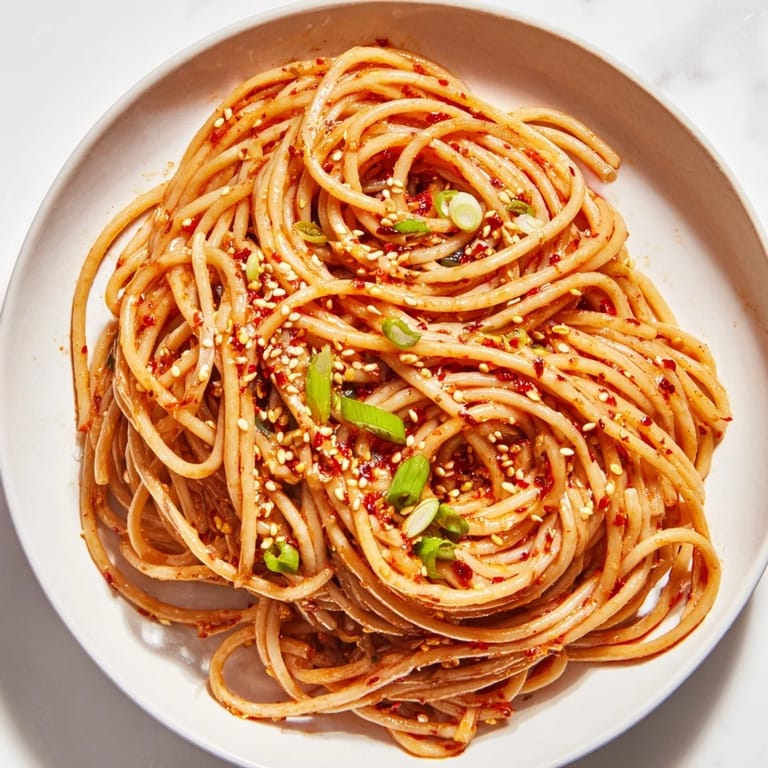
Save The best version of this dish I ever made was for myself on a quiet Sunday afternoon, sitting at my kitchen counter with no plans beyond eating it slowly and tasting every layer. That's when I realized it's not about impressing anyone—it's about giving yourself permission to make something bold and unapologetic.
Why This Works So Well
The beauty of this recipe is in its balance. The chili oil brings heat and aroma, the vinegar adds brightness and cuts through the richness of the oil, the soy sauce provides depth and saltiness, and the sesame oil whispers in at the end like a secret. Nothing fights for attention; instead, they create a conversation on your palate that keeps unfolding with every bite.
How to Adjust for Your Taste
Start with less chili flakes than the recipe calls for, then add more next time if you want it hotter—you can always turn up the heat, but you can't take it back. The same goes for the vinegar and soy sauce; taste as you go, and remember that you can customize this dish to be exactly what you need on any given day. It's flexible enough to handle your preferences without losing its soul.
Serving and Pairing Ideas
Eat this hot, ideally within a few minutes of finishing it, though it's still delicious lukewarm if you find yourself eating it later. The noodles drink up the oil and sauce as they sit, intensifying the flavors but also getting softer—which some people love and others don't, so know yourself.
- Pair it with a cold beer if you're feeling celebratory, or jasmine tea if you want something that cleanses your palate between bites.
- You can absolutely add sautéed vegetables, crispy tofu, shredded chicken, or a soft egg to make it more substantial—this recipe is a foundation, not a prison.
- Leftovers (if there are any) can be reheated gently, though the texture changes and the oil settles; eat them cold straight from the fridge if you need a snack.
 Save
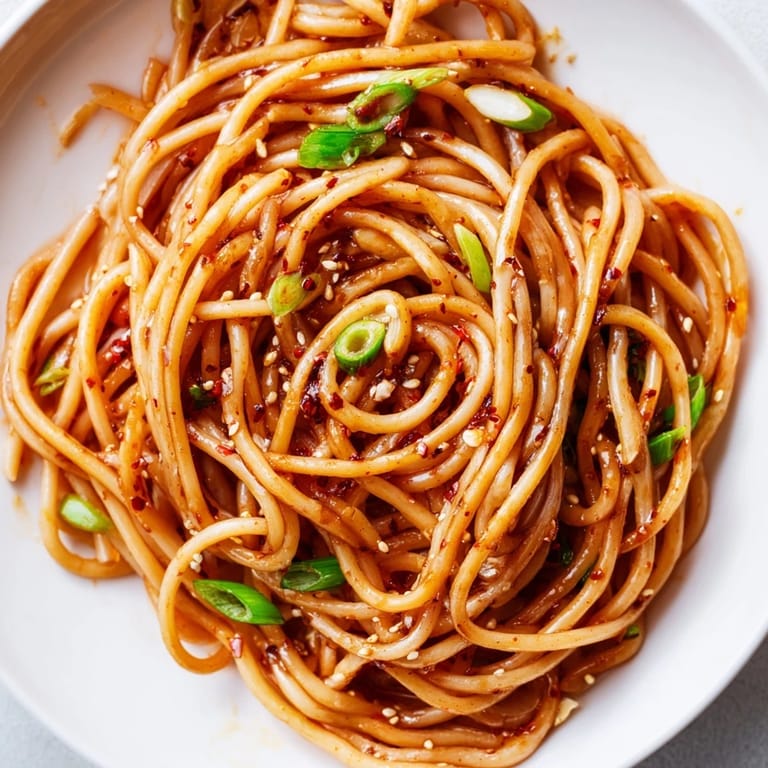
Save This is the kind of recipe I come back to again and again because it never disappoints and it always feels a little bit like a celebration, even on the most ordinary Tuesday night. Make it, enjoy it, and then make it again.
Recipe FAQs
- → What type of noodles work best?
Chinese wheat noodles or linguine are ideal due to their chewy texture, but other wheat-based noodles can be used.
- → How can I adjust the heat level?
Modify the amount of chili flakes to increase or decrease spiciness according to your preference.
- → What oils are suitable for the chili oil?
Use neutral oils like canola, sunflower, or grapeseed to infuse the chili and garlic flavors without overpowering.
- → Can I add proteins or vegetables?
Yes, sautéed vegetables, tofu, or shredded meats can be added to enhance the dish’s nutritional balance.
- → What garnishes are recommended?
Thinly sliced green scallions and extra toasted sesame seeds add freshness and a nutty finish.