 Save
Save The first time I made spanakopita, I wasn't trying to recreate Greece—I was just trying to use up a bag of spinach before it wilted in my fridge. A friend had left me with phyllo dough from her own cooking experiment, and I remembered my grandmother mentioning something about spinach pies. What started as a practical decision became the kind of dish I now make whenever I want to feel like I've done something impressive without spending hours in the kitchen. The combination of buttery, shattering phyllo with that creamy, herby filling is the kind of magic that happens when simple ingredients trust each other.
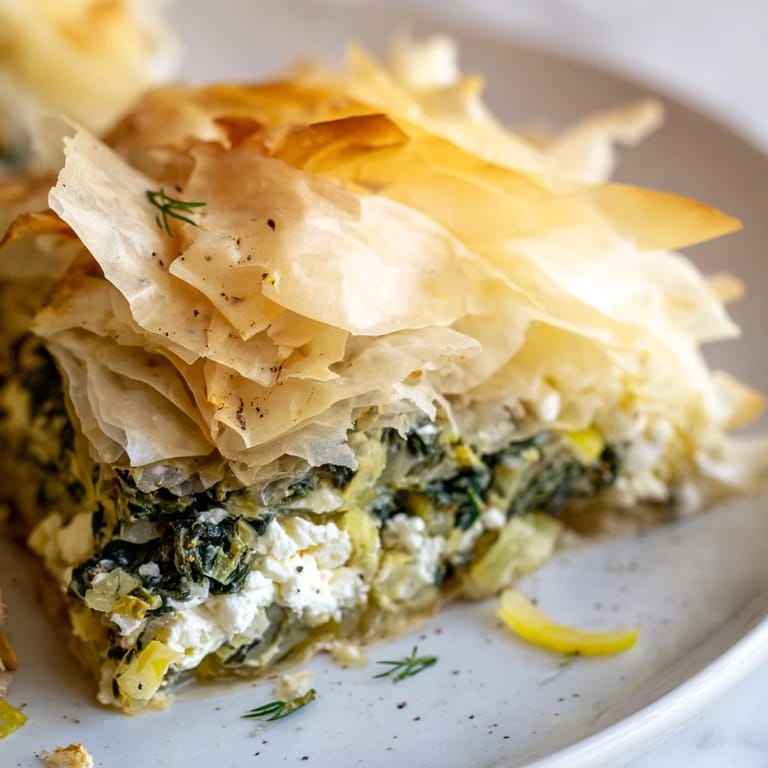
I made this for a potluck once and watched people's faces light up when they bit into their first piece—that golden, flaky exterior giving way to the bright green filling with its little hits of dill and creamy feta. Someone asked if I'd learned to make it from my mother, and I had to laugh because I'd invented my technique that very afternoon. But that's the beautiful thing about spanakopita: it feels traditional and personal at the same time.
Ingredients
- Fresh spinach: Two pounds might seem like a mountain, but it collapses dramatically once it hits heat—this is where fresh really shines over frozen, though frozen works beautifully if you squeeze it dry enough that it's almost crispy.
- Yellow onion and scallions: The onion brings sweetness and body to the filling, while scallions add a sharp, fresh note right at the end of cooking.
- Fresh dill: This is non-negotiable if you can find it; dried dill tastes like hay compared to the bright, almost anise-like flavor of fresh.
- Feta cheese: Get the crumbly kind if possible, not the brined blocks—it distributes more evenly and adds that salty, tangy backbone.
- Eggs: They're the binder that holds everything together so it doesn't slide around as you cut and serve.
- Phyllo dough: Keep it thawed but cold, and work quickly so it doesn't dry out; every sheet you skip brushing with oil will be tougher when baked.
- Olive oil or butter: This is what transforms phyllo from papery to golden and crisp, so don't skimp or it'll taste dry.
Tired of Takeout? 🥡
Get 10 meals you can make faster than delivery arrives. Seriously.
One email. No spam. Unsubscribe anytime.
Instructions
- Heat your oven and prepare:
- Preheat to 350°F and lightly grease a 9x13-inch baking dish—cold metal makes phyllo stick, so a little oil prevents frustration.
- Start the filling:
- Warm 2 tablespoons of olive oil in a large skillet over medium heat, then add your chopped onion and scallions, stirring occasionally until they soften and turn translucent, about 5 minutes. You'll smell them sweetening as they cook.
- Wilt the spinach:
- Add your spinach in batches if it's fresh, stirring until it releases its liquid and collapses into a dark, glossy mass. Keep cooking until most of that moisture has evaporated—this takes patience, but wet filling makes soggy phyllo, and that's the one thing you want to avoid.
- Combine the filling:
- Once the spinach mixture cools slightly, squeeze out any remaining moisture by gathering it in a clean kitchen towel and wringing it hard. Fold it together with dill, parsley, crumbled feta, ricotta if using, beaten eggs, pepper, nutmeg, and salt until everything is evenly distributed.
- Layer the phyllo base:
- Lay one sheet of phyllo in your prepared dish, letting the edges hang over the sides, then brush it lightly with oil or melted butter. Repeat this process with 6 to 7 more sheets, brushing each layer—this creates your structural base and the first layer of that golden, flaky exterior.
- Add your filling:
- Spread the spinach and feta mixture evenly across the phyllo base, using an offset spatula or the back of a spoon to smooth it into an even layer.
- Top and seal:
- Cover with the remaining phyllo sheets, layering and brushing each one with oil or butter just as you did below. Tuck the overhanging edges down and into the dish so everything is enclosed and won't dry out.
- Score for serving:
- Using a sharp knife, cut through just the top few layers in a diamond or square pattern—this makes serving easier and lets people see those beautiful layers before they take a bite.
- Bake until golden:
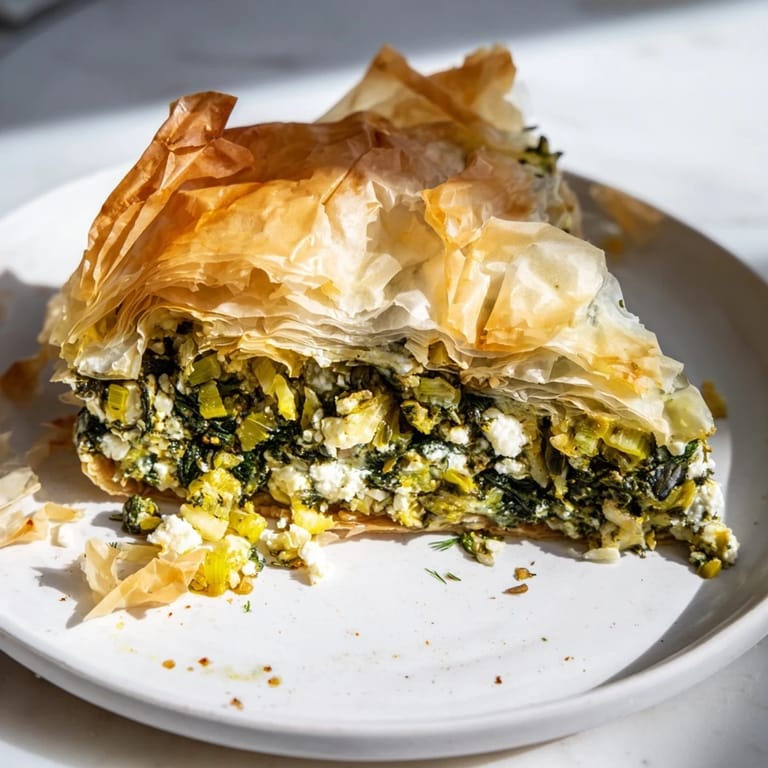
- Bake for 35 to 40 minutes, watching until the top is deep golden and you can hear it crackling slightly. Let it rest for 10 minutes before serving so the structure sets and each piece holds together.
 Save
Save There was a moment during that first attempt when I thought I'd made a mess of it—the phyllo was sticking to itself, the filling seemed too wet, and I was convinced I was about to produce an inedible disaster. But that golden pie that emerged from the oven, shattering when you cut into it with the most satisfying crunch, turned that nervous energy into something I still think about years later.
Choosing Your Greens
While spinach is traditional and what I reach for most often, I've had wonderful results substituting chard, kale, or even a combination of spring greens. Each brings its own personality—chard adds earthiness, kale brings a subtle bitterness that plays beautifully with the feta, and mixed greens create complexity. The technique stays exactly the same: cook until wilted, squeeze until dry, fold into the filling. I once used mostly dandelion greens because that's what I had, and the slight bitterness actually elevated the whole dish by making the creamy feta taste even richer by contrast.
Phyllo Secrets
Phyllo intimidates people, but it's really forgiving once you understand its only real need: moisture. Every sheet you brush with oil becomes part of the flaky, shattering exterior, and every sheet you skip becomes tough and papery. I've learned to work calmly, brushing each layer deliberately, because rushing leads to bunching and tearing. One time I ran out of oil halfway through and switched to melted butter—the butter side was noticeably richer and more golden, so now I use a mix of both for the best of both worlds.
Serving and Pairing
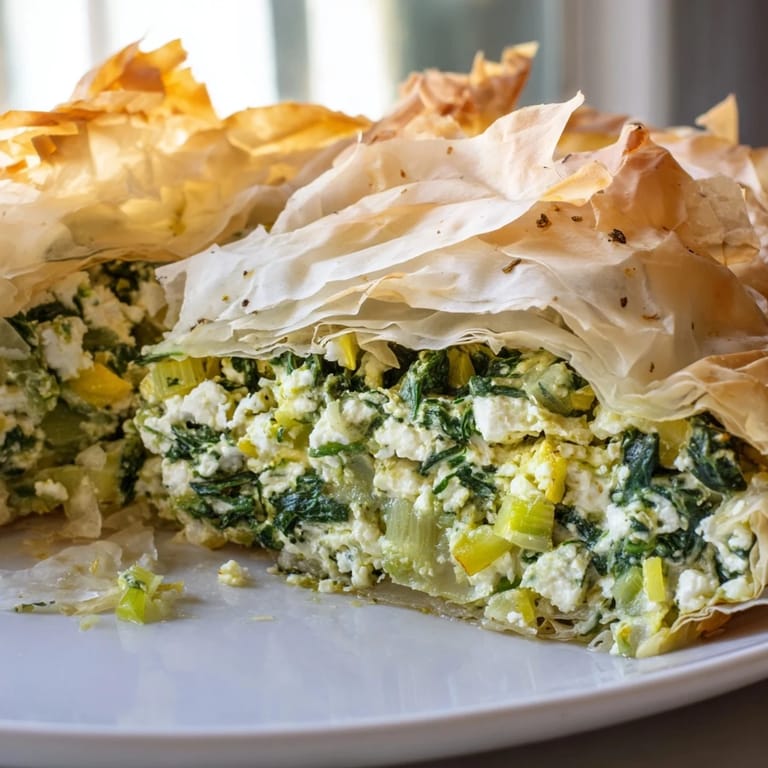
Spanakopita is endlessly flexible—serve it warm from the oven as an appetizer with lemon wedges on the side, or let it cool to room temperature for picnics and packed lunches. A crisp white wine like Assyrtiko or Sauvignon Blanc cuts through the richness perfectly, and a simple green salad with a lemon vinaigrette on the side makes it feel like a complete meal. I've found that room-temperature spanakopita actually develops more flavor as it sits, so making it a day ahead is not a shortcut, it's actually an upgrade.
- Cut pieces with a serrated knife for cleaner edges and less crumbling.
- If you want a lighter version, you can reduce the oil slightly, though the texture won't be quite as shatteringly crisp.
- Leftovers reheat beautifully in a 300°F oven for about 15 minutes, regaining most of their original crispness.
 Save
Save There's something deeply satisfying about pulling a golden, crackling spanakopita from the oven, knowing you've created something that looks and tastes like it came from a Greek grandmother's kitchen—even if you learned it from impulse and experimentation. It's the kind of dish that proves you don't need years of training to create something beautiful and delicious.
Recipe FAQs
- → What type of spinach works best?
Fresh spinach is ideal when available, but well-drained frozen spinach can be a convenient substitute without compromising flavor.
- → Can I substitute the cheese in the filling?
Feta provides the characteristic tang, though ricotta or cottage cheese may be added for creaminess and softer texture.
- → How should phyllo be handled?
Keep phyllo sheets covered with a damp cloth to prevent drying, and brush each layer lightly with oil or melted butter for crispness.
- → What herbs enhance the filling's flavor?
Fresh dill and parsley are traditional choices, adding bright, aromatic notes that complement the spinach and cheese.
- → How to serve this dish for best taste?
Allow the pie to cool slightly after baking to set the filling, then slice into squares or diamonds and enjoy warm with a crisp white wine.