 Save
Save I discovered hojicha pastry cream on a quiet afternoon in a small Japanese patisserie, watching through the window as a chef piped silky cream into delicate choux. The aroma hitting the street was unlike anything I'd smelled before—toasted, almost caramel-like, but with this grassy undertone that made you pause mid-breath. I asked for a taste, and the moment that cream touched my tongue, something clicked. It wasn't the heavy vanilla custard I'd grown up with; it was refined, subtle, like a whispered conversation between tea and butter.
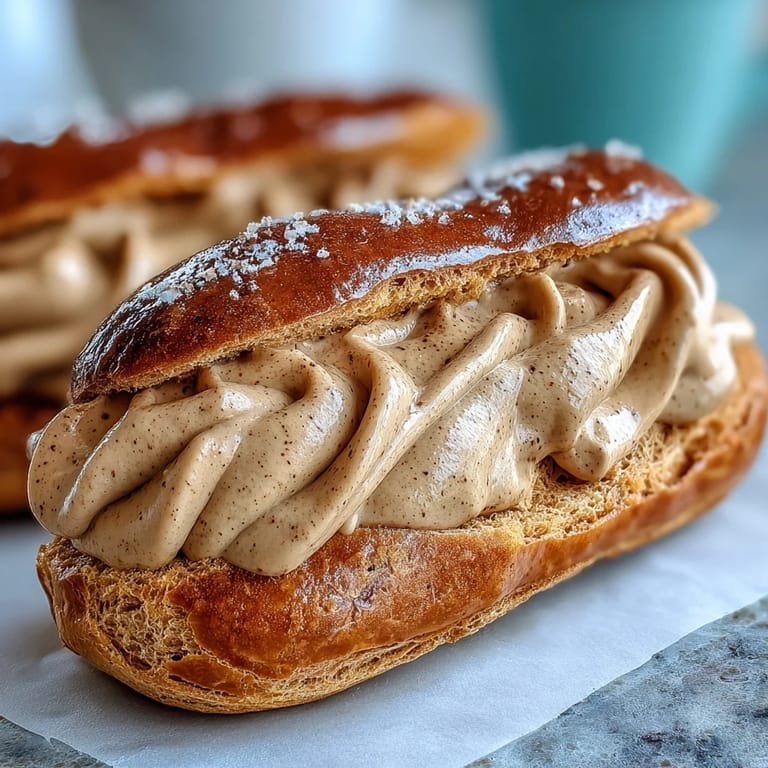
A friend came over for afternoon tea last spring, and I'd just made these tiny éclairs filled with this cream. She took one bite and got this faraway look, then told me it tasted like her grandmother's kitchen in Kyoto. I'd never met her grandmother, but watching her eyes well up a little told me I'd gotten something right. That's when I realized this wasn't just a filling—it was a conversation between memories.
Ingredients
- Whole milk (2 cups): You need full-fat here—it carries the hojicha flavor better and gives the cream that silky mouthfeel. Skim milk will taste thinner and the tea flavor gets lost.
- Hojicha loose leaf tea (3 tablespoons): This is the star. Loose leaf gives you more control over steeping time than tea bags, and you can really squeeze those leaves to pull every ounce of toasted flavor into the milk.
- Unsalted butter (3 tablespoons): Added at the end for richness and to balance the tea's slight bitterness—don't skip it or your cream will taste hollow.
- Egg yolks (4 large): The base of your custard and what makes it creamy and luxurious; room temperature yolks temper more smoothly into the hot milk.
- Granulated sugar (1/2 cup): Sweetness, yes, but it also helps stabilize the yolk proteins so your custard sets properly.
- Cornstarch (3 tablespoons): The safety net that prevents curdling and gives you a foolproof, silky texture.
- Vanilla extract (1/2 teaspoon): A whisper of vanilla that doesn't compete with the hojicha but deepens it somehow—learned this by accident when I forgot it once.
- Salt (pinch): Brings out the tea notes and keeps the sweetness from becoming cloying.
Tired of Takeout? 🥡
Get 10 meals you can make faster than delivery arrives. Seriously.
One email. No spam. Unsubscribe anytime.
Instructions
- Heat your milk with intention:
- Pour the milk into your saucepan and turn the heat to medium. Watch for small wisps of steam rising from the surface, not aggressive bubbles—you're looking for that moment just before it boils where the milk is hot enough to properly steep the tea but won't cook off the delicate flavors.
- Steep the hojicha into silence:
- Once the milk steams, pour in your loose leaf tea, remove from heat, and cover. Ten minutes might feel long, but don't rush it. The tea will slowly unfurl and turn your milk into this beautiful golden-brown color that hints at what's coming.
- Strain like you mean it:
- Pour the milk through your fine mesh sieve slowly, letting gravity do most of the work, then gently press the tea leaves with the back of a spoon. You're extracting every last bit of flavor without forcing leaves into your cream.
- Whisk your yolk mixture until it transforms:
- In a separate bowl, combine egg yolks, sugar, cornstarch, and salt. Whisk for about two minutes until the mixture goes pale and thick—this is where the sugar starts dissolving and the yolks lighten in color, a sign you're aerating them properly.
- Temper with patience and a steady hand:
- This is the moment that matters. Pour your warm hojicha milk into the yolk mixture in a thin, steady stream while whisking constantly. If you pour too fast, the heat will scramble your eggs; too slow, and you'll be here all day. Think of it like a conversation where you both get to speak.
- Return to heat and coax out the thickness:
- Pour everything back into your saucepan and set the heat to medium. Whisk continuously for two to three minutes until you see bubbles breaking the surface and the mixture coats the back of a spoon like a gentle veil.
- Finish with the final touches:
- Off heat, whisk in your butter and vanilla until they disappear completely into the cream. This is where the hojicha softens and becomes this refined, almost silky flavor.
- Protect your cream from the air:
- Transfer to a clean bowl and press a piece of plastic wrap directly onto the surface—not an inch of air between wrap and cream. This prevents that sad skin from forming and keeps the texture perfect.
- Let time do its work:
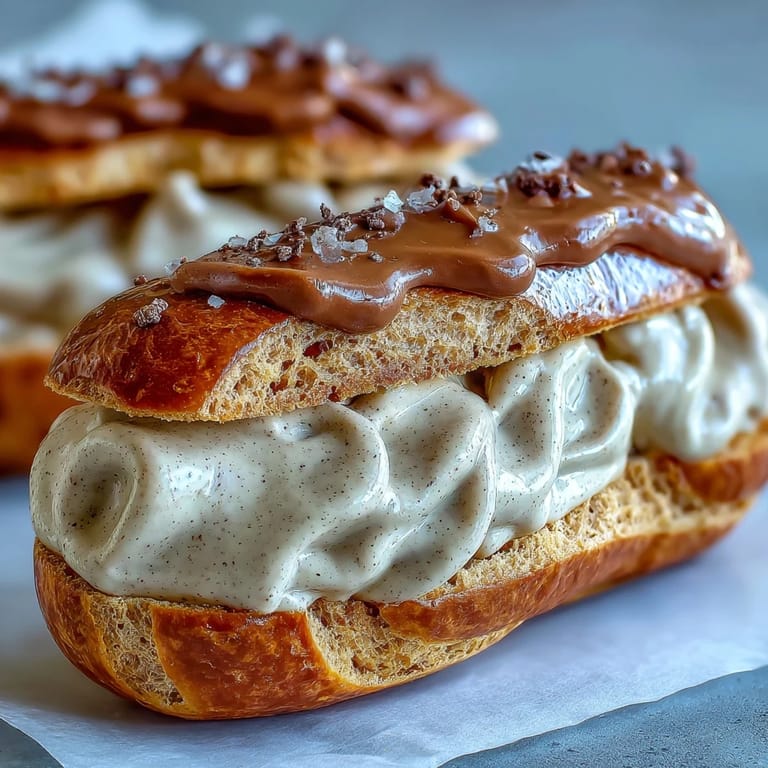
- Refrigerate for at least an hour, though overnight is even better. The cream will continue to set and the hojicha flavor will deepen and settle into something really special.
 Save
Save There's a particular magic in biting through the crisp shell of a cream puff and feeling that hojicha cream coat your tongue like velvet. My daughter asked me once why I never got tired of making these, and I realized it's because every batch carries this little moment of peace—the steam rising, the tea unfurling, the kitchen smelling like something from another place entirely.
The Secret of Hojicha
Hojicha isn't like green tea or matcha—it's already been roasted, which gives it this mellow, almost caramel-like personality. When it steeps into warm milk, it doesn't turn bitter or sharp; instead, it creates this gentle, nutty sweetness that feels sophisticated without being pretentious. This is why it works so beautifully in a pastry cream where matcha might overpower everything else. The roasting process has already done the heavy lifting, and you just get to enjoy the results.
What to Fill and How to Use It
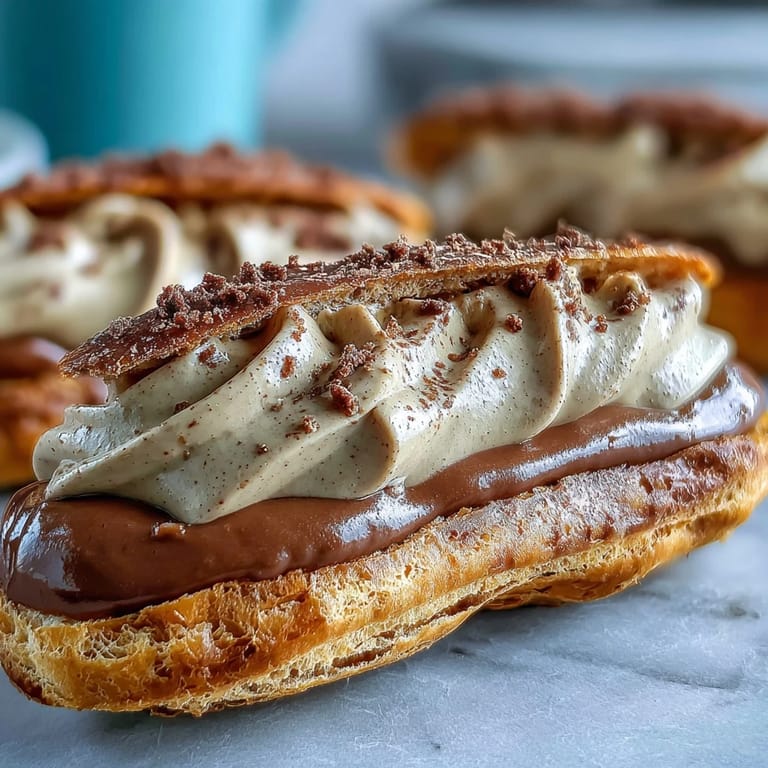
Cream puffs are the obvious choice, but I've also used this to layer between cake layers, pipe into petit fours, or even dollop onto warm custard tarts. The cream sets firmly enough that it won't ooze out the sides of delicate pastry, but it stays silky on the tongue—a balance that took me three tries to understand. Matcha choux pastry is the obvious pairing if you want to lean into the Japanese aesthetic, but honestly, plain vanilla choux works beautifully too and lets the hojicha shine without competition.
Making It Your Own
Once you've made this basic version, you start seeing possibilities everywhere. I've folded in whipped cream to make it lighter, swirled in a touch of white chocolate to add a subtle sweetness, and even stirred in a tiny bit of hojicha powder after chilling for an extra depth of flavor. There's also this moment, usually after the cream has chilled overnight, where the flavors have really settled and deepened—that's when it's most beautiful.
- Hojicha powder can replace loose leaf tea (use just 2 teaspoons and whisk it directly into the warm milk for a smoother texture).
- Fold whipped cream in just before using if you want something lighter and more delicate, which works particularly well for layering in cakes.
- Make this a day ahead if you can—the flavor deepens and the texture becomes even more refined as it sits.
 Save
Save This cream has become something I make whenever I want to remember what good cooking feels like. It's not complicated, but it demands your attention and rewards it with something genuinely beautiful.
Recipe FAQs
- → What does hojicha pastry cream taste like?
Hojicha pastry cream features a distinctive toasted, nutty flavor with subtle smokiness from the roasted Japanese tea. The result is a mellow, aromatic custard that's less grassy than matcha but more complex than vanilla.
- → How long does hojicha cream last in the refrigerator?
Properly stored with plastic wrap pressed directly on the surface, hojicha pastry cream will keep for 3-4 days refrigerated. The cream is best used within 24 hours for optimal texture and flavor.
- → Can I freeze hojicha pastry cream?
Freezing is not recommended as the texture can become grainy and separated upon thawing. The cornstarch-based custard does not maintain its silky consistency through freezing and thawing cycles.
- → What's the difference between using loose leaf versus powder?
Loose leaf tea requires steeping and straining, yielding a more nuanced flavor. Powder dissolves directly into the milk for quicker preparation but may result in slightly more textured cream. Use 2 teaspoons powder in place of 3 tablespoons loose leaves.
- → How do I know when the custard is properly thickened?
The cream is ready when large bubbles emerge and it coats the back of a spoon. It should hold a line when you run your finger through it on the spoon. This typically takes 2-3 minutes of constant whisking over medium heat.
- → What desserts work best with hojicha cream?
This custard excels in cream puffs, éclairs, and choux pastry creations. It also layers beautifully in cakes, fills tart shells, or tops crème brûlée. Pair with matcha-flavored pastries for complementary Japanese flavors.