 Save
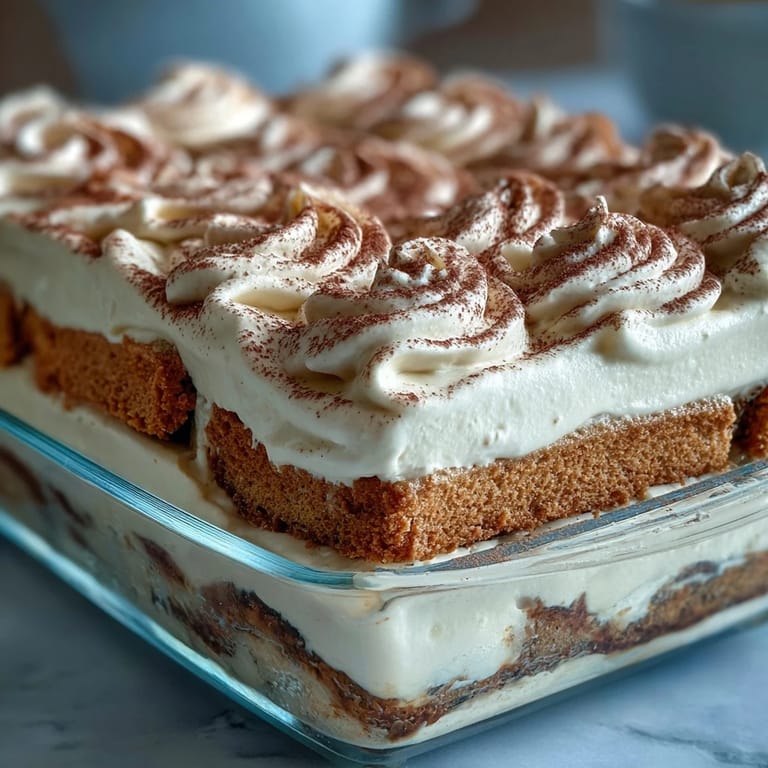
Save A few years back, I found myself standing in a Tokyo convenience store, mesmerized by a tin of hojicha tea that smelled like toasted nuts and autumn all at once. That same week, I'd been craving tiramisu something fierce, and somehow my brain decided these two worlds absolutely had to meet. The result was this hojicha tiramisu, a dessert that tastes like someone whispered secrets between Italy and Japan over a cup of tea.
I made this for my partner's parents on a rainy Sunday, and watching their faces when they tasted that first spoonful—that moment when confusion turned to delight—made me understand why fusion cooking exists. They kept asking what was different about it, and I loved keeping the secret until dessert was almost gone.
Ingredients
- Hojicha loose leaf tea: This roasted green tea is the soul of the dish, bringing that nutty, slightly smoky depth that makes people pause and ask what's in their mouth.
- Water: Use filtered if you can—it lets the hojicha flavor shine without any chlorine interference.
- Sugar for the syrup: Just enough to balance the tea's earthiness without turning it into candy.
- Large egg yolks: These create the silky base that makes this taste less like a trendy mashup and more like something your grandmother invented fifty years ago.
- Granulated sugar for the cream: Whisk this with the yolks over gentle heat—rushing this step is how you end up with scrambled eggs, which I learned the hard way.
- Heavy cream, cold: The cold matters because warm cream won't whip properly, and limp whipped cream is the enemy of everything.
- Mascarpone cheese, softened: Let it sit at room temperature for at least thirty minutes before you start, or it'll be stubborn and lumpy no matter how hard you beat it.
- Vanilla extract: A teaspoon feels small until you taste how it pulls everything together.
- Ladyfinger biscuits: The Italian classic—get the crispy kind, not the soft ones, because they need to hold their structure when they meet the tea syrup.
- Cocoa powder or hojicha powder for dusting: Save some hojicha powder if you can; it's more interesting than plain cocoa on top.
Tired of Takeout? 🥡
Get 10 meals you can make faster than delivery arrives. Seriously.
One email. No spam. Unsubscribe anytime.
Instructions
- Brew the hojicha moment:
- Bring water to a boil and let it calm down just slightly before pouring over the tea—boiling water can scald hojicha and turn it bitter. Steep for exactly five minutes, watching the water transform into liquid caramel, then strain it through a fine mesh so no leaf bits end up in your syrup.
- Create the foundation:
- Whisk egg yolks and sugar in a heatproof bowl, then set it over simmering water like you're warming a baby bottle. Keep whisking constantly for five to seven minutes until the mixture is pale and thick enough to hold a ribbon when you lift the whisk—this is your insurance policy against any food safety worries.
- Build the cloud:
- Whip cold heavy cream to stiff peaks in one bowl, then beat softened mascarpone and vanilla smooth in another. This is where patience pays off—fold gently, using a spatula and turning the bowl rather than stirring, so you keep all that air you just worked so hard to incorporate.
- The dipping dance:
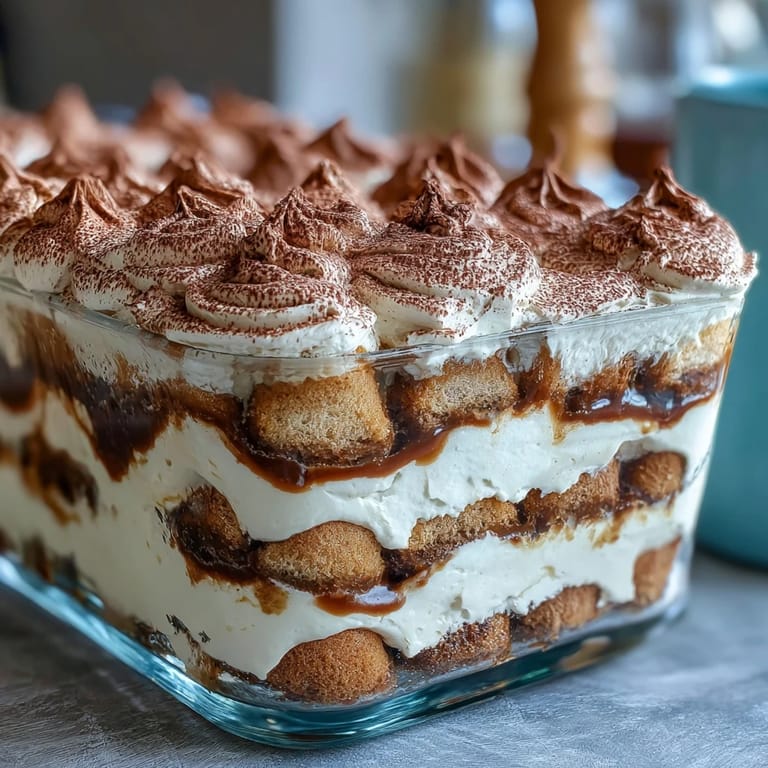
- Pour your cooled hojicha syrup into a shallow dish, then dip each ladyfinger for just one second per side—any longer and they'll dissolve into the cream below. Lay them in a single layer in your baking dish, creating your first floor of this edible building.
- Spread and layer:
- Dollop half the mascarpone cream over the ladyfingers and spread it gently, then repeat the dipping and layering with fresh ladyfingers and the remaining cream. The cream should cushion between the layers like a mattress between floors.
- The long rest:
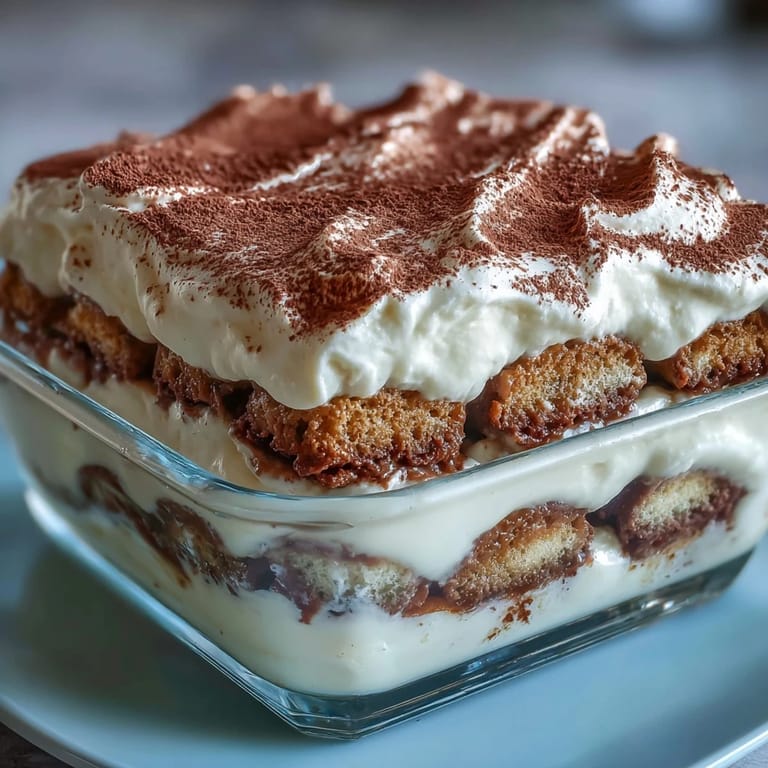
- Cover this with plastic wrap and let it chill for at least four hours, though overnight is when the real magic happens—the flavors meld, the texture sets, and the whole thing becomes something greater than the sum of its parts. You'll know it's ready when you can slice it cleanly without the layers sliding around.
- The final flourish:
- Right before serving, dust the top generously with cocoa powder or hojicha powder, shaking it through a fine mesh sifter so it lands evenly like fresh snow.
 Save
Save There's something about serving a dessert that bridges two cultures on one plate that feels like a small act of kindness. When someone tastes hojicha tiramisu for the first time, they're tasting proof that good ideas can come from anywhere, even from standing confused in a convenience store halfway around the world.
The Art of Not Oversaturating
The biggest mistake people make with tiramisu variations is drowning the ladyfingers completely, thinking more soaking equals more flavor. With hojicha, the tea is delicate enough that a quick dip is all you need—think of it as introducing two friends rather than forcing them to merge completely. I learned this after my first attempt when the middle layers turned into a mushy disappointment, and I realized the ladyfingers should stay crispy enough to provide structure.
Why Hojicha Over Other Teas
Hojicha is roasted, which means it's already been heat-processed, so brewing it doesn't release the bitterness that can happen with delicate greens. The roasting also gives it this warm, almost caramelized quality that actually complements the sweetness of tiramisu instead of fighting against it. If you've only ever had green tea, hojicha might surprise you—it tastes more like a cozy evening than a bright morning.
Customizing Without Losing the Plot
This dessert is forgiving enough that you can bend the rules a little, but some changes work better than others. Matcha would make it brighter and more floral, coffee liqueur adds depth if you want to push toward the boozy side, and a light sprinkle of toasted sesame seeds on top brings an unexpected nuttiness that makes people lean in for another bite wondering what they just tasted.
- If you're making this for someone with egg concerns, pasteurized eggs or a store-bought custard base works in a pinch.
- Gluten-free ladyfingers exist and work just as well, though they're sometimes crumbier so handle them with extra gentleness.
- The overnight rest is when all the flavors get to know each other, so don't skip it if you can avoid it—same-day tiramisu is fine, but aged tiramisu is transcendent.
 Save
Save This hojicha tiramisu has become one of those recipes I return to whenever I want to remind myself that the best food happens at the intersection of cultures and curiosity. Every time I make it, I think about that Tokyo convenience store and how a random moment of inspiration turned into something people actually crave.
Recipe FAQs
- → What makes hojicha different from matcha?
Hojicha is roasted green tea with a deep, toasty flavor and reddish-brown color. It's naturally lower in caffeine and less grassy than matcha, adding warm, nutty notes to creamy desserts.
- → Can I make this ahead of time?
Absolutely. This dessert actually improves after chilling overnight in the refrigerator. The flavors meld together beautifully, and the texture becomes more cohesive.
- → What can I substitute for ladyfingers?
Try sponge cake cut into fingers, pound cake slices, or even soft biscotti. For a gluten-free version, use gluten-free ladyfinger alternatives or delicate cake layers.
- → Is the egg yolk mixture safe to eat?
The egg yolks are gently cooked over simmering water in a double boiler until they reach 160°F, making them safe to consume while achieving a thick, creamy consistency.
- → How do I store leftovers?
Cover tightly with plastic wrap and refrigerate for up to 3-4 days. The texture remains excellent, though the cocoa powder may dissolve slightly into the cream over time.
- → Can I add alcohol to this dessert?
Yes, incorporate 2 tablespoons of coffee liqueur, Marsala wine, or even Japanese shochu into the hojicha syrup for an adult variation with added depth.