 Save
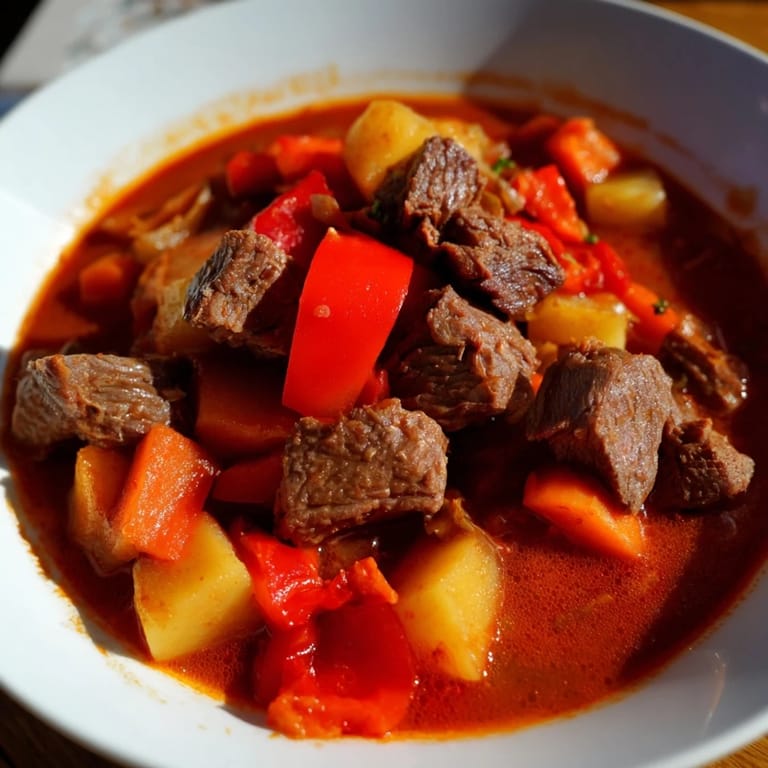
Save There's something about the smell of paprika hitting hot oil that transports me straight to a Budapest kitchen I visited years ago, where an elderly woman stirred an enormous pot without measuring anything, just knowing. Hungarian goulash has that same magic—it's not fussy or complicated, but somehow tastes like it took all day to perfect. The truth is simpler: good beef, real paprika, time, and heat do most of the work. This version respects those fundamentals while keeping the process straightforward enough for a weeknight.
I made this for friends on a cold February night when someone brought Hungarian wine and we ended up cooking together in my small kitchen, laughing at how the paprika made everything—including us—turn a little red. One friend took a spoonful straight from the pot and went completely quiet, which is the highest compliment any cook can receive.
Ingredients
- Beef chuck: Two pounds of well-marbled chuck is the foundation; it breaks down into silky strands during the long braise.
- Hungarian sweet paprika: This is non-negotiable—it's not just a spice, it's the whole soul of the dish, so buy the good stuff from a source you trust.
- Onions: Two large ones, chopped fine, dissolve into the sauce and add subtle sweetness that rounds out the paprika's earthiness.
- Garlic: Just two cloves minced fine; too much crowds out the paprika's starring role.
- Red bell pepper: One large one adds brightness and slight sweetness that balances the deep spice.
- Carrots: Two medium carrots sliced thin, they soften completely and add body to the stew.
- Potatoes: Optional, but they soak up the sauce and make the stew more substantial—I add them about halfway through cooking.
- Caraway seeds: A teaspoon of these gives the whole pot a subtle, aromatic quality that feels authentic without being obvious.
- Dried marjoram: A teaspoon rounds out the spice profile with an herbal note that paprika alone can't provide.
- Beef broth: Four cups of good broth—homemade is ideal, but a quality store-bought works if you avoid anything overly salty.
- Tomato paste: Two tablespoons deepen the color and add a gentle tang that prevents the stew from feeling one-dimensional.
- Vegetable oil or lard: Two tablespoons for cooking; if you can find lard, it adds authenticity and richness that vegetable oil can't quite match.
- Bay leaf, black pepper, and salt: The foundation seasoning that keeps everything balanced and honest.
Tired of Takeout? 🥡
Get 10 meals you can make faster than delivery arrives. Seriously.
One email. No spam. Unsubscribe anytime.
Instructions
- Start with the onions:
- Heat your oil or lard in a heavy pot over medium heat until it shimmers slightly, then add the chopped onions and let them soften for about 8 minutes, stirring occasionally until they turn golden and sweet. You'll know they're ready when the kitchen smells less raw and more like caramelized sweetness.
- Bloom the garlic:
- Add your minced garlic and cook for just a minute, stirring constantly, until it becomes fragrant and loses that harsh bite. Don't let it brown or it'll taste bitter.
- Brown the beef:
- Add the beef cubes in batches if needed so they have room to sear properly; let them sit undisturbed for a minute or two on each side until they develop a dark crust. This takes about 5 minutes total and creates the savory depth that carries through the whole stew.
- Toast the paprika:
- This is crucial: sprinkle the paprika over the meat and onions and stir immediately and constantly for about 30 seconds to a minute. The paprika needs heat to bloom but can burn if left alone, so stay with it and watch for the moment it smells toasty and rich rather than raw.
- Build the base:
- Stir in the tomato paste, caraway seeds, marjoram, black pepper, and salt, coating everything evenly and letting it cook for another minute so the spices toast slightly. Add the carrots, bell pepper, and bay leaf and mix everything together so the vegetables are nestled into the meat.
- Deglaze and simmer:
- Pour in the beef broth, using a wooden spoon to scrape up all the browned bits stuck to the bottom of the pot—those are flavor gold. Bring the whole thing to a gentle simmer, then cover, reduce the heat to low, and let it cook undisturbed for about an hour.
- Add potatoes if using:
- After an hour, if you're using them, add your cubed potatoes and stir, then continue cooking uncovered for another 45 minutes to an hour until the beef is fall-apart tender and the potatoes are soft. The stew should thicken slightly as it cooks and the potatoes release their starch.
- Taste and adjust:
- Before serving, fish out the bay leaf and taste the stew, adding more salt if needed or a pinch of paprika if it needs more spice. Trust your palate here—stews benefit from a final seasoning check.
 Save
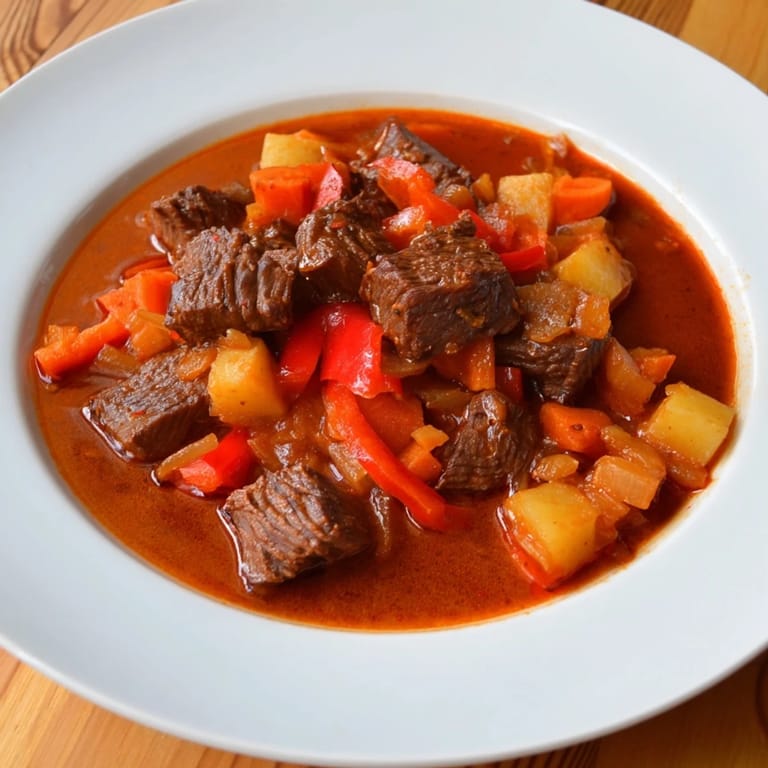
Save The moment I realized goulash had become part of my cooking vocabulary was when my partner brought home the wrong cut of beef one evening, and I didn't panic—I just knew it would work. That's when a recipe stops being instructions and becomes something you understand in your bones.
The Science of Slow Cooking Beef
Beef chuck is full of collagen and connective tissue that seems tough at first, but those long, moist hours of gentle heat transform everything into gelatin that coats your mouth and makes the stew velvety. The low temperature ensures the meat fibers relax instead of seizing up, and the liquid braises rather than boils, so every bite stays tender instead of turning stringy. Understanding this changed how I cook all kinds of stews—it's not about time alone, it's about respecting the chemistry.
Paprika: The Heart of Authenticity
Hungarian paprika is different from the paprika you might find in a standard spice rack—it's deeper, more complex, with a flavor that feels like it belongs in a story about old kitchens and family recipes. There's sweet paprika, which is what this recipe calls for, but there's also half-sharp and hot versions if you want to play with heat levels. The difference between a mediocre goulash and a transcendent one often comes down to this one ingredient, so it's worth seeking out from a specialty store or an online source you trust.
Serving and Pairing Ideas
This stew is honest food that doesn't need much—crusty bread for soaking up the broth, thick egg noodles tossed with a little butter, or those delicate Hungarian csipetke dumplings if you want to get fancy. Some people serve it over rice, and while that's not traditional, it absolutely works and feeds more people from the same pot.
- Leftovers genuinely taste better the next day once the flavors have melded and deepened overnight.
- You can make this up to three days ahead and reheat it gently on the stove, or freeze it for a month and have dinner ready whenever you need comfort.
- A splash of red wine stirred in at the end adds complexity, though it's not necessary if you don't have it open.
 Save
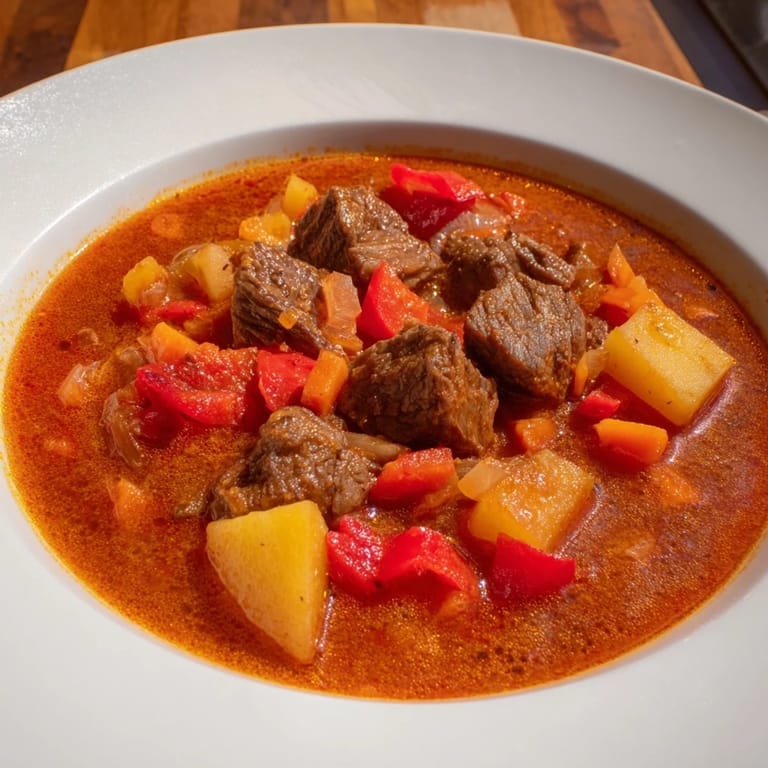
Save This is the kind of recipe that teaches you how to cook, not just what to cook—it's forgiving enough to learn from mistakes but flavorful enough to feel like a win every time. Make it once and you'll find yourself making it again on nights when you need something that tastes like home.
Recipe FAQs
- → What cut of beef works best for this stew?
Beef chuck is ideal due to its marbling and tenderness after slow cooking, resulting in a juicy, flavorful stew.
- → Can I adjust the spice level in this dish?
Yes, adding hot paprika or a chopped chili pepper will add heat, complementing the sweet paprika’s warmth.
- → What sides pair well with this dish?
Rustic bread, egg noodles, or Hungarian csipetke dumplings are traditional accompaniments that soak up the rich sauce beautifully.
- → Is it necessary to add potatoes?
Potatoes are optional but they add a comforting texture and help thicken the stew as it simmers.
- → How can I tell when the stew is done?
The beef should be very tender and the vegetables soft; the sauce will thicken slightly with a rich aroma.
- → What’s the role of caraway seeds in this dish?
Caraway adds a mild, earthy sweetness that enhances the overall flavor complexity alongside paprika and marjoram.