 Save
Save I discovered this salad during a lazy afternoon when my kitchen felt too warm for anything heavy. A friend dropped by with fresh mint from her garden, and I had some chickpeas I'd been meaning to use. Within minutes, I was tossing together quinoa, cucumber, and herbs, and suddenly we had something so bright and satisfying that we made it twice that week. It's the kind of dish that feels effortless but tastes like you actually tried.
I remember making this for a picnic on a June evening, packing it in a glass container and watching my sister devour it straight from the bowl with a fork. She kept asking what made it taste so good, and honestly, it's just good ingredients treated simply—no tricks, no fuss.
Ingredients
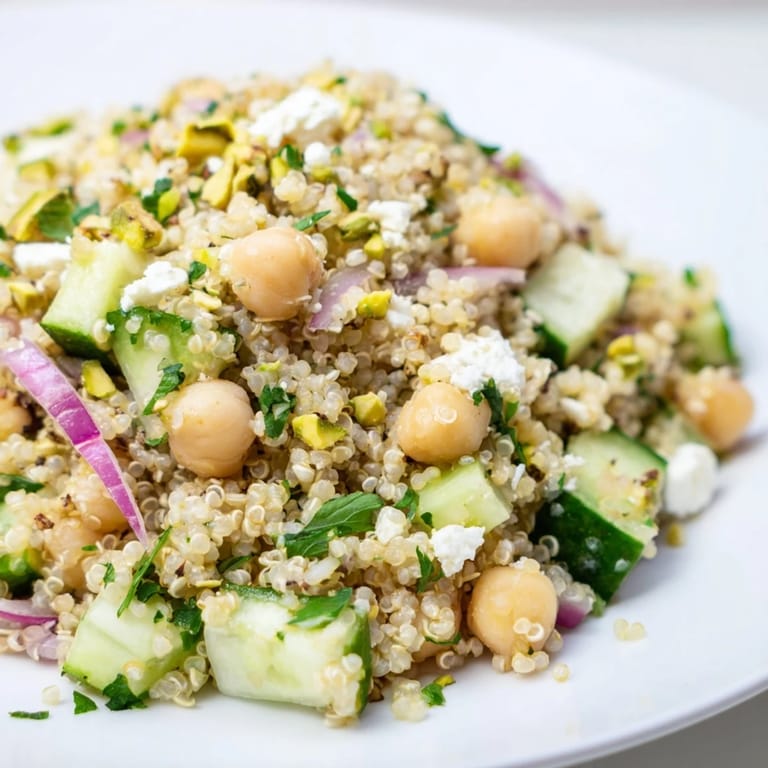
- Quinoa or bulgur, 1 cup uncooked: Choose quinoa if you like a nuttier, fluffier grain or bulgur for something earthier. Either one absorbs the dressing beautifully.
- Chickpeas, 1 can (15 oz): Drain and rinse them well to remove excess sodium and starch, which keeps the salad from getting gummy.
- Cucumber, 1 large: Dice it into bite-sized pieces, and don't peel it unless you prefer—the skin adds color and a bit of texture.
- Red onion, 1/2 small: Finely chopped and raw, it brings a sharp brightness that balances the creamy feta.
- Feta cheese, 3/4 cup crumbled: Buy a block and crumble it yourself for better texture, or use pre-crumbled in a pinch.
- Fresh parsley and mint, 1/2 cup and 1/4 cup: Fresh herbs are non-negotiable here—they're what make this taste alive and not like leftover grain salad.
- Pistachios or slivered almonds, 1/3 cup toasted: Toasting them takes two minutes and completely transforms their flavor from flat to rich and nutty.
- Extra virgin olive oil, 3 tbsp: This is where quality matters—use something you'd actually taste on bread.
- Lemon juice, 2 tbsp fresh: Bottled juice will work, but fresh-squeezed makes a noticeable difference in brightness.
- Garlic, 1 clove minced, and salt and pepper to taste: The garlic in the dressing keeps everything from tasting one-dimensional.
Tired of Takeout? 🥡
Get 10 meals you can make faster than delivery arrives. Seriously.
One email. No spam. Unsubscribe anytime.
Instructions
- Cook Your Grain:
- Rinse quinoa or bulgur under cold water until the water runs clear, then combine with 2 cups fresh water in a medium saucepan. Bring to a boil, then immediately reduce heat, cover, and let it simmer quietly for about 12 minutes for quinoa or 15 for bulgur—you'll know it's done when the liquid is absorbed and the grains are tender. Fluff it gently with a fork and spread it on a plate to cool faster.
- Gather Everything in One Bowl:
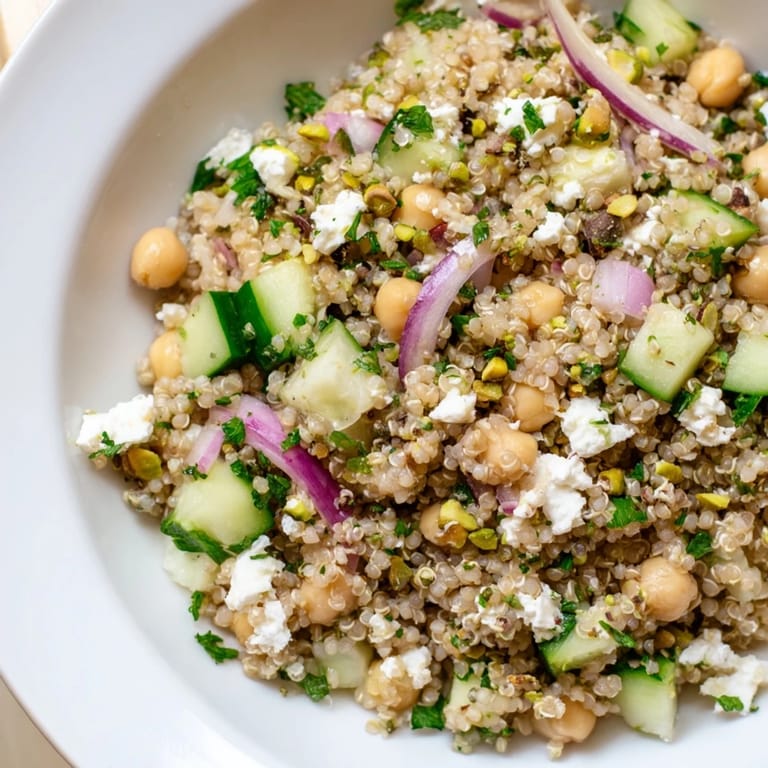
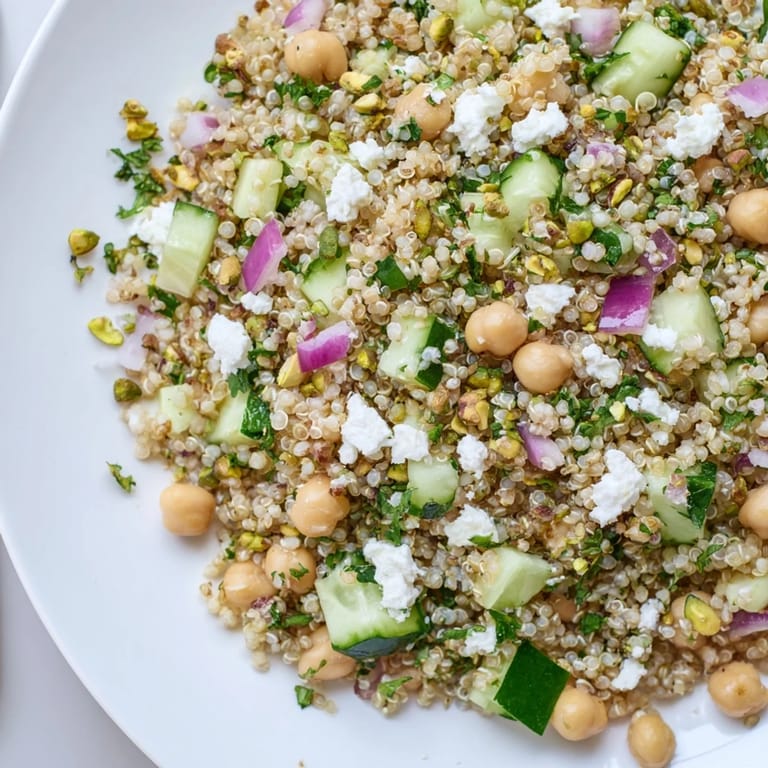
- Once your grain is cool enough to touch, toss it into a large bowl with the drained chickpeas, diced cucumber, finely chopped red onion, crumbled feta, chopped parsley and mint, and your toasted nuts. At this point, it looks a bit like controlled chaos, but trust it.
- Make the Dressing:
- In a small bowl, whisk together olive oil, fresh lemon juice, minced garlic, salt, and pepper until it's emulsified and tastes balanced—not too acidic, not too oily. This only takes about a minute, and it's the thing that ties everything together.
- Bring It All Together:
- Pour the dressing over the salad and toss gently but thoroughly, making sure every grain and bean gets coated. Taste a bite and adjust salt or lemon juice if it needs it—you're the final judge.
 Save
Save There was a moment when my partner tasted this for the first time and asked if I'd made it at a restaurant. That small recognition—that something simple could taste that good—was when I realized this wasn't just a salad, it was something we'd keep coming back to.
Why This Salad Works
The magic here isn't in complexity—it's in letting each ingredient do what it does best. The grains provide substance, the chickpeas add protein, the vegetables bring freshness and crunch, and the feta brings richness without heaviness. The herbs are what elevate it from 'side dish' to 'something you actually want to eat.' Every component matters, and none of them overshadow the others.
When to Make This
This is a warm-weather staple in my kitchen, but it works year-round. It's perfect for meal prep because it stays fresh for three to four days in the refrigerator, though the nuts stay crispest if you add them right before serving. I've brought it to potlucks, packed it for work lunches, and served it alongside grilled fish at casual dinner parties.
Customizing Your Salad
The beauty of this recipe is how flexible it is—change what you have, keep what you love. If avocado is calling to you, slice one in at the last minute. Sun-dried tomatoes add a subtle sweetness. Sometimes I add a handful of arugula or swap the red onion for thinly sliced shallots if I'm feeling fancy.
- Swap bulgur for farro or barley if you want a chewier texture.
- Add diced avocado, sun-dried tomatoes, or roasted red peppers for extra richness or sweetness.
- Use walnuts, pecans, or sunflower seeds instead of pistachios if that's what you have on hand.
 Save
Save This salad has quietly become one of those recipes I reach for when I want to feel nourished without overthinking dinner. It's dependable, it's delicious, and it never disappoints.
Recipe FAQs
- → Can I substitute quinoa with bulgur?
Yes, bulgur can be used as a grain alternative; cooking times may vary slightly but both provide a hearty base.
- → What nuts work best for this salad?
Toasted pistachios or slivered almonds add a nice crunch, but walnuts or pecans can be great substitutes.
- → How do I make the salad vegan friendly?
Simply omit the feta cheese or replace it with a plant-based cheese alternative to keep it vegan.
- → Is it better to serve this salad warm or chilled?
This salad tastes great served chilled or at room temperature, allowing the flavors to meld beautifully.
- → Can I add other vegetables to enhance flavor?
Yes, diced avocado or sun-dried tomatoes add extra richness and depth to the salad's flavor profile.