 Save
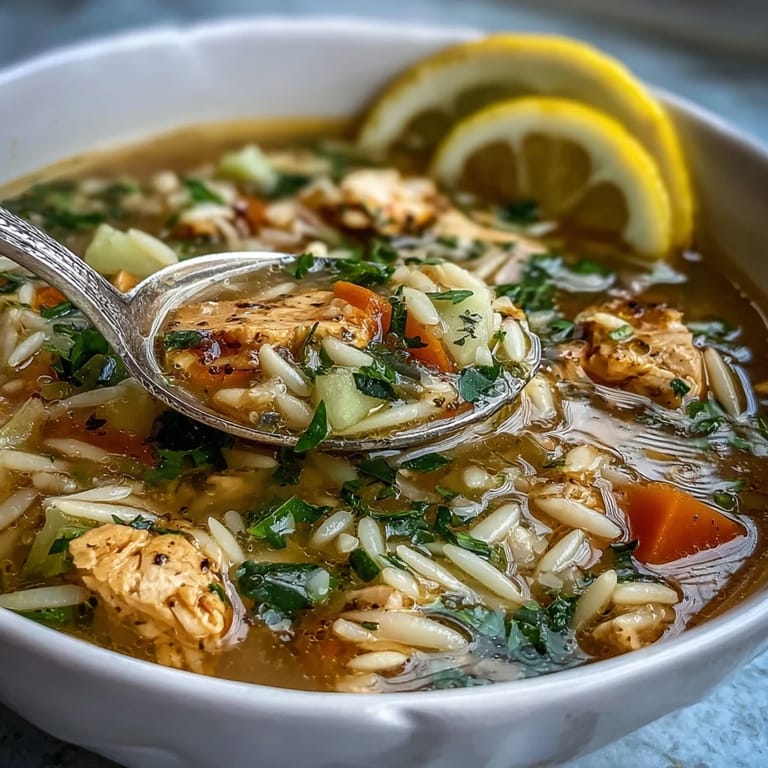
Save There's a moment in late winter when I stop craving heavy stews and suddenly want something bright—this soup was born on exactly that kind of day. My kitchen smelled like garlic and lemon, steam rising from the pot while I stood at the window watching the first real sun in weeks. It felt like the dish itself was telling me what I needed: something warm but alive, chicken and vegetables in a broth that tasted like it was made from pure optimism.
I made this for my neighbor who'd just come home from the hospital, and watching her face when she tasted it—that little pause before she smiled—reminded me why simple, honest food matters so much. She asked for the recipe while still holding the bowl, and I knew then this was one of those dishes that transcends being just sustenance.
Ingredients
- Boneless, skinless chicken breasts (2, about 400 g), diced: Keep them bite-sized and relatively uniform so they cook at the same speed and stay tender in the broth.
- Medium zucchini, diced: Don't peel it—the skin holds the flesh together during cooking and adds a whisper of earthiness you'll miss if you remove it.
- Medium carrot, peeled and diced: Carrots take slightly longer than other vegetables to soften, which is why they go in at the very beginning with the onion and celery.
- Small yellow onion, finely chopped: Yellow onions have a natural sweetness that balances the acidity of the lemon without dominating the broth.
- Garlic cloves (2), minced: Add this after the softer vegetables start breaking down, or it burns and tastes bitter—a mistake I made before learning to listen for that fragrant moment.
- Celery stalks (2), diced: This is the unsung hero that builds the foundation of the broth; don't skip it or use celery salt as a substitute.
- Lemon juice and zest (from 1 large lemon): Add the juice at the end to preserve its brightness, but zest it early and keep it aside so you don't lose any of those volatile oils.
- Fresh parsley (2 tablespoons), chopped: Use fresh, never dried—it wilts in the heat and becomes part of the broth rather than sitting on top as a garnish.
- Orzo pasta (3/4 cup or 120 g): This tiny rice-shaped pasta absorbs flavor from the broth while staying delicate enough not to overwhelm the lightness of the soup.
- Low-sodium chicken broth (6 cups or 1.5 L): Low-sodium lets you control the salt level throughout cooking and taste how the lemon actually shines.
- Olive oil (2 tablespoons): Use a neutral-tasting variety here so it doesn't compete with the delicate lemon and herb notes.
- Dried oregano (1 teaspoon) and dried thyme (1/2 teaspoon): These herbs need time to bloom in the hot broth, so don't add them at the end or they'll taste dusty and sharp.
- Salt and freshly ground black pepper, to taste: Taste constantly as you cook—the chicken releases its own salts, and you want to build flavor thoughtfully rather than oversalting from the start.
Tired of Takeout? 🥡
Get 10 meals you can make faster than delivery arrives. Seriously.
One email. No spam. Unsubscribe anytime.
Instructions
- Start your aromatic base:
- Heat the olive oil in a large pot over medium heat, then add the onion, carrot, and celery all at once. Sauté for 4 to 5 minutes, listening for that soft crackling sound that tells you the vegetables are releasing their water and starting to caramelize slightly at the edges.
- Wake up the garlic:
- Stir in the minced garlic and cook for just 1 minute until the kitchen smells like a Mediterranean kitchen should—warm and garlicky but not burned. You'll know it's right when your nose tells you to keep going.
- Build your protein:
- Add the diced chicken and sprinkle it immediately with salt, pepper, oregano, and thyme. Stir constantly for 3 to 4 minutes while watching the chicken transform from raw pink to opaque white—this is when the seasoning gets locked into the meat.
- Add the broth and pasta:
- Pour in all 6 cups of chicken broth and bring the pot to a gentle boil—you want active bubbles, not an aggressive rolling boil that makes the chicken tough. Stir in the orzo and zucchini together, then lower the heat to a simmer.
- Let it come together:
- Simmer for 10 to 12 minutes while stirring occasionally, watching as the orzo softens and soaks up all that savory, herbed broth. The zucchini should still have a slight firmness to it, not mushy.
- Finish with brightness:
- Remove from heat and stir in the lemon juice and zest along with half of your fresh parsley. Taste the soup and adjust salt and pepper—it should taste alive and balanced, never too acidic.
- Serve and celebrate:
- Ladle into bowls, top with the remaining fresh parsley, and add a lemon slice if you're feeling fancy. Serve it while it's hot and steaming, which is when it tastes its absolute best.
 Save
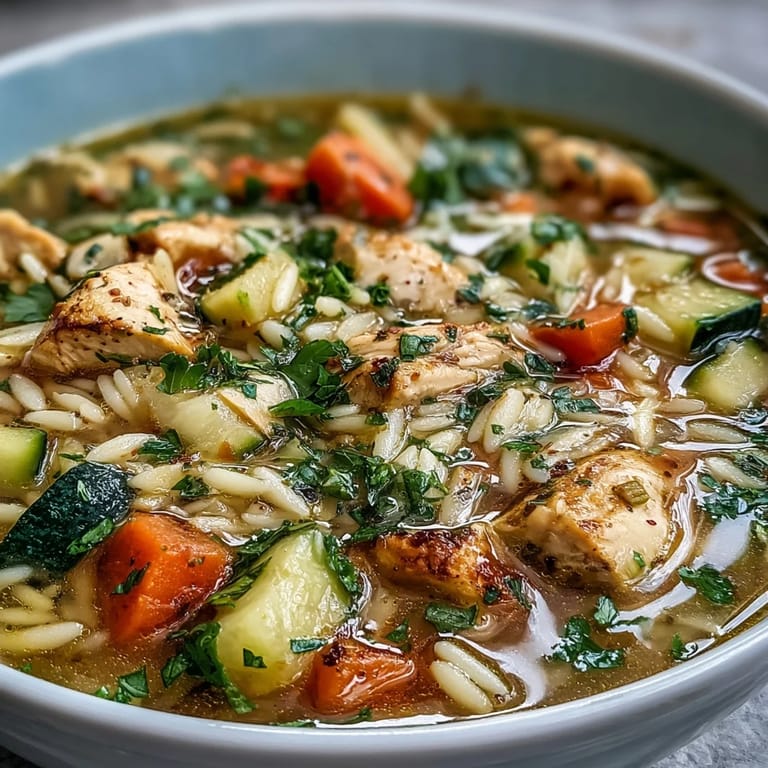
Save My daughter once told me this soup tasted like 'the good kind of healthy,' which somehow said everything I'd been trying to achieve in one bowl. Food moments like that remind me why we cook at all.
Ways to Make It Your Own
The structure of this soup is sturdy enough to welcome your additions and changes without falling apart. I've added fresh dill instead of parsley on quieter days, and spinach or kale at the very end when I want something darker and more mineral-tasting.
Storage and Reheating
This soup keeps beautifully in the refrigerator for up to three days, and honestly tastes even better the next day when all the flavors have had time to become friends with each other. Reheat gently over medium heat on the stovetop, and if it's thickened too much, just add a splash of broth or water to restore that perfect soupy consistency.
Pairing and Serving Suggestions
Serve this alongside something with texture—a crusty piece of sourdough bread, a simple green salad, or even soft focaccia if you want to get a little more luxurious about it. A crisp Sauvignon Blanc works beautifully alongside it if you're in a wine mood, or just ice water if you want the soup itself to be the star.
- The bread is important because it gives you something to drag through those last spoonfuls of broth at the bottom of the bowl, which honestly might be the best part.
- If you're making this for guests, have extra fresh parsley and lemon slices on the table so people can garnish exactly to their taste.
- This soup actually freezes well for up to two months if you leave out the orzo and add fresh pasta when you're reheating—that way it stays properly al dente.
 Save
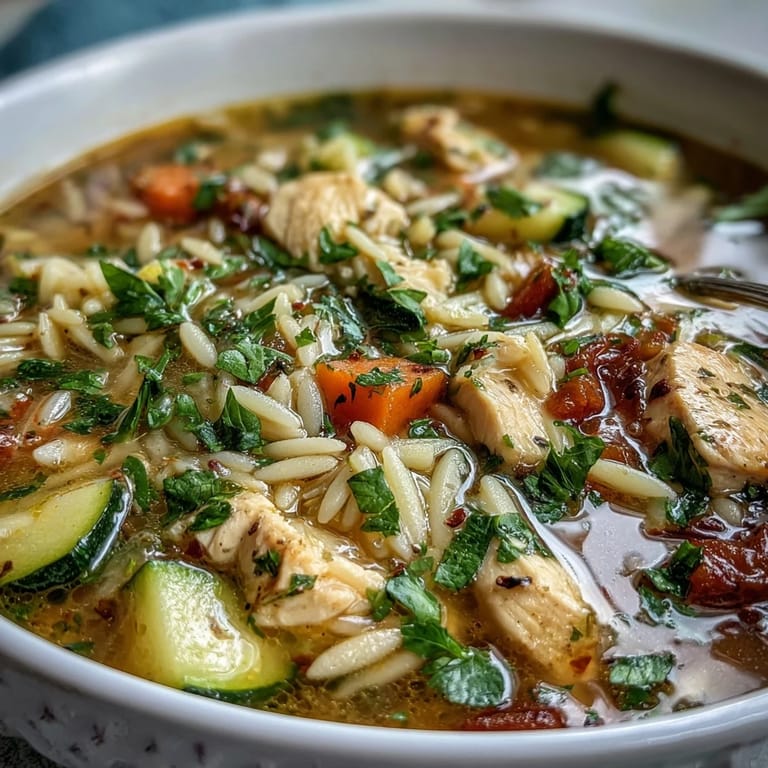
Save This is the soup that reminds you why cooking from scratch still matters, why simple ingredients in the right combinations can taste like something approaching magic. Make it when you need to feel better, make it when you want to feed someone you love, or just make it on a regular Tuesday because you deserve that brightness in your bowl.
Recipe FAQs
- → Can I use another grain instead of orzo?
Yes, small pasta shapes or even couscous can be substituted, but adjust cooking times to maintain texture.
- → How can I make this dish dairy-free?
This meal is naturally free of dairy unless cream or yogurt is added; simply omit those to keep it dairy-free.
- → What herbs enhance the flavor best?
Dried oregano and thyme provide earthy notes that complement the lemon and chicken beautifully.
- → Is it possible to prepare this in advance?
This dish reheats well; store it covered in the refrigerator and gently reheat on the stove or microwave.
- → Can I substitute chicken with a vegetarian option?
Yes, chickpeas or other legumes can replace chicken for a hearty vegetarian alternative.