 Save
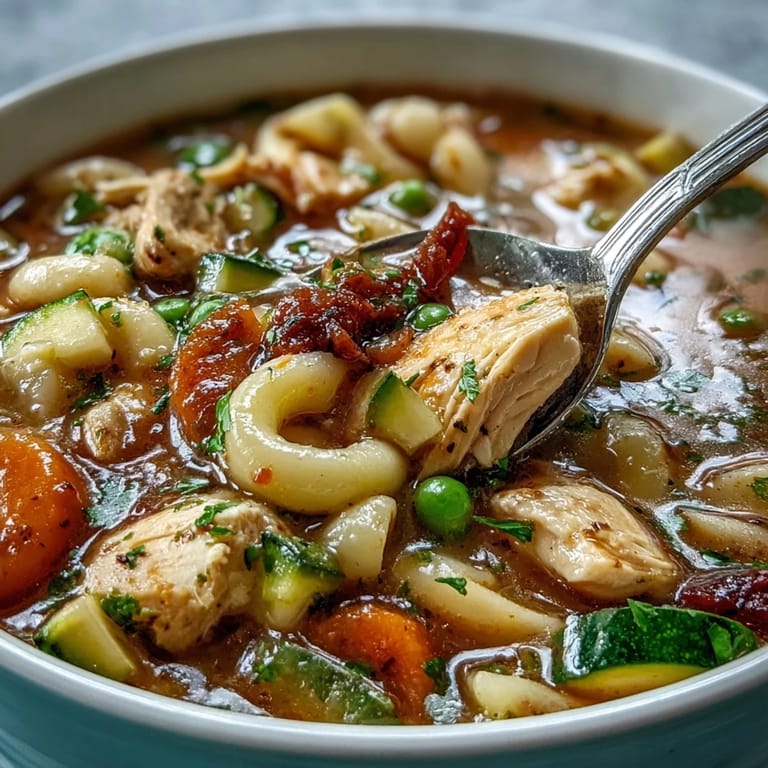
Save There's something about a steaming bowl of pasta soup that stops mid-conversation—everyone just pauses to breathe in the smell. My neighbor brought over a pot of this one November afternoon when the weather turned, and I watched her ladle it into bowls with this quiet confidence, like she'd made it a hundred times. That first spoonful, with the tender chicken and soft vegetables all swimming together in this golden broth, felt less like a recipe and more like being taken care of. I've been making it ever since, especially on evenings when the kitchen needs to feel warm again.
I made this for my son's first week back at university, freezing four containers so he'd have something that actually tasted like home. He texted me a photo of a bowl surrounded by textbooks, and that moment made me realize this soup had become his comfort food too, the way it had become mine.
Ingredients
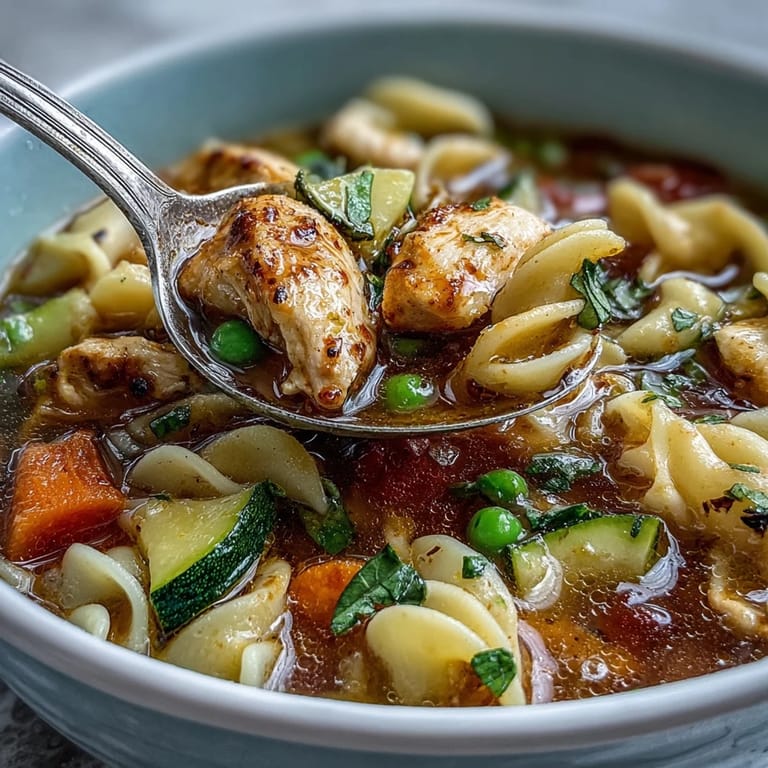
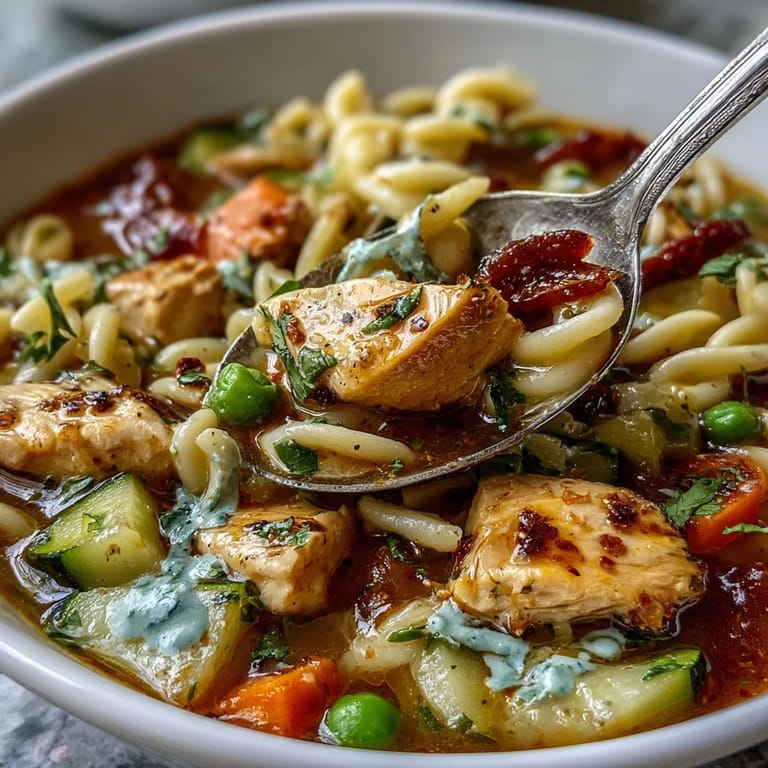
- Chicken breasts: Boneless and skinless work best because they cook quickly and stay tender—about 400 grams total, cut into half-inch cubes so they cook evenly without falling apart.
- Carrots: Two medium ones, peeled and sliced into thin rounds that soften beautifully and add natural sweetness.
- Celery: Two stalks sliced adds an earthy backbone that somehow makes everything taste more intentional.
- Onion: One medium onion, finely chopped, is the foundation—it disappears into the broth and becomes the flavor nobody can quite identify but everyone notices when it's missing.
- Garlic: Two cloves minced, added after the softer vegetables so it doesn't burn and turn bitter.
- Zucchini: One medium one diced brings a subtle vegetable note without overpowering the soup.
- Green beans: One cup trimmed and cut into one-inch pieces adds texture and stay slightly firm if you time it right.
- Frozen peas: One cup added near the end for brightness and that little pop when you bite them.
- Diced tomatoes: One 400-gram can, undrained, brings acidity that lifts the whole soup.
- Fresh parsley: Two tablespoons chopped, stirred in at the very end so it keeps its color and fresh taste.
- Small pasta: One cup of ditalini or elbow macaroni—small shapes work better than long ones because they nestle into the broth instead of sticking out awkwardly.
- Chicken broth: Eight cups of low-sodium gives you room to adjust seasoning without the soup ending up salty.
- Olive oil: One tablespoon for sautéing the vegetables until they're soft and fragrant.
- Thyme: One teaspoon dried, an herb that smells like autumn in a dried form but tastes cleaner than you'd expect.
- Basil: One teaspoon dried rounds out the seasoning with something familiar and comforting.
- Bay leaf: One leaf that you'll remove later—it's like adding a whisper of flavor that nobody sees.
- Salt and pepper: To taste, always added in stages because the broth carries salt too.
Tired of Takeout? 🥡
Get 10 meals you can make faster than delivery arrives. Seriously.
One email. No spam. Unsubscribe anytime.
Instructions
- Build the base:
- Heat olive oil in a large soup pot over medium heat, then add the chopped onion, sliced carrots, and celery. Let them sauté for about five minutes until the onion turns translucent and the carrots soften at the edges—you're looking for that moment when the kitchen starts to smell like home cooking.
- Wake up the garlic:
- Stir in your minced garlic and cook for just one minute, stirring constantly so it becomes fragrant without browning and turning harsh.
- Brown the chicken gently:
- Add the cubed chicken and let it cook for four to five minutes, stirring occasionally, until the pieces are mostly white on the outside but still slightly translucent inside. You're not trying to fully cook it here—just color it and start the process.
- Add everything that stays:
- Stir in the diced zucchini, green beans, canned tomatoes with all their juices, dried thyme, basil, bay leaf, salt, and pepper. Mix everything together so the seasonings are distributed throughout.
- Bring it together:
- Pour in the chicken broth and turn the heat up until the soup reaches a boil, then reduce the heat to low, cover the pot, and let it simmer gently for fifteen minutes. This gives the chicken time to cook through and all the flavors a chance to start becoming friends.
- Finish with pasta:
- Uncover the pot, stir in the pasta and frozen peas, and simmer uncovered for ten to twelve minutes until the pasta is al dente and the chicken is fully cooked through. Taste as you go—pasta absorbs broth and keeps cooking even after you've turned off the heat.
- Final touches:
- Remove the bay leaf, stir in your fresh chopped parsley, and adjust the salt and pepper if needed. Serve immediately in warm bowls, optionally topped with extra parsley or grated Parmesan.
 Save
Save There was a night when my daughter came home from school frustrated with something I can't even remember now, and she sat at the counter without speaking while I ladled this soup into bowls. By the time she finished the first spoonful, her shoulders had dropped and she started talking again—not about what was wrong, but about her day in the way kids do when they're finally ready. That's when I understood that some meals aren't really about nutrition.
Variations That Still Feel Like Home
The beauty of this soup is how it responds to what's in your refrigerator rather than fighting against it. I've swapped zucchini for diced bell peppers, traded green beans for corn, and once threw in a handful of fresh spinach near the end because it was about to wilt anyway. Every version tastes slightly different but somehow the same, like a song where you change a few notes but the feeling stays intact. The bones of the recipe—the sautéed aromatics, the broth, the pasta—stay constant while the vegetables become a conversation between what you have and what you're hungry for.
How to Make It Your Own
My mother always said a recipe is just a suggestion, and after making this soup dozens of times, I've started to believe her. You could use leftover roasted chicken, canned beans, or even swap the chicken broth for vegetable broth and skip the chicken entirely if that's what your household needs that day. The seasoning proportions are flexible too—if you taste it and decide you want more basil or thyme, trust that instinct. There's no version of this soup that's wrong, only different versions that work for different moments in your life.
Storage and Reheating Tips
This soup improves as it sits, the flavors deepening and mingling overnight in the refrigerator. It keeps well for up to four days in a sealed container, and freezes beautifully for up to three months—I usually portion mine into smaller containers so I can grab one without defrosting more than necessary. When you reheat it, do so gently over medium heat and add a splash of broth or water because the pasta continues to absorb liquid even in storage.
- If you're freezing it, slightly undercook the pasta so it doesn't turn mushy when you reheat.
- Store leftover soup with the parsley added fresh just before serving, as frozen parsley loses its brightness.
- A squeeze of fresh lemon juice when reheating wakes the whole thing up and reminds you why you loved it in the first place.
 Save
Save This soup has become one of those recipes I make without consulting notes anymore, adding pinches of this and adjusting that based on mood and season. It's the kind of dish that reminds you why cooking matters in the first place.
Recipe FAQs
- → Can I make this pasta soup ahead of time?
Yes, you can prepare this soup up to 3 days in advance. Store it in an airtight container in the refrigerator. Note that the pasta will continue to absorb liquid, so you may need to add extra broth when reheating.
- → What type of pasta works best?
Small pasta shapes like ditalini, elbow macaroni, or small shells work beautifully. These shapes hold up well in broth and are easy to scoop up with a spoon. Gluten-free pasta can be substituted if needed.
- → Can I freeze this soup?
Freezing works best if you cook the pasta separately. The soup base freezes well for up to 3 months. When ready to serve, thaw the base, reheat, and add freshly cooked pasta to maintain texture.
- → How can I add more flavor?
Using rotisserie chicken instead of raw adds depth. A Parmesan rind simmered in the broth creates richness. Extra fresh herbs like rosemary or oregano enhance the aromatic profile.
- → What vegetables can I substitute?
Feel free to swap zucchini for spinach, green beans for corn, or add bell peppers. The formula is flexible—use what you have on hand or what's in season for best results.
- → Is this suitable for meal prep?
Absolutely. Portion into individual containers for easy grab-and-go lunches throughout the week. Add a splash of broth when reheating as the pasta will continue absorbing liquid.