 Save
Save My first pelmeni lesson came on a snowy December afternoon when my neighbor pulled me into her kitchen, flour already dusting her apron. She showed me how her grandmother had shaped these tiny dumplings one by one, her hands moving with such practiced ease that I almost missed the technique entirely. Watching her fold each circle into that distinctive pinched pouch felt like learning a secret language, and the moment I tasted one fresh from boiling water, crowned with cool sour cream, something clicked—this wasn't just food, it was an invitation into her family's tradition.
I made these for a potluck once and watched three different people go back for seconds before anyone had even finished their first plate—something about the combination of pillowy dough and rich meat filling just disappears. That's when I realized pelmeni were my secret weapon for impressing people without making it obvious how much effort had actually gone into the making.
Ingredients
- All-purpose flour (2 cups): The foundation that needs kneading to develop just enough gluten so your dough stays tender but doesn't tear when you fold.
- Cold water (1/2 cup): Temperature matters here—cold water keeps the dough from getting tough, so don't use warm.
- Egg (1 large): This binds everything together while adding richness that you'll notice in every bite.
- Salt for dough (1/2 tsp): Seasons the base and strengthens the gluten network without overdoing it.
- Ground pork (7 oz): Brings a subtle sweetness that balances the beef's earthiness.
- Ground beef (7 oz): The workhorse that gives the filling its savory backbone and satisfying texture.
- Small onion, finely grated: Releases its juices directly into the filling instead of staying as chunks, keeping everything moist.
- Garlic (2 cloves), minced: Just enough to whisper in the background without overpowering the meat.
- Black pepper and salt for filling: Season to your taste preference—I lean toward generous pepper.
- Cold water for filling (2 tbsp): Makes the mixture sticky enough to stay put inside each pocket.
- Sour cream (1 cup): The crowning touch that should be served cold against the hot dumplings.
- Fresh dill, chopped (optional): A brightness that transforms the dish from simple to memorable.
Tired of Takeout? 🥡
Get 10 meals you can make faster than delivery arrives. Seriously.
One email. No spam. Unsubscribe anytime.
Instructions
- Build your dough canvas:
- Combine flour and salt in a bowl, then add the egg and gradually pour in cold water while mixing with your hands or a wooden spoon. Knead for 8 to 10 minutes until the dough becomes smooth and elastic—it should feel soft but not sticky, almost like an earlobe. Wrap it tightly and let it rest for 20 minutes while you take a breath and prep your filling.
- Create the meat mixture:
- Combine both meats in a bowl with the grated onion, minced garlic, salt, pepper, and cold water, mixing thoroughly until the filling turns slightly sticky and everything is evenly distributed. The moisture from the grated onion and the water keeps the filling tender instead of dense.
- Roll and cut:
- Dust your work surface with flour and roll the rested dough until it's paper-thin, about 1/16 inch thick—you want it delicate enough that light passes through it. Using a 2.5-inch round cutter, stamp out circles and stack them gently with flour between each layer so they don't stick.
- Fill and fold with intention:
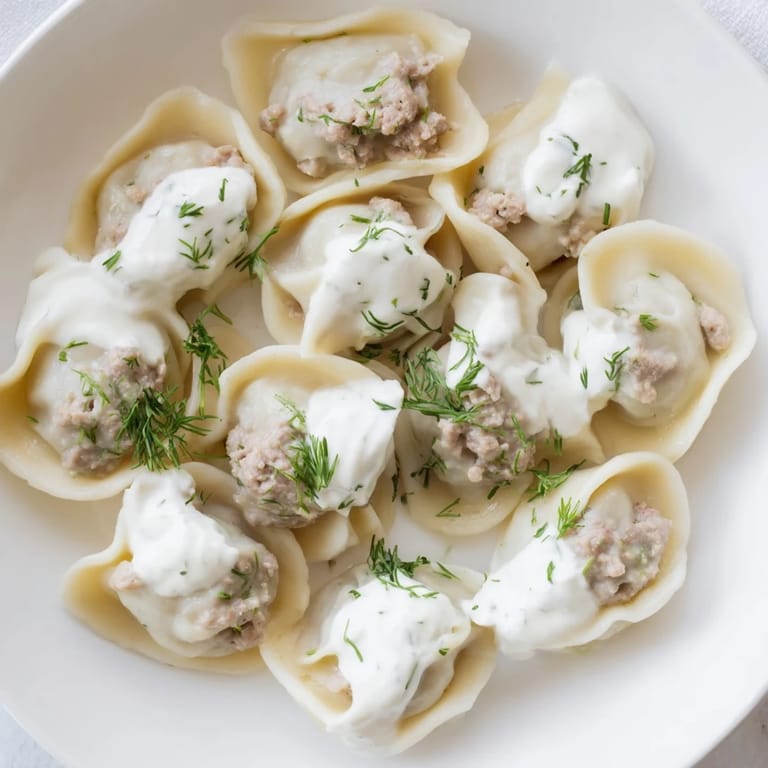
- Place one teaspoon of filling in the center of each circle, then fold it in half to form a half-moon, pinching the straight edge firmly so no filling peeks out. Bring the two pointed corners around and pinch them together to seal—this distinctive shape is what makes pelmeni unmistakable.
- Boil until they float:
- Bring a large pot of salted water to a rolling boil and drop the pelmeni in batches, stirring gently with a wooden spoon immediately so they don't stick to the bottom or each other. They're done when they float to the surface and stay there for a minute, which means the filling has cooked through.
- Serve with generosity:
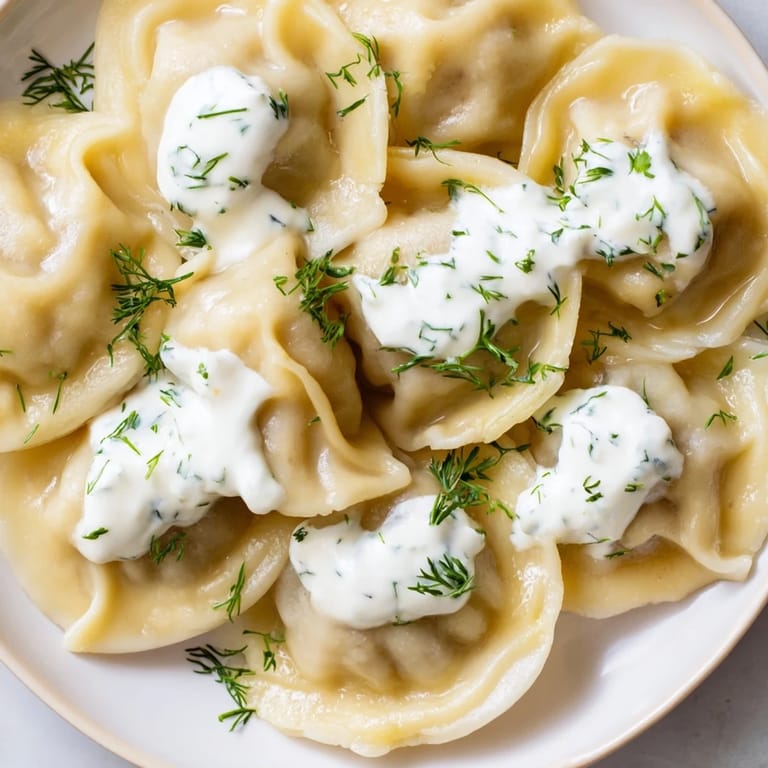
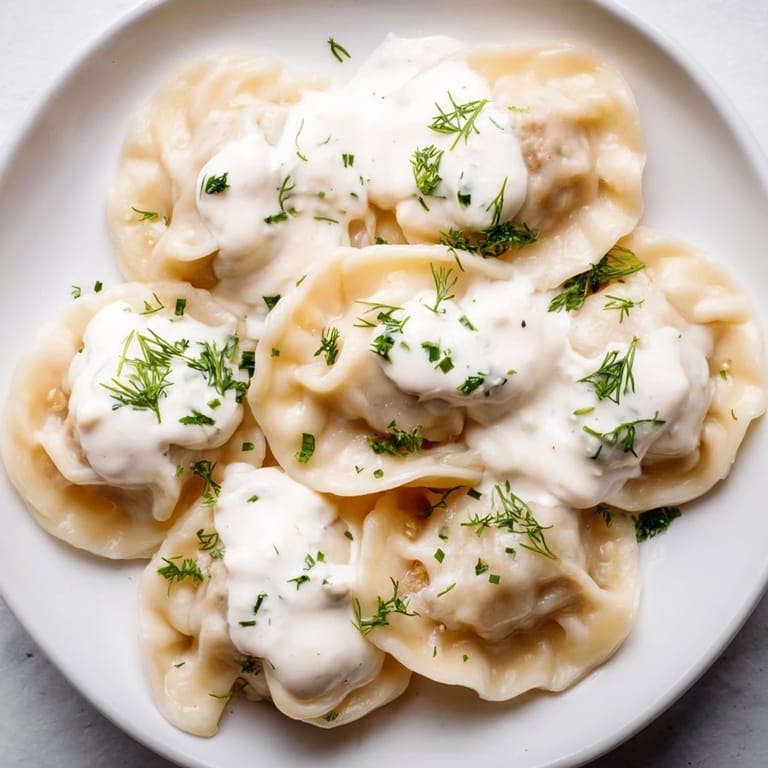
- Remove them with a slotted spoon and transfer to serving bowls, then top each portion with a generous dollop of cold sour cream and a sprinkle of fresh dill. The contrast between the hot dumpling and cold cream is where the magic happens.
 Save
Save There's something almost meditative about folding pelmeni once you find your rhythm, and I've learned that's when people relax and tell their best stories in the kitchen. My aunt and I once made three hundred of these together for a family gathering, and by pelmeni number fifty, we were laughing at inside jokes while our hands moved on autopilot.
Why These Dumplings Matter
Pelmeni represent the kind of cooking that nourishes long before you take the first bite—the kind where the making is half the magic. In Russia, they appear at celebrations and quiet weeknights alike, at tables where three generations might be gathered. When you make them yourself, you're not just cooking; you're holding onto something real.
The Art of the Freezer Strategy
One of my best kitchen discoveries was realizing that pelmeni actually improve when frozen—the filling becomes more flavorful as it sits, and you'll always have an emergency meal ready. I now freeze them on a baking tray in a single layer before transferring to freezer bags, which lets me grab exactly what I need without thawing. Frozen pelmeni take only about eight to ten minutes to cook, which means you can go from freezer to table in roughly the time it takes to boil water.
Flavor Variations Worth Exploring
While the traditional meat filling is perfect as written, I've experimented with subtle additions that don't overwhelm the delicate meat balance. A pinch of nutmeg adds a whisper of warmth, while some cooks add finely minced mushrooms for depth without changing the texture. The real magic happens in the sauce though—some days I skip the dill entirely, other times I add a touch of vinegar to the sour cream or even a dot of melted butter on the side for dipping.
- Try adding one tablespoon of finely minced mushrooms to the filling for an earthier note that still lets the meat shine.
- Swirl a pinch of nutmeg into the meat mixture for a warming spice that nobody will be able to name.
- Keep sour cream cold and serve it alongside melted butter or vinegar so each person builds their own flavor combination.
 Save
Save These pelmeni taste like coming home, like people gathered around a table with somewhere better to be but choosing this moment instead. Make them once and you'll understand why they've lasted through generations and continents.
Recipe FAQs
- → What type of meat is used for the filling?
The filling combines ground pork and ground beef blended with finely grated onion and garlic for rich flavor.
- → How is the dough prepared for the dumplings?
The dough is made using all-purpose flour, egg, cold water, and salt, kneaded until smooth and elastic, then rested before rolling out.
- → What is the cooking method for these dumplings?
The dumplings are boiled in salted water until they float, indicating they are cooked through and tender.
- → How is the sour cream sauce flavored?
The sauce is a simple mixture of sour cream, optionally fresh dill, and seasoning with salt and black pepper to complement the dumplings.
- → Can these dumplings be prepared in advance?
Yes, they can be frozen unboiled on a tray and then stored in bags for up to three months, ready to cook when desired.