 Save
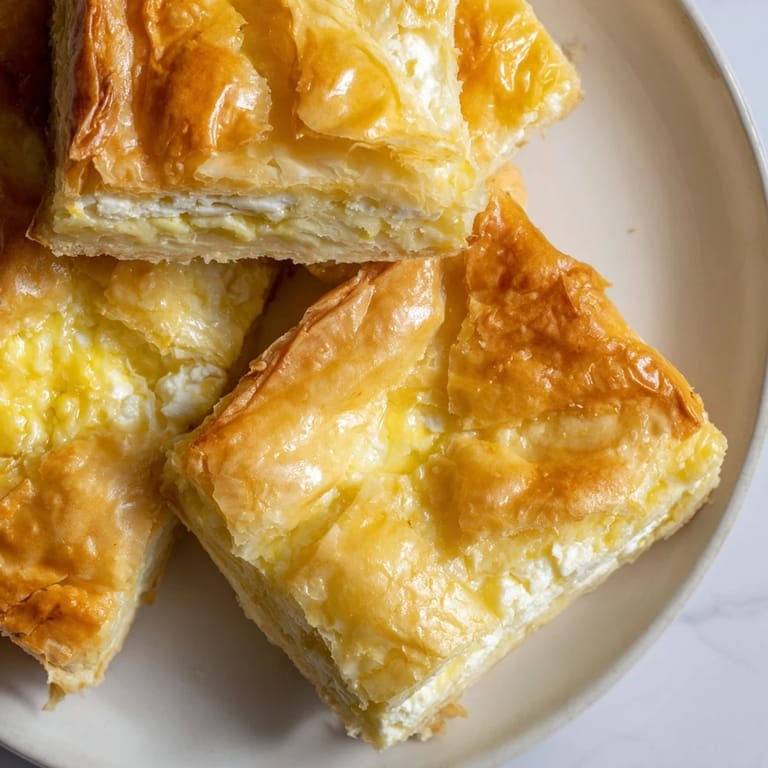
Save My neighbor Marija taught me to make gibanica on a rainy October afternoon when the kitchen smelled like warm butter and possibility. She'd arrived with a bag of phyllo dough and stories about her grandmother layering these sheets so thin you could see through them, and suddenly I understood why this pie had survived generations of family tables. That first bite—the shatter of golden pastry giving way to creamy cheese filling—changed how I thought about simple ingredients working together. Now whenever I make it, I can almost hear her humming while she worked, unbothered by perfection, focused only on the rhythm of brush strokes and layers.
I made this for my book club once, and it disappeared before anyone finished their wine—not because it was fancy, but because it felt like home-cooked comfort that happened to look restaurant-quality. Someone asked for the recipe right there at the table, and I watched their face light up when I explained it was mostly just cheese and eggs layered between crispy sheets, like it couldn't possibly be that simple. That's when I realized gibanica wasn't really about technique or secret ingredients; it was about understanding that sometimes the most satisfying dishes are just about respecting the few good things you start with.
Ingredients
- Cottage cheese (300g): This is the foundation—mild, creamy, and willing to take on whatever flavors surround it; don't skip it even though it seems plain.
- Feta cheese, crumbled (200g): The salty, tangy partner that wakes everything up; use a good quality block and crumble it yourself if you can.
- Eggs (4 large): They bind the filling together and add richness; room temperature eggs incorporate more smoothly.
- Plain yogurt (100ml): It keeps the filling from drying out and adds a gentle tang that echoes the feta.
- Sunflower oil (50ml in filling, plus 2 tbsp for brushing): Use a neutral oil that won't compete with the cheese; this is where you don't skimp on quality.
- Sparkling water (50ml): This small addition creates tiny air pockets that make the filling lighter, almost custardy—it's the kind of detail that separates good from memorable.
- Salt and pepper: Taste as you go; the feta brings its own salt, so you might need less than you think.
- Phyllo dough (500g, about 12 sheets): Keep it thawed and covered with a damp towel so it doesn't dry out and crack while you work.
- Egg yolk for glazing (optional): Brushed on top, it gives you that burnished, bakery-quality golden finish.
Tired of Takeout? 🥡
Get 10 meals you can make faster than delivery arrives. Seriously.
One email. No spam. Unsubscribe anytime.
Instructions
- Prepare your stage:
- Heat your oven to 180°C and grease your baking dish until it gleams a little—this small step prevents sticking and lets the phyllo crisp evenly. Have all your ingredients within arm's reach because once you start layering phyllo, you move with intention, not search parties.
- Build the filling:
- Combine cottage cheese, feta, eggs, yogurt, oil, sparkling water, salt, and pepper in a bowl and mix until the texture is smooth and pourable. Don't overbeat it; you want the filling creamy, not whipped into submission.
- Start the layers:
- Place one phyllo sheet in the dish, brush it with oil using broad, confident strokes, and repeat with two more sheets. Each sheet should be glossy and flexible, not brittle.
- First filling layer:
- Spread 3-4 tablespoons of filling over the phyllo foundation, letting it settle into a relatively even layer.
- Build the rhythm:
- Continue with 2-3 phyllo sheets, oil each one, then a layer of filling, and repeat until your ingredients are gone. Finish with 2 phyllo sheets on top, which will shield the filling and turn golden.
- Finish and cut:
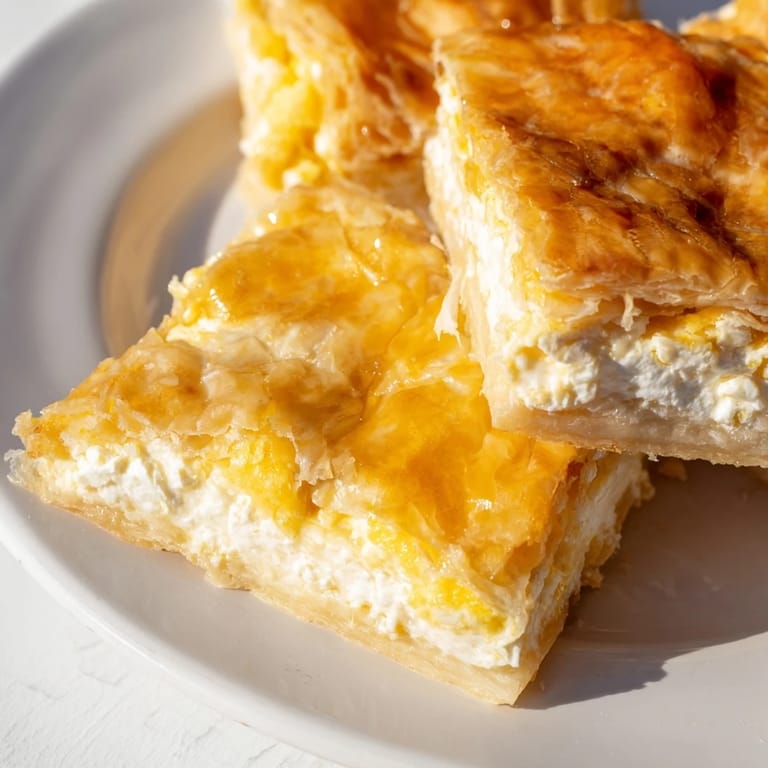
- Brush the top phyllo generously with oil, and if you have an egg yolk, beat it and brush it on for a mahogany finish. Once the oven is ready, use a very sharp knife to cut the pie into squares or diamonds—these cuts help the heat reach every layer and make serving easier.
- Bake until golden:
- Bake for 35-40 minutes until the top is golden and crispy and you can hear a gentle crackle when the oven door closes. The filling will set as it cools.
- Rest before serving:
- Let it cool for 10 minutes so the layers set and the cheese firms up enough to cut cleanly, but serve it warm or room temperature while the phyllo is still at its crispiest.
 Save
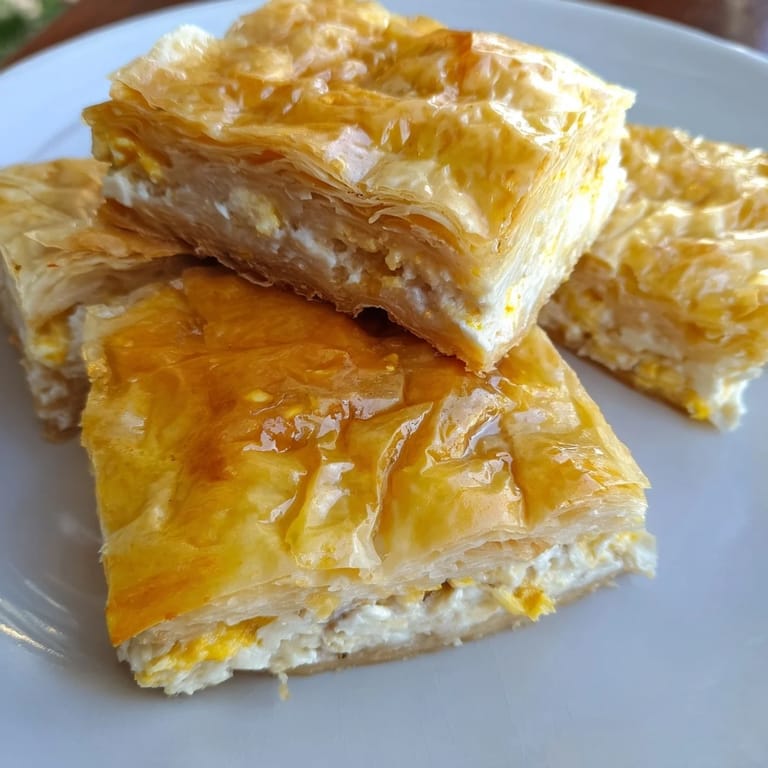
Save The day my daughter first tried gibanica, she was skeptical about the cheese filling until she tasted that combination of creamy and salty and crispy all at once. Her eyes went quiet in that way they do when something unexpected pleases you, and she asked if I could make it every week—which I didn't, but we both knew we wanted to. That's when food stops being about hunger and becomes about these small moments of discovery together.
The Philosophy of Phyllo
Phyllo dough intimidates people, but it's actually just a vehicle for everything you care about—thin, patient, willing to take on whatever flavor you're layering between its sheets. I used to think you needed restaurant training to handle it, until I realized that perfect, unbroken sheets matter far less than honoring the intention behind each brushstroke of oil. Some sheets will tear; you simply patch them with another piece and keep going, because the philosophy of gibanica is about abundance and layering, not flawlessness. Once you make peace with that, phyllo becomes almost meditative to work with.
Serving and Pairing
Gibanica shines warmest when served with something fresh and bright alongside it—a tomato and cucumber salad cuts through the richness and gives your palate a place to rest between bites. Some people serve it with sour cream on the side for dipping, which sounds indulgent until you try it and wonder how you ever ate it plain. A sharp, clean white wine or even just cold water with lemon works beautifully, letting the cheese and phyllo be the stars rather than fighting for attention.
Storage and Reheating
Leftover gibanica keeps in the fridge for several days and tastes almost as good the next day—sometimes even better, when the flavors have had time to settle and know each other. To reheat, wrap it loosely in foil and warm it gently in a 160°C oven for about ten minutes, just until it's heated through and the phyllo remembers how to be crispy. You can even eat it cold straight from the fridge if you're in a hurry, though something important happens when it's warm.
- Store covered in an airtight container to keep the phyllo from going soft or picking up fridge flavors.
- Leftover filling can be frozen separately and used for a faster bake next time you crave gibanica.
- If you're making it ahead for guests, assemble it the day before and bake it fresh the morning you're serving—it takes just forty minutes and arrives at the table with maximum crispness.
 Save
Save Gibanica is one of those dishes that teaches you that good food doesn't require drama or long ingredient lists—just patience, respect for simple things, and the willingness to layer them thoughtfully. Once you've made it once, you'll want to make it again, and each time it feels a little more like home.
Recipe FAQs
- → What type of cheese is used in this layered pie?
The filling combines creamy cottage cheese with crumbly feta, creating a balanced tangy and mild flavor.
- → How do I achieve crispy phyllo layers?
Brush each phyllo sheet with sunflower oil before layering to ensure crispiness and a golden finish after baking.
- → Can the dish be served at room temperature?
Yes, it tastes delicious both warm and at room temperature, making it versatile for various occasions.
- → Is there a way to enrich the filling flavor?
Adding a tablespoon of sour cream to the cheese mixture can enhance creaminess and depth of taste.
- → Can I make a gluten-free version?
Yes, substitute the traditional phyllo dough with gluten-free phyllo sheets to accommodate dietary needs.
- → How should leftovers be stored?
Keep any leftovers refrigerated and reheat gently to preserve texture and flavor.