 Save
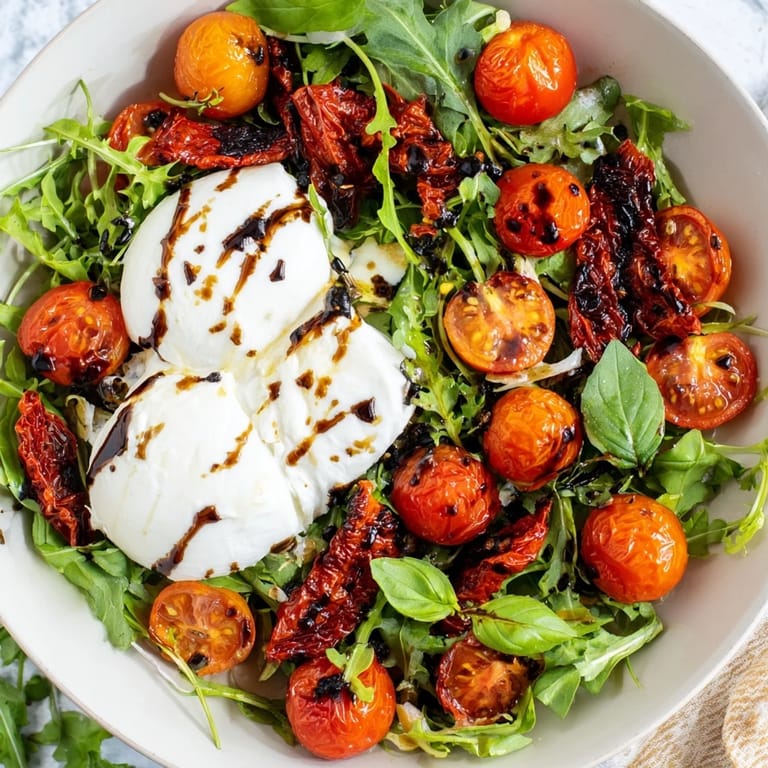
Save I discovered the magic of layering tomatoes by accident one summer when my farmer's market haul looked overwhelming—three different varieties all at their peak, staring at me from the counter. Instead of panicking, I decided to celebrate each one differently: one fresh and bright, another roasted to concentrate its sweetness, and the last as a sun-dried treasure I'd been saving. The result was so stunning that my guests asked for the recipe before even tasting it, and when they did, the combination of creamy burrata and torn basil felt like I'd somehow bottled summer itself.
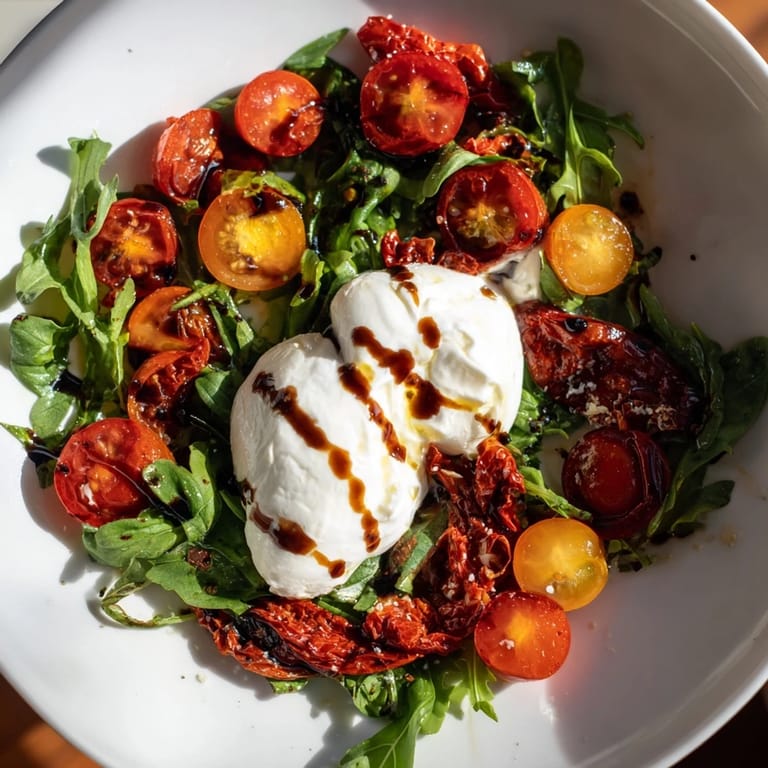
I remember bringing this salad to a potluck where everyone was stressed about bringing something "Instagram-worthy," and this showed up looking absolutely sculpted—arranged with the different tomato colors creating natural patterns across the greens. A friend who usually just picks around salads came back for seconds, and someone asked if I'd trained as a chef. I hadn't; I'd just paid attention to how different tomato colors told a story on the plate.
Ingredients
- Cherry or grape tomatoes, fresh (1 cup halved): These stay bright and sweet, giving you little bursts of raw tomato flavor that ground the whole thing in freshness.
- Cherry or grape tomatoes, whole (1 cup for roasting): Roasting concentrates their sugars and adds a warm, caramelized depth that makes people think you've done something complicated.
- Sun-dried tomatoes in oil (1/2 cup drained and sliced): These are your umami bomb—use the good quality ones that still have some chew, and if you drain them, save that oil for bread dipping later.
- Mixed salad greens (4 cups): Choose a mix that includes at least one peppery green like arugula so the salad has personality beyond just the tomatoes.
- Fresh burrata cheese (2 balls, about 200 g): This is the creamy centerpiece—look for burrata that's been made recently, and keep it cold until the last moment because it's happiest served chilled against warm roasted tomatoes.
- Extra virgin olive oil (3 tbsp): Use one you actually like tasting, because this is going in a dressing where it's the star, not hidden in a long cooked sauce.
- Balsamic glaze or vinegar (1 tbsp): The glaze is thicker and sweeter; vinegar is more tart—pick based on your mood and what tomatoes you're working with.
- Honey (1 tsp): Just enough to balance the vinegar's acidity without making this into a sweet salad.
- Garlic clove, minced (1 small): One clove is all you need—any more and you're making a different salad entirely.
- Salt and pepper: Taste as you go because proper seasoning is what transforms this from nice to memorable.
- Fresh basil (1/4 cup torn): Tear it by hand so the edges bruise slightly and release more fragrance—don't use a knife, which will make the leaves blacken.
- Flaky sea salt (optional): A finishing touch that adds a little crunch and visual interest if you have it on hand.
Tired of Takeout? 🥡
Get 10 meals you can make faster than delivery arrives. Seriously.
One email. No spam. Unsubscribe anytime.
Instructions
- Roast your second tomato moment:
- Heat your oven to 400°F and spread whole tomatoes on a baking sheet, then give them a light coat of olive oil and season generously. Pop them in for 12–15 minutes until their skins are blistered and the insides are soft and bubbling at the edges—you'll know they're done when they smell so good you can barely wait to eat them.
- Build your dressing while they cook:
- Whisk together the remaining olive oil, your vinegar or glaze, honey, minced garlic, salt, and pepper in a small bowl until it tastes balanced—tart but slightly sweet, garlicky but not aggressive. If you taste it on a salad green right now, it should make you happy.
- Create your green foundation:
- Spread your mixed greens across a platter or arrange them on individual plates, using this as your blank canvas.
- Layer your three tomato variations:
- Distribute the fresh halved tomatoes, the still-warm roasted tomatoes, and the sun-dried tomato slices evenly across the greens so every bite has representation from all three. This is where the visual magic happens.
- Add the creamy element:
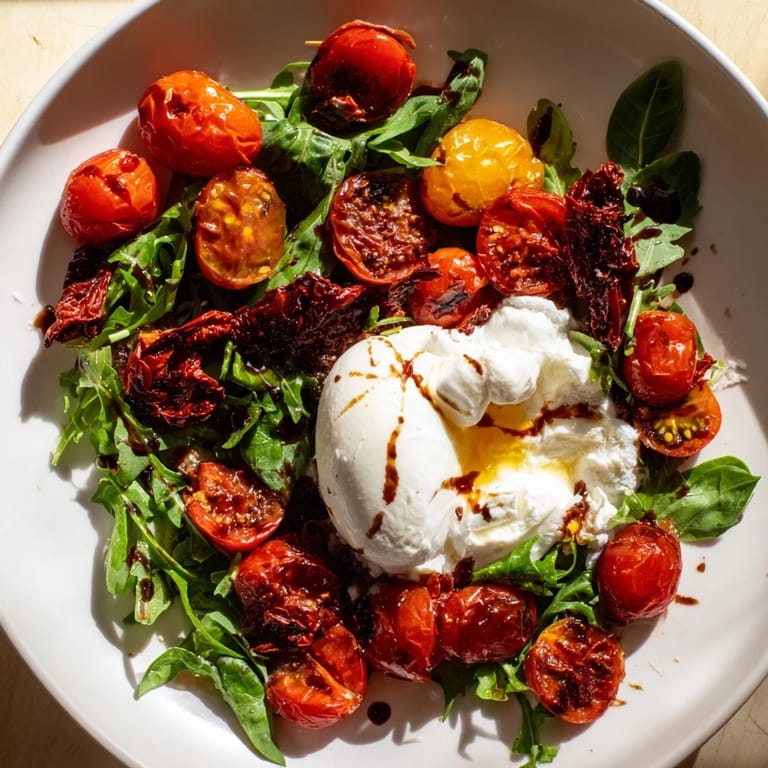
- Tear the burrata into rough pieces—don't aim for uniform chunks, just natural tears—and nestle them throughout the salad where they look right to you.
- Finish with dressing and garnish:
- Drizzle the dressing lightly across everything, scatter your torn basil leaves over the top, and if you have flaky sea salt, give it a generous pinch. Serve this immediately while the roasted tomatoes still have a little warmth to them.
 Save
Save There's a particular quiet moment right before serving this salad when you step back and see all three tomato colors arranged on the plate, sunlight hitting the burrata and making it glow slightly—and you realize that sometimes the best dishes aren't about complicated technique, they're about paying attention to what already wants to taste good together. That's when you know you've made something worth serving.
The Three-Tomato Philosophy
Using three different preparations of the same ingredient might sound like overthinking, but it's actually the opposite—it's about honoring tomatoes in all their forms and letting each one do what it does best. Fresh tomatoes are bright and immediate, roasted ones become concentrated and almost candy-like, and sun-dried tomatoes are this beautiful bridge between past and present, between summer stored and summer right now. When you put them together, you're not making a salad; you're telling a story about the tomato itself.
Burrata as the Bridge
Burrata is special because it's creamy without being heavy, rich without being overwhelming, and it takes on the flavors around it like a good listener. The warmth from the roasted tomatoes starts to soften the cheese just slightly, creating these little pockets of creaminess that balance the acidity of the dressing and the texture of the crispy greens. Once you've had burrata this way, you realize it's almost too good to waste on anything fancier.
Making It Yours
This salad is a framework, not a rule, so feel free to add toasted pine nuts for crunch, swap in mozzarella di bufala if burrata isn't available, or add a handful of crispy croutons if you want to make it more substantial. The dressing also scales beautifully—if you're feeding more people, just multiply the ratios and taste as you go.
- Toast pine nuts in a dry pan for about two minutes if you want to add that nutty crunch without any oil.
- A splash of good red wine vinegar can replace balsamic if that's what you have, though it'll taste brighter and less sweet.
- Make this salad year-round by using quality cherry tomatoes in winter and whatever heirloom varieties you find at the market in summer.
 Save
Save This salad reminds me that sometimes the most impressive dishes are the ones where you just get out of the way and let good ingredients speak for themselves. Serve it with confidence.
Recipe FAQs
- → What types of tomatoes are used?
Three types are combined: fresh halved cherry or grape tomatoes, whole cherry or grape tomatoes roasted until tender, and sliced sun-dried tomatoes for an intense flavor contrast.
- → Can I substitute burrata cheese?
Yes, mozzarella di bufala or fresh ricotta can be used as alternatives for similar creamy texture and mild flavor.
- → How is the dressing prepared?
The dressing is made by whisking extra virgin olive oil, balsamic glaze or vinegar, honey, minced garlic, salt, and black pepper, balancing sweetness and acidity.
- → What serving suggestions enhance this dish?
Adding toasted pine nuts or croutons provides extra crunch. This salad pairs well with a crisp Sauvignon Blanc or light Italian rosé.
- → Is this dish suitable for special diets?
It is vegetarian and gluten-free as prepared, but check sun-dried tomatoes for potential allergens or gluten additions.