 Save
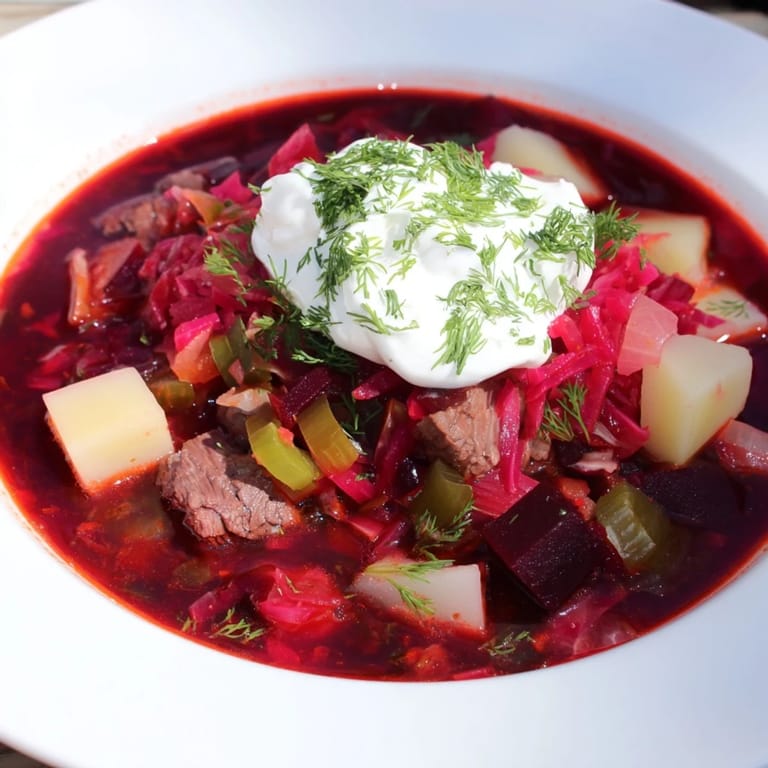
Save There's something about the smell of beets simmering in broth that stops me mid-afternoon, pulls me back to my kitchen, and reminds me why I keep making this soup. My first real borscht came together almost by accident—I had beef, I had beets, and someone had just pressed a container of sour cream into my hands at the market. What emerged was this glorious, crimson bowl of comfort that tasted like it had been simmering for generations. Now it's one of those dishes I return to without thinking, the way you might reach for a favorite sweater when the weather turns.
I served this to my neighbor one winter evening when she'd been under the weather, and watching her face as she tasted it—that moment when you can see someone actually relax into a spoonful—reminded me that borscht isn't just food. It's a gesture, a warmth you can hand across a table. She asked for the recipe that night, and now she makes it for her own people.
Ingredients
- Beef chuck or brisket (400 g): Use a fattier cut that breaks down into tender strands—this isn't where you skimp, because the beef flavors the entire broth and becomes almost background sweetness.
- Water (1.5 liters): Cold water brings out the beef's depth; hot water can seal in flavors you want released into the soup.
- Bay leaves and peppercorns: These aren't just seasonings—they're the foundation, so don't skip them or the broth tastes flat and one-dimensional.
- Beets (3 medium): Buy them raw and peel them yourself after cooking if you can; grating gives them more surface area to release that gorgeous color and earthy sweetness into the broth.
- Carrots (2 medium): Grated, not chopped, so they soften quickly and blend into the sautéed base that carries all the depth of flavor.
- Onion, potatoes, and cabbage: The holy trinity of texture and substance—the onion sweetens as it cooks, potatoes add body, and cabbage keeps everything bright and slightly sharp.
- Tomato paste (2 tablespoons): This is your secret weapon for umami; it deepens everything and makes the broth taste like it's been slow-cooked all day.
- Sunflower oil: Use what you have, but this neutral oil lets all the vegetables shine without competing.
- Sugar and vinegar: These are the balance—a teaspoon of sugar rounds out the earthiness, and vinegar brings everything into focus so the flavors don't muddle.
- Sour cream and fresh dill: Don't treat these as optional garnishes; they're the final brushstroke that makes borscht feel complete.
Tired of Takeout? 🥡
Get 10 meals you can make faster than delivery arrives. Seriously.
One email. No spam. Unsubscribe anytime.
Instructions
- Start Your Broth:
- Combine the beef, cold water, bay leaves, peppercorns, and salt in a large pot and bring it to a rolling boil. You'll see foam rise to the surface—skim it off gently, because this is impurities leaving the broth and clarity matters. Reduce the heat and let it simmer quietly for 45 minutes, just enough time for the beef to begin yielding its richness into the water.
- Build the Base:
- While that's happening, warm oil in a skillet and let the chopped onion soften and turn translucent—this takes about 3 minutes and you'll smell it sweetening. Add the grated carrots and beets, and let them soften for 5 minutes, stirring occasionally so they cook evenly. Stir in the tomato paste, sugar, and vinegar, and cook for another 7 to 8 minutes; the mixture should darken and deepen in color as the tomato paste caramelizes slightly.
- Merge the Elements:
- Lift the beef from the broth with tongs and set it aside—you can shred or cube it later. If you prefer a clearer broth, strain it through a fine sieve, then return it to the pot and bring it back to a simmer. Add the diced potatoes and let them cook for 10 minutes until they begin to soften.
- Layer In the Rest:
- Add the shredded cabbage and the entire sautéed beet mixture to the pot. Simmer for another 10 minutes so the cabbage softens and all the colors and flavors start to blur into something unified and gorgeous. Shred or cube the beef and return it to the pot along with the minced garlic, then taste and adjust salt and pepper carefully—borscht needs a little more seasoning than you'd expect.
- Let It Rest:
- Remove from heat and let the pot sit for 15 to 20 minutes before serving; this resting time is when the flavors truly settle and marry into something greater than the sum of their parts.
 Save
Save There's a moment in every borscht that becomes memorable—mine came when my teenage son, usually indifferent to anything I cook, asked for a second bowl and wanted to know if I could make it again next week. Sometimes the best food moments are the quiet ones, when someone you love actually wants more.
Why Borscht Tastes Better Tomorrow
Borscht is one of those rare soups that improves overnight—the flavors deepen as the beets continue to release their color and earthiness, and the broth becomes more complex and rounded. I've learned to make it with this in mind, actually planning to serve it the day after, so the first batch becomes dinner prep rather than a rush. Store it in an airtight container in the refrigerator for up to four days, and you'll find that each day tastes slightly different, slightly better.
Serving and Pairing
This soup doesn't stand alone in my kitchen—it needs companions. Rye bread is traditional and perfect, its dense, slightly sour crumb a natural match for the bright borscht. I've also made Ukrainian garlic rolls (pampushky) to go alongside, and the garlicky steam rising from them while you're eating the soup creates this wonderful sensory experience. A simple green salad with a sharp vinaigrette on the side cuts through the richness without competing.
Variations and Flexibility
Borscht is forgiving in a way that makes it perfect for adapting to what you have. Skip the beef for a vegetarian version and swap in vegetable broth—you lose nothing except the meaty depth, and it becomes brighter and somehow more refreshing. I've added kidney beans on nights when I wanted more substance, thinned it with extra broth when it felt too thick, and even added fresh herbs like cilantro or tarragon instead of the traditional dill when I was experimenting. The core structure stays the same; everything else is conversation between you and the soup.
- A splash of lemon juice added just before serving lifts and brightens the whole bowl without making it taste sour.
- For extra richness, stir a spoonful of sour cream directly into the pot instead of just garnishing—it creates a luxurious, velvety texture.
- If you love garlic, don't stop at the minced clove at the end; mash a raw clove with salt and stir it into your individual bowl of sour cream for a bold, bright kick.
 Save
Save This is the soup I make when I want to feel like I'm doing something that matters in my kitchen—not because it's complicated, but because it connects me to something older and warmer than myself. Make it and you'll understand why people hold onto borscht recipes across generations and continents.
Recipe FAQs
- → What cut of beef works best for this soup?
Beef chuck or brisket cut into large pieces is ideal, as it becomes tender and flavorful after slow simmering.
- → How can I make the soup vegetarian?
Omit the beef and use a vegetable broth instead to maintain depth and richness of flavor.
- → What vegetables are key to the soup's flavor?
Beets, carrots, onions, potatoes, and cabbage combine to create the soup’s distinctive color and taste.
- → Why is the soup rested before serving?
Allowing the soup to rest lets the flavors meld together, enhancing the overall depth and aroma.
- → What garnishes complement the soup?
A dollop of sour cream and fresh chopped dill or parsley add creaminess and fresh herbal notes.
- → Can this soup be stored and reheated?
Yes, the soup keeps well and flavors often improve after a day refrigerated, perfect for reheating.