 Save
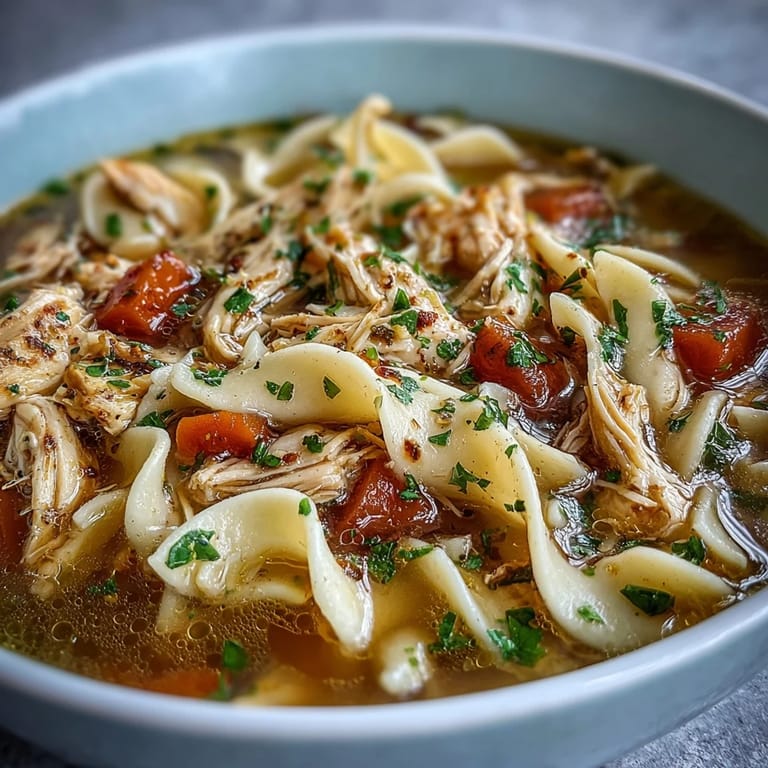
Save My mom used to make this soup on the first truly cold day of autumn, when the house felt drafty and I'd come home from school shivering. She'd have the pot simmering by the time I walked in, filling the kitchen with this warm, gentle aroma that made everything feel manageable again. There's something almost magical about how simple ingredients—chicken, vegetables, broth, noodles—transform into something that feels like an embrace in a bowl. It became my go-to when I needed comfort, and later, when I needed to comfort others.
I made this for a friend during one of those stretches where life felt overwhelming, and I watched her eat it like it was the first thing that tasted right in weeks. She asked for the recipe, and when I realized I'd never written it down—just made it by feel—I sat down and documented every step. That's when I understood that the best recipes aren't the fancy ones; they're the ones that show up exactly when you need them.
Ingredients
- Bone-in, skinless chicken thighs or breasts (1 ½ lbs): Thighs give you richer, more forgiving meat that stays tender even if you accidentally overcook it, while breasts cook slightly faster—use a mix if you want the best of both worlds.
- Low-sodium chicken broth (8 cups): Low-sodium lets you control the salt level and taste the actual chicken flavor instead of just salt, which makes a real difference in the final bowl.
- Yellow onion, carrots, and celery (1 large onion, 3 medium carrots, 2 stalks): This trio is the flavor foundation—they sweeten as they cook and create an almost silky base to the broth.
- Garlic cloves, minced (3): Mincing rather than slicing means the garlic distributes evenly and dissolves into the broth, adding complexity without overwhelming you with garlic chunks.
- Bay leaves, dried thyme, and dried rosemary (2 bay leaves, ½ tsp thyme, ¼ tsp rosemary): These herbs whisper rather than shout—they're what make people ask, what's in this that makes it taste so good?
- Salt and freshly ground black pepper: Always taste as you go and adjust at the end; different broths have different salt levels, so you're really the one in control here.
- Wide egg noodles (6 oz): Wide noodles catch the broth and feel more substantial than thin ones, making each spoonful feel intentional.
- Fresh parsley and lemon juice (2 tbsp parsley, 1 tbsp lemon juice optional): Parsley adds brightness and a fresh note right before serving, while a squeeze of lemon wakes up all the other flavors without making it taste citrusy.
Tired of Takeout? 🥡
Get 10 meals you can make faster than delivery arrives. Seriously.
One email. No spam. Unsubscribe anytime.
Instructions
- Start with the foundation:
- Place chicken and broth in a large pot and bring to a gentle boil, skimming off the foam that rises—this takes just a minute and makes the broth cleaner and clearer. You're basically removing impurities so your final soup is as pure and golden as possible.
- Build flavor slowly:
- Add onion, carrots, celery, garlic, bay leaves, thyme, rosemary, salt, and pepper, then reduce heat to a simmer and cover. Let this cook for 25–30 minutes while the vegetables soften and the chicken becomes so tender it will practically fall apart when you look at it.
- Shred the chicken:
- Remove the chicken pieces and let them cool just enough to handle, then use two forks to shred the meat into bite-sized pieces, discarding any bones. This step takes maybe five minutes and is actually kind of meditative once you get into a rhythm.
- Bring it back together:
- Return the shredded chicken to the pot and increase heat to medium-high to bring everything back to a gentle boil. You're essentially finishing the cooking process now that the chicken is broken into smaller pieces.
- Add the noodles:
- Stir in the egg noodles and cook for 8–10 minutes until tender, stirring occasionally so they don't stick together. The noodles will soften and absorb some of the broth, becoming part of the whole rather than just an add-on.
- Finish with brightness:
- Stir in the fresh parsley and lemon juice if using, then taste and adjust salt and pepper—a little more of either can make all the difference. Remove the bay leaves before serving, as biting into one by accident is genuinely unpleasant.
 Save
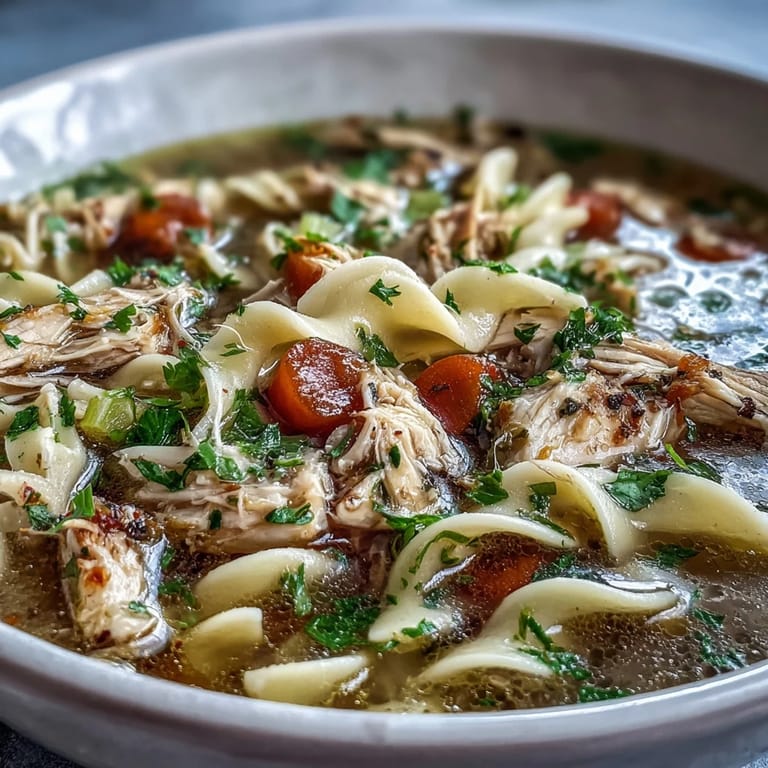
Save Years later, I realized this soup had become the recipe I teach people when they're learning to cook, because it's humble enough to forgive mistakes but good enough to build confidence. Every time someone tells me they made it and it turned out better than they expected, it feels like I've passed along something that actually matters.
Why Bone-In Chicken Makes the Difference
The first time I tried this soup with boneless breasts, it tasted fine but somehow flatter, less interesting. When I switched back to bone-in thighs, I realized the bones weren't just contributing minerals and gelatin to the broth—they were adding a subtle richness that made the whole thing taste more complex and satisfying. Bone-in meat also stays more forgiving during the 25–30 minute simmer, so you're less likely to end up with dry, stringy chicken.
The Vegetable Timing Secret
I used to add the vegetables and chicken at the same time and wondered why some pieces were mushy and others were still a little crunchy. Then I realized that cutting the vegetables into roughly uniform sizes meant they'd all cook at the same rate, and simmering them for the full 25–30 minutes made them soft enough to almost melt into the broth while still holding their shape. The carrots especially—sliced about a quarter-inch thick—become almost sweet as the heat coaxes out their natural sugars.
Make It Your Own
This recipe is a canvas, and I've learned that the best versions are the ones where you add something that speaks to you. Some people swear by a handful of spinach stirred in at the end for color and nutrition, while others add chili flakes for a gentle warmth that builds as you eat. A splash of white wine before adding the broth deepens the savory notes, and I've even seen people add a teaspoon of miso paste to the finished soup for an umami boost that's subtle but unmistakable.
- Fresh dill works beautifully stirred in at the end if you want something more herbal than parsley.
- A splash of apple cider vinegar instead of lemon juice gives you a different kind of brightness, almost autumnal.
- Don't hesitate to use leftover rotisserie chicken if you're short on time—shred it and add it in step four instead of simmering chicken from raw.
 Save
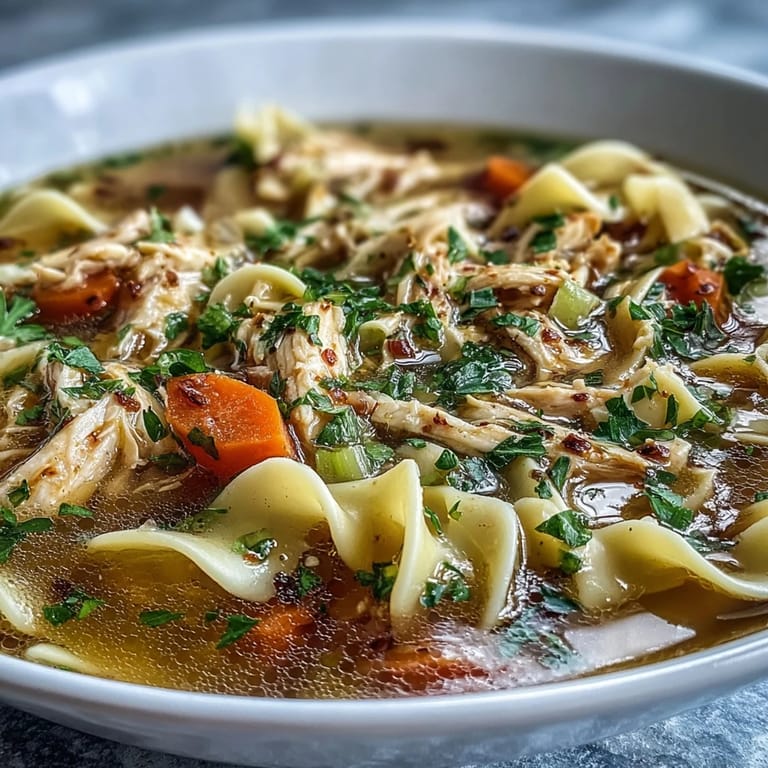
Save This is the soup that taught me that good cooking doesn't require fancy techniques or exotic ingredients—it just requires paying attention and caring about the person eating it. Make it when you need comfort, make it when others do, and watch how something this simple becomes something they remember.
Recipe FAQs
- → How long does chicken noodle soup keep?
Store cooled soup in an airtight container in the refrigerator for up to 4 days. The flavors often develop even more after a day or two.
- → Can I freeze this soup?
Freeze without noodles for best results. Cook fresh noodles when reheating to prevent them from becoming mushy. Frozen soup keeps well for up to 3 months.
- → What cut of chicken works best?
Bone-in, skinless thighs or breasts both work wonderfully. Thighs add extra richness and moisture, while breasts yield a leaner broth.
- → How do I make it gluten-free?
Substitute the egg noodles with your favorite gluten-free pasta variety. Rice noodles or gluten-free fusilli are excellent alternatives.
- → What vegetables can I add?
Consider adding diced potatoes, green beans, peas, or a handful of fresh spinach during the last few minutes of cooking.
- → Can I make this in a slow cooker?
Yes. Combine all ingredients except noodles and cook on low for 6-7 hours. Add cooked noodles just before serving.