 Save
Save I discovered The Gilded Cage while flipping through a dinner party magazine at my dentist's office—of all places. The photograph was so striking that I tore out the page, and months later, I finally had the courage to attempt it for a friend's promotion celebration. What began as an intimidating project became one of those kitchen moments where everything clicked: the breadsticks emerged golden and crisp, the cheeses gleamed like jewels, and when I lifted that delicate dome to reveal the treasure beneath, the entire room went silent. That silence was worth every minute of effort.
I made this for my sister's book club meeting, and halfway through assembly, one of the breadsticks snapped dramatically in my hands—I'd been so nervous about perfection that I wasn't thinking clearly. Instead of panicking, I broke it into smaller pieces and used them as props around the base, and somehow that accident made the whole thing look more organic and artistic. My sister caught me grinning at the "mistake," and we both knew this was going to be something special.
Ingredients
- All-purpose flour: The foundation of your breadsticks; this flour strikes the perfect balance between structure and tenderness, holding the dome's weight without becoming tough.
- Instant dry yeast: Make sure yours is fresh and stored in a cool place, or your dough won't rise with the enthusiasm you need.
- Lukewarm water: Too hot and you'll kill the yeast; too cold and nothing happens—aim for the temperature of a comfortable bath.
- Olive oil: Both in the dough and for brushing, this adds richness and helps the breadsticks turn that gorgeous golden color.
- Egg yolk: Your secret weapon for a professional-looking glossy finish that catches the light beautifully.
- Triple-cream Brie: The silky star of your cheese selection; it melts slightly and anchors the flavor profile with its buttery elegance.
- Aged Comté: This brings nutty depth and a firm enough texture to stack without collapsing.
- Truffled goat cheese: A touch of luxury that makes guests lean in closer and ask what exactly they're tasting.
- Blue cheese: The bold statement piece; don't be shy with it, but remember it commands attention.
- Parmigiano Reggiano: Shave it fresh if you can; pre-shaved loses its crystalline texture and some of its personality.
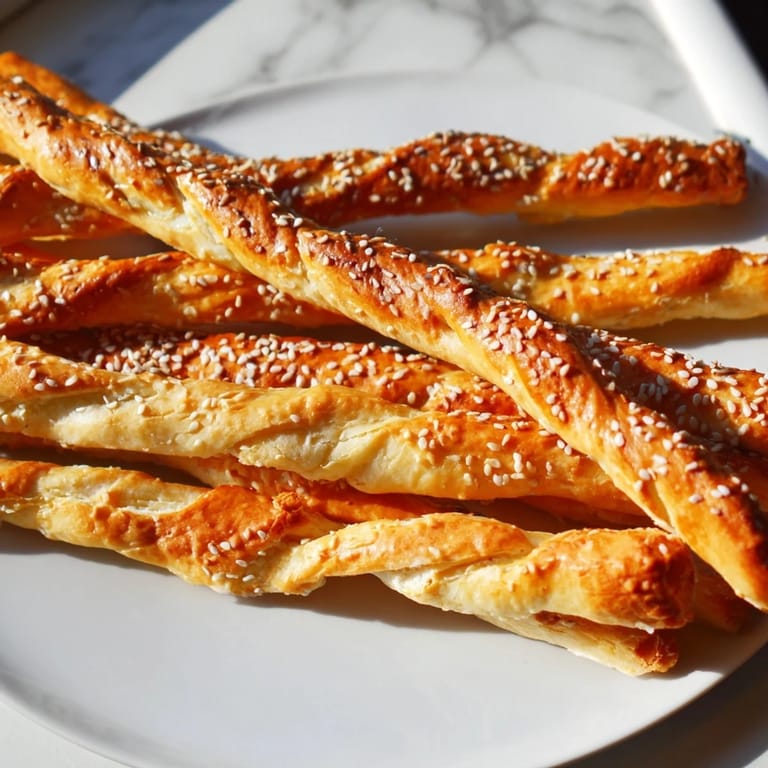
- Sesame seeds: A subtle garnish that adds texture and a whisper of nuttiness to your breadsticks.
- Honey or fig jam: A drizzle of sweetness that plays beautifully against the savory cheeses and creates visual drama.
Tired of Takeout? 🥡
Get 10 meals you can make faster than delivery arrives. Seriously.
One email. No spam. Unsubscribe anytime.
Instructions
- Building Your Dough Base:
- Combine your flour, yeast, sugar, and salt in a large bowl, then add the water and olive oil and mix until shaggy. Begin kneading immediately—you're looking for that magical moment around 8–10 minutes when the dough transforms from rough and sticky into something smooth and elastic that springs back when you poke it.
- Rising with Patience:
- Cover your bowl and tuck it somewhere warm, like an oven with just the light on or a sunny windowsill. The dough should roughly double in size within 30 minutes; if your kitchen is chilly, give it a bit longer.
- Preparing Your Oven:
- Heat to 200°C and line your baking tray with parchment paper so your breadsticks don't stick and brown evenly.
- Shaping the Sticks:
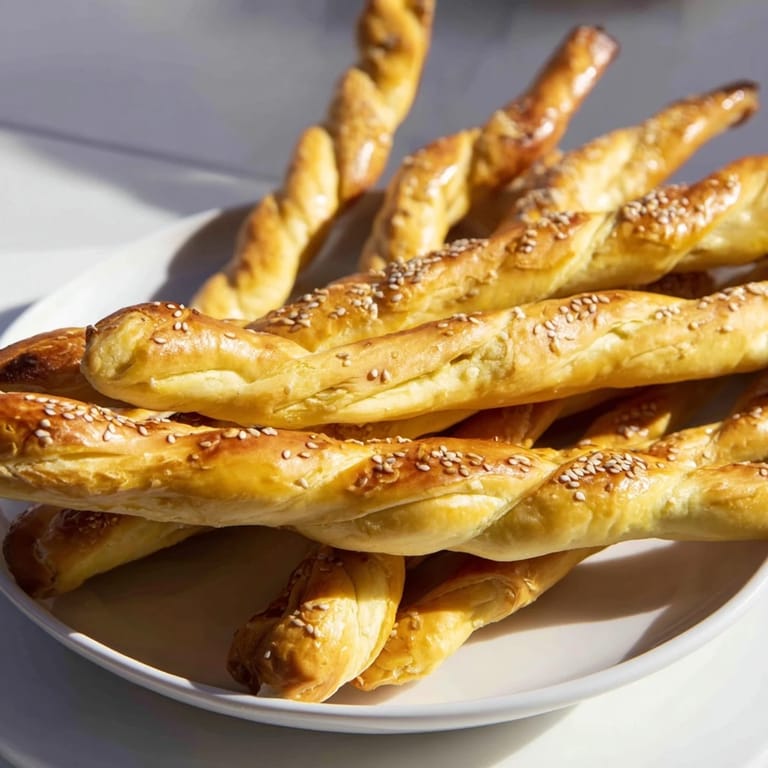
- Divide the risen dough into 18–20 equal pieces—I like to roll them between my palms first into rough balls, then elongate them on the counter. Aim for thin sticks about 3 mm thick and 25 cm long; thinner sticks are crispier and look more elegant.
- The Golden Glaze:
- Brush each breadstick with egg yolk and scatter sesame seeds over if you're using them. This is where the visual magic starts to happen.
- Baking to Perfection:
- Bake for 15–18 minutes, turning the tray halfway through so everything browns evenly. You're aiming for a deep golden color—pull them out when they sound hollow when tapped and smell incredible. Cool them completely on the tray or on a rack; they'll crisp up even more as they cool.
- Composing Your Masterpiece:
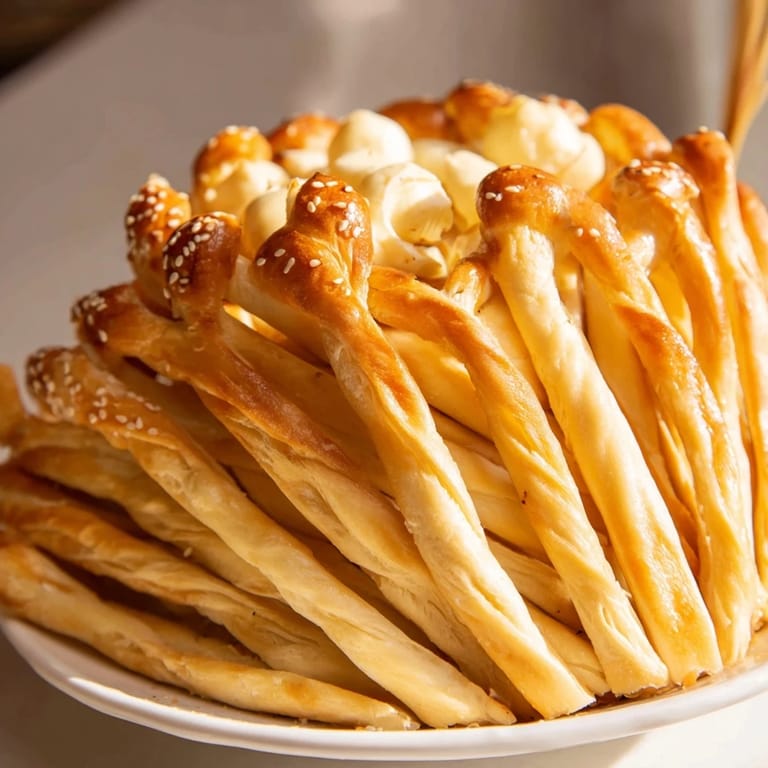
- Arrange your cheese selection in a mound on your serving platter, nestling in the grapes and scattering fresh herbs around it. Now comes the architectural moment: lean the breadsticks against each other and the cheese pile, building upward until you've created a dome that looks intentional and impressive.
 Save
Save What struck me most wasn't just how beautiful this looked, but how it transformed the entire energy of the gathering. People stopped scrolling on their phones, abandoned their small talk, and simply stood around this edible sculpture like they'd stumbled upon something precious. When someone finally broke into the dome and tasted that contrast between the crispy, savory breadstick and the creamy, complex cheeses, there was an actual moment of collective appreciation. That's when I understood: this dish isn't about impressing—it's about creating a shared moment of delight.
The Art of Breadstick Assembly
Building the dome is where precision meets intuition. I used to overthink it, trying to engineer every angle, until I realized the breadsticks are surprisingly forgiving if you work confidently. Start by leaning your first few sticks against the cheese mound at an angle, then build your second layer so each stick rests on two lower sticks, creating a natural pyramid. The sesame seeds catch the light and hide any slightly imperfect moments, and the eye naturally follows the lines upward rather than scrutinizing gaps. Trust that a little rustic asymmetry actually looks more impressive than mathematical perfection.
Cheese Selection Strategy
The beauty of this recipe lies in the contrast of flavors, textures, and intensities layered into every bite. I learned to think of the cheeses like a musical composition: the Brie is your smooth opening note, the Comté adds depth and complexity, the goat cheese brings earthiness, the blue offers a bold crescendo, and the Parmigiano provides a crisp finale. Don't be afraid to swap in cheeses that speak to you—a creamy Taleggio, a sharp aged cheddar, or a buttery Manchego all work beautifully. The only rule I follow is balance: include at least one soft cheese, one hard cheese, and one with genuine personality.
The Finishing Touches That Matter
Details elevate this from impressive to unforgettable. A light drizzle of honey or fig jam creates a gloss that catches light, while fresh thyme or rosemary sprigs scattered around the platter add color and aroma. If you're feeling adventurous, edible gold leaf attached to a few breadsticks transforms the whole presentation into something almost mythical. I once added pomegranate seeds instead of grapes, and the tartness proved to be the exact counterpoint everyone's palate needed after the rich cheeses.
- Toast a few breadsticks lightly under the broiler for 30 seconds if they've lost their crispness overnight.
- Serve everything at room temperature so the cheese flavors fully express themselves.
- Prepare the components separately and assemble within an hour of serving for maximum visual impact.
 Save
Save This recipe taught me that sometimes the most memorable meals aren't complicated—they're just thoughtfully composed with ingredients you genuinely care about. The Gilded Cage became my signature dish not because it's technically difficult, but because it tells a story of intention and warmth the moment it lands on the table.
Recipe FAQs
- → How do I achieve crispy breadsticks?
Roll the dough thinly, bake at a high temperature around 200°C (390°F) until golden and crisp, turning once to ensure even baking.
- → What cheeses work best in this dish?
Soft triple-cream Brie, aged Comté, truffled goat cheese, blue cheese, and Parmigiano Reggiano offer complementary textures and flavors.
- → How can I assemble the breadsticks dome securely?
Arrange cheeses in a central mound, then carefully build the breadsticks around and over it, gently pressing sticks into the cheese or using a small bowl as a mold.
- → Are there vegetarian-friendly options?
This preparation is vegetarian, featuring dairy cheeses and egg yolk glaze; substitute or omit ingredients if needed for dietary restrictions.
- → What accompaniments enhance the flavor?
Seedless red grapes, honey or fig jam, and fresh herbs like thyme or rosemary complement the rich cheeses and crispy breadsticks perfectly.
- → Can I add decorative touches?
For an elegant presentation, edible gold leaf on select breadsticks adds a luxurious sparkle to the centerpiece.